

Witnessing a Martin Taylor solo show has always been something of a levelling experience for the average guitar player. His guitar might have the same number of frets as ours (we’ve counted), but you’re hearing chords, melody and basslines all at once.
How does that happen? And when you realise that much of it is improvised on the spot, the tendency is to come away humbled and determined to do better the next time you head to the woodshed.
In order to celebrate his very special birthday this October, Martin stopped by the Guitarist studios to not only reflect on a long career in music but also record no fewer than three exclusive videos for us, including a lesson on how he works his unfathomable magic on a simple blues song.
When did you first pick up a guitar?
I started on a ukulele when I was about three years old. My dad came back with his little uke and I just really took to it. There was just something about playing a stringed instrument, you know? Then a kid across the street from us, his parents got him a little half-size guitar from Petticoat Lane Market and I played that, and my dad went and got me one.
There was always music being played in the house. A lot of my dad’s friends used to come round and play on Saturday afternoons. They would all come round and put records on of the Hot Club De France, Duke Ellington and Ben Webster, all the classic jazz players, and then they would play along and I just really took to music.
Why do you think music had that effect on you at such an early age?
It always fascinated me how music affected your emotions. You know, why does it make me feel sad? Why does that make me feel happy? I couldn’t understand it. I thought it was really, really fascinating. It still does fascinate me. My brother was really into music as well, and in many ways he was more musical than me, but he just didn’t have the wish to spend all that time playing a guitar, which had suited me fine.
I’ve got that kind of mind that will just keep doing the same thing over and over and over again, and thinking it’s going to get better. Sign of madness, apparently. So I really stuck with the guitar. I didn’t want to just listen to it. My brother wanted to listen to it, but I wanted to play it. I wanted to be right in the middle of it. So straight away, I just got into playing.
I turned up on Saturday morning and they’d put a chair in the shop window and an amplifier out in the street. And I sat in the shop window, plugged in this amp and that became my little job
My next door neighbour was Gypie Mayo, who went on to play guitar after Wilko Johnson in Doctor Feelgood, so we started playing at the same time. He really went more into the blues side of things and became a fantastic blues player. So many people were playing guitar at that time. In fact, at one point I thought of taking up another instrument because every lad in the street was playing a guitar!
One of your earliest gigs was playing in a shop window in Harlow at the age of eight. How did that come about?
One day Gypie – or I knew him as John in those days – came to the house and said, “There’s a shop up in the town, they’ve got guitars in the window.” It was like a haberdashery shop; they sold sewing machines and wool and knitting needles and things like that.
But the guy who ran it was a real music fan. He wasn’t a musician himself, but he knew quite a few musicians and he started bringing guitars in, and you could go in there to buy strings or drumsticks or all kinds of bits and pieces for the local musicians. It became a hangout.
We went up there one day, and the guy – whose name was Alan Summers – said, “Do you play guitar?” And John said, “He plays guitar.” And Alan said, “Well, play something.” So he gave me a guitar and I played Sweet Georgia Brown or something. He didn’t expect that. So he said, “Come along on Saturday morning.”
So I turned up on Saturday morning and they’d put a chair in the shop window and an amplifier out in the street. And I sat in the shop window, plugged in this amp and that became my little job every Saturday morning until the police came along because there were too many people coming to look.
Your next big landmark was playing in the band on the QE2 cruise liner.
That was only a few years later. I left school at 15 and, because I was doing quite a few gigs, my dad said, “I think you should just leave school. You could always go back and do qualifications if it doesn’t work out.” That’s exactly what I wanted to hear. I had to promise my mum that I would go back to education if it all fell through because she wasn’t too keen on the idea.
Then I was very fortunate to meet a trumpet player who was playing with my dad and he played on the QE2 in a band. They needed a guitar player, and the band leader rang me up one day and said, “Would you like to do six months on the QE2? Go [back and forth] to New York and then spend the winter in the Caribbean?” And I looked out of the window of our council house in Essex, where it was raining, and I went, “Yes, that’ll do me.”

That must have delivered some new challenges…
“The bandleader said, “Do you read music?” And, no, I couldn’t read music at all. So I just said, “Yeah.” I said to my dad, “How long does it take to cross the Atlantic?” He said, “Five days.” I thought, “Well, okay, I can fake it for two. Then they’re not going to turn back, are they? At least I’ll get to New York.”
So I found myself in the band there. Then we did a couple of jazz cruises, one with the Count Basie Orchestra, and I got to hang out with the great Freddie Green. I went to New York, saw a few people play there. So that was the beginning.
What happened next?
I came back to the UK and started freelancing for a few years. When I started to play with Stéphane Grappelli in 1979, I’d already made an album of my own about a year before. I played with Stéphane a few months of the year and then I had my own things with various bands. Playing with Stéphane was a key moment for me.
I’d grown up listening to him and Django [Reinhardt] as a kid, and then suddenly at the age of 22, I’m sitting in Django’s chair. And because of playing with Stéphane, we went to America. I started to get known internationally, recorded for Concord Records out in California, and then I continued to play with Stéphane for a number of years.

I started recording for some other labels – Linn Records, and I was with Sony Columbia for a while. I think you’ll find with a lot of jazz players that the defining moment for them is when they work with a very well-established living legend. When you think of all the musicians that played with Miles Davis, it just set them on a career path. There’s a renaissance in Django music, but we didn’t really play that.
We played the great American songbook, so we didn’t really play what’s now labelled as ‘Gypsy jazz’. We did play some of the Hot Club music, some of the things that Django and Stéphane wrote together, but mostly we just played. I didn’t make any attempt to play like Django because Stéphane didn’t want that.”
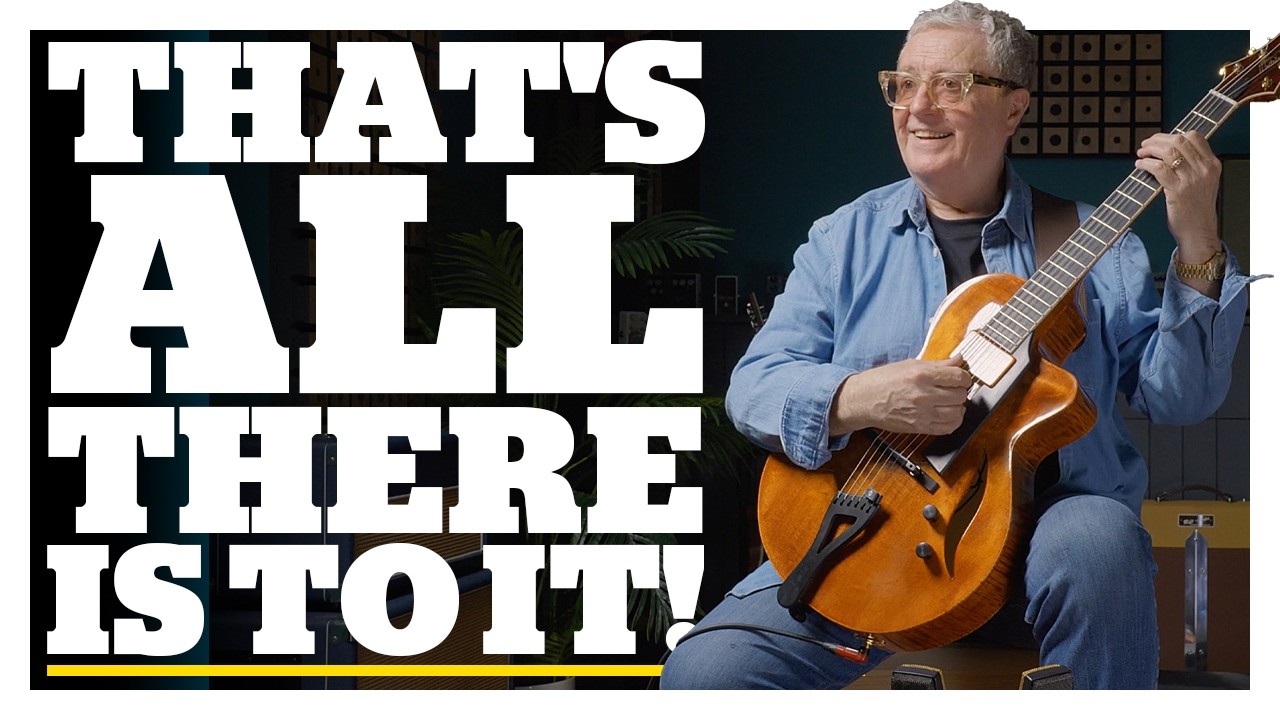
What in particular inspired you to begin playing your solo shows?
I’d always been fascinated with playing solo guitar. Ever since I saw [Andrés] Segovia play, I just thought there was something magical about a guitar player walking on stage, sitting on a chair and playing. Just before he walked on stage, there was a piano stool and a footrest, and he just walked out, sat there and played a concert. I thought, ‘That’s what I want to do’.
It took a while to get there, but to hold an audience for two hours, completely on your own… Of course, I tell stories and things as well. But I like playing for people. It’s ironic, even though I’m known as a solo player, I don’t like playing for myself, just sitting in a room playing for myself.
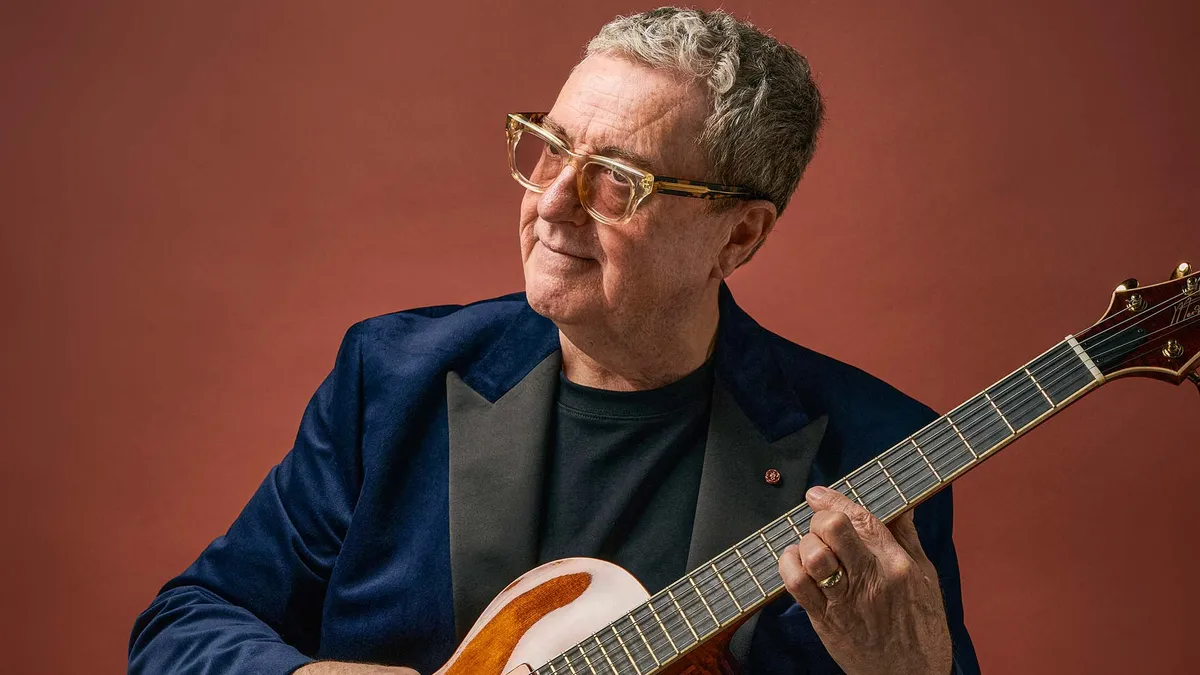
Even as a kid, I liked playing for people, even though I was shy and I didn’t like people looking at me. And if they came up to me and said, “Oh, that was really good,” I’d get embarrassed, you know? I realised music is something that has to be shared, and that’s what I [am] doing in my solo shows.
You can’t be put into a box: “Oh, Martin Taylor, yeah, jazz guitar player.” Well, yes and no. Yes, I am – that’s my roots – but it depends on what your perception of a jazz guitar player is. Do I play like Wes Montgomery? No. You know, the guitar is the guitar, music’s music, and that’s how I see it.
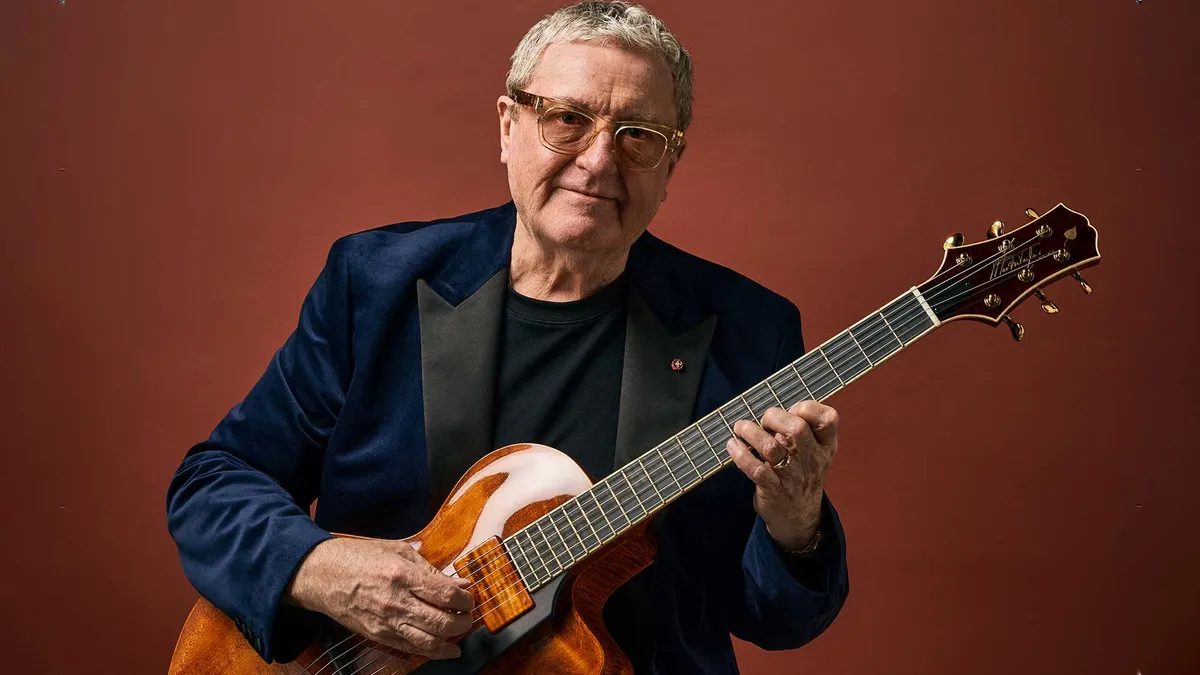
Martin on his signature Fibonacci Joya guitar

“The idea was to have an archtop jazz guitar but in the 21st century. Every jazz guitar archtop is kind of based on the [Gibson] L-5 – it’s the classic guitar – but I wanted a smaller-bodied instrument. So this is only a 15-inch lower bout. This is the second generation of this guitar, the Martin Taylor Joya, and this is a little bit deeper; the one before was just a little narrower.
“I’ve got a new pickup on it, it’s a Jon Dickinson pickup and it’s a wonderful pickup. This is my dream guitar, it’s actually the best guitar I’ve ever played and it really suits me down to a T. A lot of jazz guitars, for me, being a fingerstyle player, are very middle-y sounding and I wanted more lows and highs. I wanted a bit more of an acoustic sound as well. I don’t really play with a classic jazz tone. There’s more of a sparkle and there’s more of a bottom-end and there’s more sustain.”
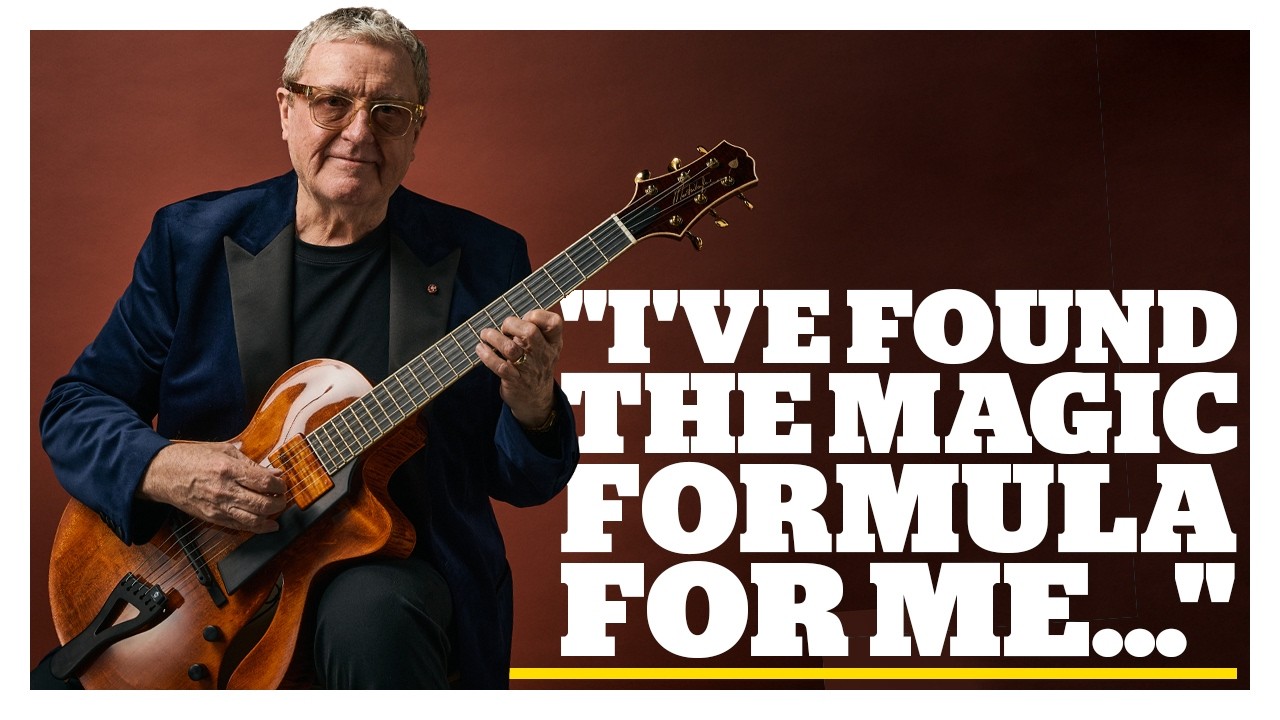
“I play with round-wound strings. Most jazz players play with flat-wounds to get that mellow, duller sound. I like that sound, but it’s not my sound.
“I think something a lot of people don’t realise about jazz guitars is they’re basically acoustic instruments. So sometimes you’ll get an archtop and it’s set up like an electric guitar, and it doesn’t really come into its own unless it’s set up as an acoustic instrument. It’s basically an acoustic guitar with a pickup on it. It’s not an electric as such.
“The top, back and sides are Carpathian spruce – from Romania, I believe. It’s very, very beautiful and you’ll notice it’s got some ‘bear claw’ – and I actually like that.
“Some guitar collectors like guitars to be absolutely perfect, not to have any kind of blemishes on them, and you never know if a guitar is going to have a blemish on it till the process starts happening. But, for me, that is a characteristic of the guitar. That makes this guitar a one-off. I could see that guitar and say, ‘That’s mine.’”
- This article first appeared in Guitarist. Subscribe and save.

