




The sight of an endless wall of Marshall stacks on stage is becoming increasingly rare; instead, many guitarists are choosing to arm themselves with one of the best amp modelers. They’re considerably more compact, faster, and easier to set up. Most of them can be used as a recording interface, and let’s be honest, the audience (and most players) can’t tell the difference in what they hear.
Now, it’s fair to say that early amp emulation technology was not much to write about, and certainly no match for the sound of a real, roaring tube amp. Today, though, is a very different story. The best amp modelers are everywhere for those with eyes to see, from small-format digital pedals to larger-scale amp-insert units that carry the weight of a thousand combos – purely figuratively, of course. No more does the touring musician have to drag an 80-pound monstrosity onto a raised stage; no more are they beholden to the mercurial tendencies of 70s circuitry, or the damaging consequences of blasting such circuitry at ear-splitting volumes.
Amp modelers are still something of a contentious subject amongst guitarists, a healthy portion of whom will never trade the ‘feel’ of the ‘real thing’ for a faithful digital interpretation. But the many and varied benefits of amp modelers are hard to ignore – from the versatility of sound to the lightness of physical burden. And, in many cases, they sound (and feel) near-indistinguishable from the real thing. If you think you could benefit from one of the best amp modelers on the market, whether to trial a number of different amp sounds or to simplify your gigging rig, you’ve come to the right place. Here you’ll find reviews of the best of the best, and at the bottom, you’ll find some helpful advice to help you figure out what you’re looking for.
Best overall

✅ Buy it if you never want to buy another amp modeler: This is an endgame device for amp modelling (at least, until some new and arcane technology renders fingers obsolete or something). From extensive and three-dimensional models to the capacity to make your own captures, the Quad Cortex does everything, and at half the size.
❌ Avoid it if your budget is stretched: Incredible as the Quad Cortex’s capabilities are, even a few years into its life, it’s not likely that you’ll need all of them. If you’re finding the price at all hard to justify, there are cheaper amp modelers to try – including another from NeuralDSP
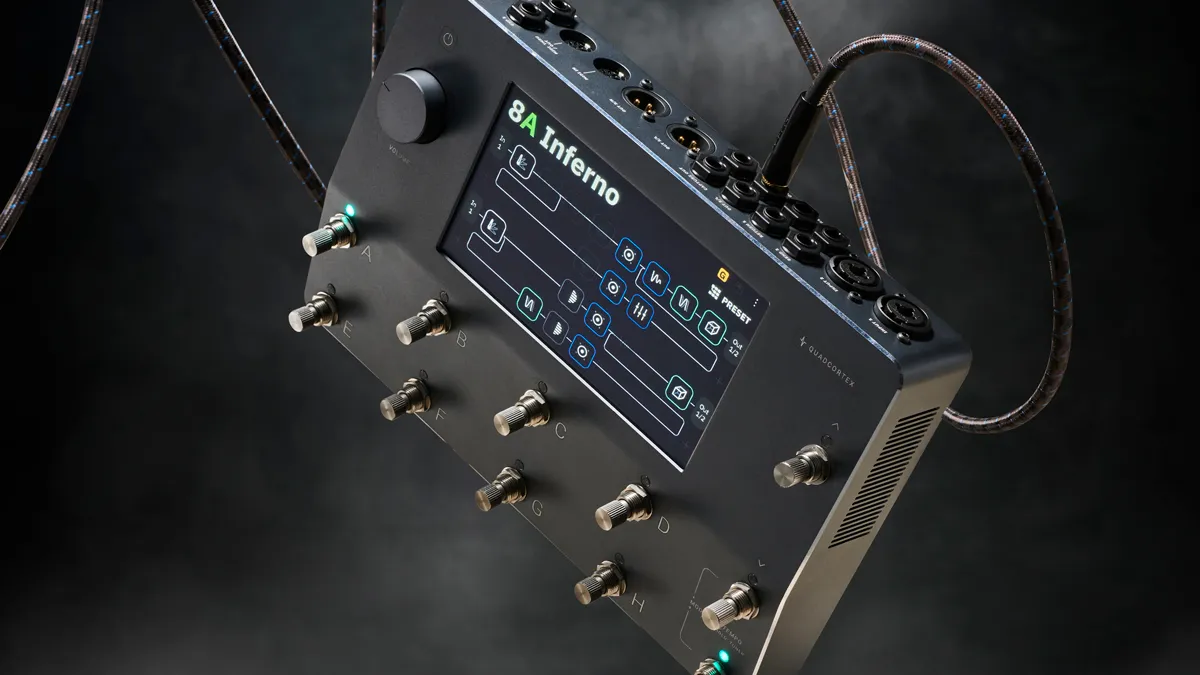
Neural DSP’s Quad Cortex has been on the market for a little while now, but it remains the best amp modeler overall. This neatly-formatted little box contains multitudes – and multitudes more than it did at launch, too, thanks to an active programme of firmware updates that continue to revolutionise its capabilities.
Fundamentally, the Quad Cortex is a hugely powerful amp modelling machine, with beefy computational innards and a deep UI enabling all manner of record- and gig-ready fenaglings. You can build up to 256 of your own presets from a cornucopia of pre-existing amp models, effects and utilities; scene mode is smart for allowing you to create eight different sub-versions of the same core signal chain, allowing you to bank between presets of a preset – and giving you eight times more presets for your money. Cool!
And if the existing (and, if we must say it, excellent) amp models aren’t enough, a crucial component of the Quad Cortex sauce is its Neural Capture capabilities. The revamped Neural Capture V2 allows you to print the sounds not just of your own amps, but also hardware like distortion pedals and even compressors – and all you need is about a half-hour of time.
There’s so much more to say, and indeed to love about the Quad Cortex, from its user-friendly touch-screen to its clever footswitches-cum-encoders. But maybe this will suffice: as far as functionality is concerned, the Quad Cortex is a difficult amp modeler to supersede.

"A digital all-in-one rig with seemingly limitless possibilities, top-quality sounds, and a user experience that makes tweaking both rewarding and pain-free, the Quad Cortex represents a new standard for floor-based amp modeling and multi-effects units."
Read the full Neural DSP Quad Cortex review
Best for gigging

✅ Buy it if you’re looking to simplify a complex gigging rig: Sometimes, your band asks for much more of you than just playing sick riffs. The Line 6 Helix Stadium XL Floor is the comprehensive answer, with its own DAW and powerful multi-amp modelling signal chain capabilities.
❌ Avoid it if you’re a simple player with simple needs: Not every guitarist needs to automate light shows and play multitrack song recordings with their pedalboard. If you’re just after something that models some amps well, you can get away with something far smaller and far cheaper.
Line 6 has been in the modelling game for some time now, having kickstarted myriad arguments over the future of digital guitar effects with its divisive POD way back when. In recent years, Line 6 has managed to rehabilitate the concept, with the excellent Helix range of modelling effects units. This is the latest, biggest, and baddest (complimentary).
The Line6 Helix Stadium XL Floor is less an amp modeler, and more a- well, I’m not sure there’s a word for it. It’s kind of everything – from multi-effects to amp modelling to cab simulating, with more I/O than your limbs could ever justify, and with a built-in DAW that can run your whole show. Including the lighting. Not kidding.
This maximalist state of affairs lends itself unapologetically to the stage, where backing tracks and timed MIDI automation can be handled by the same thing that’s emulating a Marshall stack. Speaking of which, the amp modelling (you know, the reason we’re here) is top notch, assisted by the new Agoura modelling methodology that promises more dynamic interactivity, and hence more three-dimensional reflects of amps as they respond to different cabs and different play-styles.
Realistically, not every gigging guitarist will need every feature on display in the Line 6 Helix Stadium XL Floor. That said, a great deal of them are time-saving, gig-saving prospects – and besides, the Stadium XL is a hugely intuitive piece of kit on which to rely for a show. If you only want to bring one thing on tour with you besides your guitar and your spare underwear, this is undoubtedly it.

"Line 6 was always going to have a tough job following up on the Helix. The original unit garnered many fans, meaning the sequel has a high bar to hit. With new amp models that feel lively under the fingers, increased processing power, a massive touchscreen, and a host of other features that not only modernize the Helix Stadium but also make it one of the most user-friendly pieces of modeling gear on the market, the Stadium XL Floor easily surpasses its predecessor and is a great choice for any working guitarist."
Read the full Line 6 Helix Stadium XL Floor review
Best for pedalboards

✅ Buy it if you want your pedalboard to handle everything: The Fractal Audio AM4 is a great hybrid piece of kit, willing to interface well with your existing pedalboard and replace your amps in the process. It’s the perfect option for slimming down a gigging rig without going all the way.
❌ Avoid it if you want something all-inclusive: The AM4 is a great mid-range amp modeler, and resultingly a little light on processing power beyond the amp-y needs you may have. As such, you can’t have quite as many effects blocks in before your amp as you might like.
Fractal Audio is the brand responsible for the Axe-FX III, one of the most successful amp modelers on the market to date. At least, if we regard quality as a primary signifier for success. The Axe-FX III became a firm favourite amongst professional touring guitarists and recording studio engineers, thanks to the simultaneous breadth and depth of the modelled amps and effects on display. Fractal Audio’s latest, the AM4, is everything good about the Axe-Fx III and more.
For its size, the Fractal Audio AM4 could well be the best bang-for-buck amp modeler on the market. It doesn’t take up nearly the same amount of space as its larger floorboard-y competitors, and yet it goes toe-to-toe on amp tones and internal shenanigans. It folds Fractal Audio’s renowned Cygnus X-3 amp-modelling architecture, exactly the same as that found in industry-standard predecessor Axe-FX III.
But what does this mean, practically? Well, 247 amps on tap, more than 45 cab IRs available from the jump, and over 325 effects from which to choose – 77 of which are faithful emulations of existing drive circuits. These effects and amps can be arranged in four ‘blocks’ per preset, the amp block of which is capable of holding four amps at a time; switch between them using the footswitches, and you’ve instant access to more backline than J Mascis.
With the AM4, Fractal Audio has been smart. There are plenty of excellent, comprehensive amp modelling motherships on the market, but not all that much in the way of lethal, compact fare. The AM4 is an excellent chrysalis of versatile utility and space-saving smarts in one tour-friendly box. Stereo in, stereo send/return and stereo balanced outputs are a godsend. A missing XLR output, for ease of tour-friendly workflow, is a small shame – but one of the small sacrifices made for a truly astounding little box of big tricks.
"Sporting Fractal's renowned Cygnus X-3 amp modeling, the AM4 is a very capable, compact modeler at home on any professional pedalboard. The modeling is backed up with an expansive selection of highly tweakable effects, and at a relatively competitive price point to boot. The compromise is that it is not the easiest to use; however, in this case, the manual diving is well worth it."
Read the full Fractal AM4 review
Best micro modeler

✅ Buy it if you have limited pedalboard real estate: This dinky little pedal carries a lot of weight for its size, including hands-on control for a three-band EQ and three separate utility effects.
❌ Avoid it if you’re an explorer of sound: Despite the humongous size of the TONEX amp model library, the ONE can only harbour 20 – and even then, you can only access two while actively playing the guitar via the footswitch.
IK Multimedia is one of the foremost names in amp modelling, its TONEX brand a virtual mainstay for studio and home-studio recording. Seasoned producers, audio engineers on the rise and independent noodlers alike use IK Multimedia’s world-class amp models, whether via the popular Amplitube plugin or the newer TONEX architecture. Now, that same world-class amp modelling can be accessed via a pedal smaller than some tap tempos.
The TONEX ONE is a micro-format effects pedal, which houses 20 “Machine-Modeled” amp presets courtesy of the TONEX line-up. Using the TONEX Editor Mac/PC programme, you can manage which presets you access via the single footswitch, as well as global parameters for each preset; you can also access a far wider library of amp tones to swap and change as you please, via the TONEX Librarian area.
A neat little touch with the TONEX ONE is that you don’t have to slave the pedal to a single amp tone, nor do you need to rely on the app to switch presets or tweak things. The footswitch can be used to A/B two different presets, and there are knobs for all the essentials, from three-band EQ to controls for a one-knob gate, compressor and reverb each – the veritable glue that ties your tone together. You can also browse between all 20 on-board presets via a shift-style menu selector.
As with any micro-format budget pedal, the TONEX ONE makes its own fair share of compromises. Being tiny, there’s only so much effect-tweaking you can do – and the single footswitch means either bypass or switching between two tones, but not much more. The output was never going to feature XLR connectivity for DI functionality, either; it does have a TRS output, but this is either stereo or unbalanced mono. Still, you’re gaining access to a world of powerful amp modelling, via a tiny pedal that offers more than it needs to. It’s mini, yet mighty!

"The Tonex One isn’t far off the cost of a starter amp and boasts convenience, great sounds, and a huge range of additional options if you connect it to a computer. The most powerful amp modeler for its size, bar none."
Read the full IK Multimedia TONEX ONE review
Best for beginners

✅ Buy it if you’re a beginner guitarist: Never before has so much been crammed into a Boss multi-effects unit at such high quality. It’s a starter kit for instant tone, from a huge library of famed Boss effects to a usable variety of realistic amp tones. And it’s an audio interface!
❌ Avoid it if you’re already invested in audio gear: The Boss GX-1 is a slam-dunk for newer guitarists, but doesn’t offer quite enough to the guitarist that already has a pedalboard or guitar rig – including the amp models, which aren’t worth the price of entry alone.
Boss was always going to find its way into this round-up, one way or another – and with the GX-1, it’s found the best possible way to do so. This new floorboard-format modeler is more a multi-effects device than anything, with 143 different effects from the Boss oeuvre (as well as a well-appointed and highly nifty looper. Crucially, though, at the end of the figurative chain is a powerful amp modeler with 23 different amps to trial.
These 23 presets are serviced by Boss’ proprietary AIRD technology, which stands for Augmented Impulse Response Dynamics. Catchy! AIRD is a modelling system that treats amp models and cab sims as a dynamic, interwoven whole. As such, speaker IRs and amp models are integrated more effectively, resulting in a more responsive playing experience. A slight surprise here is Boss’ additional amenability to your uploading of your own cab IRs; you can throw in your own WAVs and shape your tone far more accordingly.
There’s no DI output or power amp on board, but the 1/8” headphone output makes this moot for at-home players. Couple this with the Boss Tone Studio app, which can control parameters and stream audio via Bluetooth, and you’ve got a handy all-in-one for practicing your playing! There’s also a USB-C connector that converts the GX-1 into a handy audio interface – so at-home players can use their DAW to monitor and record their playing with ease.
All this and more is politely stuffed into a decently compact form factor that’s also lightweight enough not to trouble your gigging arms any more than needed. The Boss GX-1 is an excellent entry-level amp modeler and a great choice for beginners.

"For beginners, I think the Boss GX-1 is a great choice. The build quality is outstanding, and the number of features gives younger and new players plenty to grow into. The sheer number of options in terms of amps and effects models means they’ll have the best possible playing platform going forward. That said, for experienced players looking for a cheap multi-effects unit, you may find the amp models limiting."
Read the full Boss GX-1 review
Best mid-range modeler
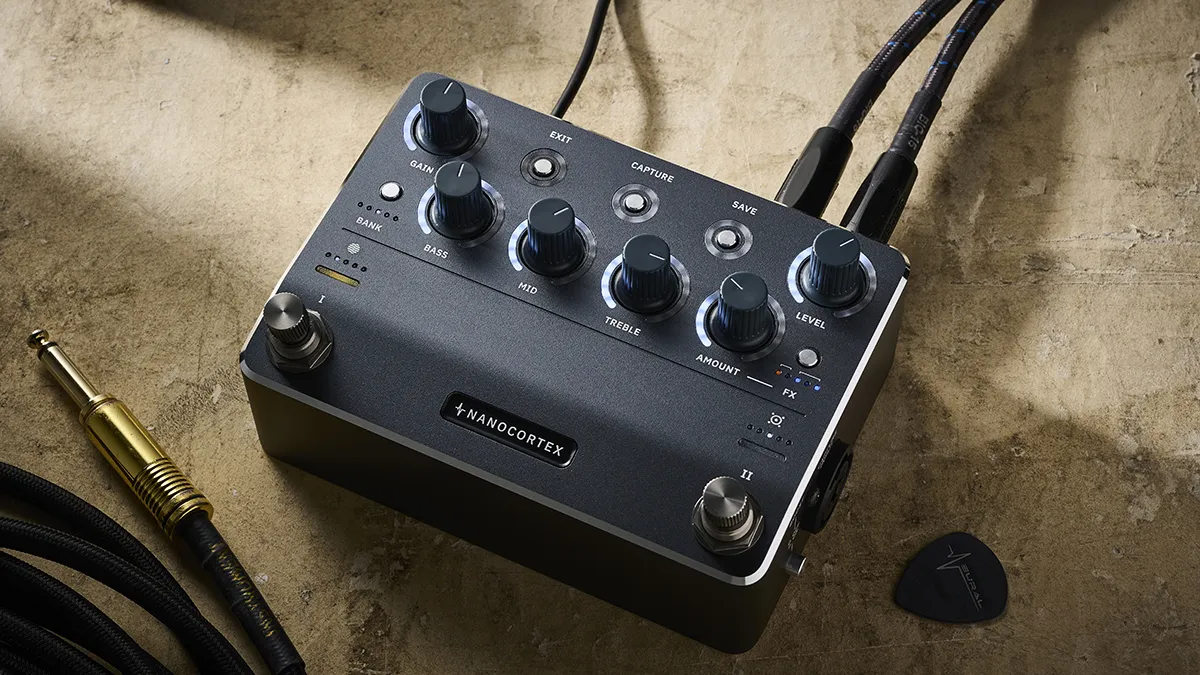
✅ Buy it if you want uncompromising sound at a budget: The asking price for the NeuralDSP Nano Cortex is very low indeed, particularly for the strong Neural Capture tech harboured within.
❌ Avoid it if you tinker with signal chains: This is a player’s modeler, in that there’s no screen or easy onboard UI to mess with effects chains beyond basic per-effect parameters.
Neural DSP is already at the top of this guide to the best amp modelers, thanks to its comprehensively-brilliant Quad Cortex. The Quad Cortex, though, is correspondingly expensive; what if, in a trade for some less-essential features, you could have that powerful Neural DSP architecture for less? The brand themselves answered that question with the Nano Cortex, a mid-range amp modeler with almost all the smarts of its large-scale predecessor.
The Nano Cortex is a smaller device than the Quad Cortex, and does away with the customary screen in favour of an all-knobs interface, augmented by LED gauges and selector readouts. It’s naturally a little harder to parse than something screen, but Neural DSP have accounted for that (and further slimmed the asking price) by applying some handy, loose restrictions to signal chain. Besides which, there’s a handy companion app in the Cortex Cloud that you can use for ease of managing presets.
The Nano Cortex is a cut above, also, for its Neural Capture capabilities. Using on-board technology, you can image your own gear and save it for later use. Though there is a more advanced Neural Capture V2 function on the big-brother Quad Cortex, the Nano Cortex can still play those V2 captures – and it won’t be long before it can create them, either.
This is because the Nano Cortex, like any frontline amp modeler worth its salt, is receiving regular updates with new effects, models, IRs and features. With the perfectly cromulent onboard I/O and a host of user-friendly controls, this mid-range modeler is certainly up there.

"The Nano Cortex might not be perfect, but with the help of a breezy app, an expansive new update, and some world-class features, it very nearly is. As a compact amp modeler/cab simulator/capture device, this is perhaps the best option out there, screen or no screen."
Read the full Neural DSP Nano Cortex review
Best amp-style modeler

✅ Buy it if you want to power a cab: Amp modelling doesn’t have to mean going fully ampless; the Kemper Profiler PowerHead MkII enables you to make the most of clever amp profiling without losing the comfort of stage volume.
❌ Avoid it if you want a pedalboard at your feet: The Profiler PowerHead MKII takes after an actual amp head for a reason. If you want instant control over the huge variety of effects offered by the Profiler MKII software, you’ll need an additional Kemper floorboard to do so – or sacrifice the power-amp for the pedalboard-format version.
The original Kemper Profiler was a disruptive presence in the guitaring world – as evidenced by the rave review we gave it back in 2013. A lot has changed since then, though – and at long last, Kemper has recognised it with a direct sequel to the Profiler amp head-style modeler.
Kemper might take umbrage at being considered a maker of amp modelers, given the brand’s commitment to the dynamics of their profiling system (the closest analogue to which is Neural DSP’s Neural Capture). But it’s a broad industry, and one in which static algorithms invariably rub shoulders with dynamic captures. The Profiler PowerHead MKII promises even more advanced profiling than the previous iteration, with deeper dynamics and more fine-tuned calibratory precision.
Amongst the upgrades, a whopping 20-effect virtual signal chain – seven more than the MKI – and the promise of an expanded effects library too. This is not just every amp rig in a box; it’s every pedalboard too. It’s also an interface, with the capabilities of multitracking audio straight into a DAW.
Kempers are industry-standard gigging and studio fare for a reason, but for me the PowerHead stands out for its inclusion of a 600W power amp. While most amp modelers don’t bother with actual amplification (and rightly so), this Kemper does, giving you flexibility in a difficult stage or studio environment, as well as the option to monitor your own playing without invoking DI boxes, headphones, and the like. In all, the Kemper Profiler PowerHead MKII is a delightful demonstration of skeumorphic smarts.
"The look may not be for everyone, and the small LCD screen makes the Kemper MK2 feel a little dated compared to the competition, but it delivers when it comes to tone. With new Profiling 2.0 leading the way, and a suite of high-end effects, it is a formidable competitor in the digital amplification world, once you get that initial learning curve out of the way."
Read the full Kemper Profiler PowerHead MKII review
Best for Fender amp sounds

✅ Buy it if you’re a Fender-head: Unsurprisingly, the Fender-branded amp modeler is an excellent source for all sounds Fender.
❌ Avoid it if you want to profile your own amps: Not a common want from guitarists, but many competitor modelers have their own on-board capture process, enabling you to write your own idiosyncratic amp tones to a new custom model.
When we’re looking for the best amp modelers, a not-insignificant number of us are unavoidably looking for something Fender-y. Fender is, after all, one of the most popular amp brands on planet Earth, and the basis off which so many other amp-makers model their own designs. If it’s Fender sounds you want, why not go right to the source?
The Fender Tone Master Pro is a floorboard-style amp modeler with a huge array of Fender-made amp models to its name, all of which are the most accurate Fender-y sounds you’ll ever find as stock in a piece of kit. Couple these with the thousands of cab and mic IRs Fender have captured, and a flotilla of effects and utilities to build presets with, and you’ve quietly one of the workhorsiest amp modelers going.
This is a truly extensive piece of guitar hardware, even outside of the Fender name and related promises. You need only look at that well-populated rear I/O panel to find out, with its arrays of mono and stereo effects loops, varied outputs, 5-pin DIN MIDI connectivity, and even a combi XLR-TS input that accepts mics as well as supplementing a stereo input.
Surprisingly, that mic input also has phantom power – a small inclusion, but huge in context. You would think this input would suit the Tone Master Pro perfectly for amp model captures, but sadly it’s not to be. You’ll just have to settle for the constant, consistent firmware upgrades, which bring with them new models, IRs, and even expansions to effects and features (from adding a poly pitch shifter, to extending the on-board looper’s max loop time from 60 seconds to 3 minutes). Thanks, Fender!

"Fender might be late to the amp modeling floor party, but that slow start pays off with a unit that is quite possibly the best in its class and price point."
Read the full Fender Tone Master Pro review
Best on a budget

✅ Buy it if you want to experiment with cab IRs: It’s still something of a novelty to see IR technology at the budget end of the figurative pedal-wedge, but here we are – and the DNAfx GiT is a very intuitive interface with which to experiment with your own cab sounds.
❌ Avoid it if you want a full pedalboard-in-a-box: Though the DNAfx GiT is a multi-effects box at heart, it isn’t fantastic at it. This is with thanks to some less-inspiring dirt sounds, and the processing delay that can happen when banking between effects-heavy patches.
Harley Benton is a go-to for all things cost-effective. Its guitars are surprisingly decent, as are a variety of amps and effects that come under Thomann’s house brand. It’s no surprise, then, that Harley Benton’s tackled the amp modeler too.
There’s a whole range of multi-effects pedals under the DNAfx GiT umbrella, but this is the flagship: a two-footswitch, expression-pedal equipped workhorse with 55 different amp models, 26 different cab IRs and over 150 effects at its disposal. It’s handier than some more expensive modelers on the market, in that you can stack nine different effects into a virtual signal-chain preset before an amp and cab.
My favourite feature in this budget-priced modeler is the IR loader. Even at this low price point, you can benefit from loading up and trying out your own cab IRs. If that’s not enough, there’s a USB-B port for connecting to your computer and turning the DNAfx GiT into an audio interface.
It’s not all sunshine and rainbows, of course – with something this inexpensive, there’s always a caveat, and the biggest one (outside of lackluster digital distortions reminiscent of the 00s) is the processing delay when switching between effects-laden presets. Still, built-in expression and IR loading is not to be sniffed at in such a cheap and effective modeler.

"Okay, the DNAfx GiT isn’t exactly groundbreaking, and certainly won’t win any awards for its high-gain tones, but at $171 (or £129), for 55 amp models, 151 effects, and a looper, it can’t be denied that it offers undeniable value for money."
Read the full Harley Benton DNAfx GiT review
Also tested
How to choose

With a wide variety of the best amp modelers to choose from, it’s hard to narrow down your options. Using these criteria, you can figure out exactly what it is you’re looking for.
Live, in the studio, or both?
Think about when and where you’ll be using your amp modeler. If you’re after something mostly for live use, then a unit with footswitches built in will likely be useful. This allows you to change between various different amp models or presets quickly and easily. Something like the toaster style Kemper Profiler Head is less suited to live use, unless you buy the separate floor pedal to control it with. I/O also comes into play here; you’re more likely to want XLR DI outputs on stage than you are in a studio flush with DI boxes!
Powered or unpowered?
If you’re investing in one of the best amp modelers for guitar, then you’re going to want to hear it. Most amp modelers are not amplifiers, though; instead, they model them, and give you the freedom to amplify them as you choose.
If you’re using one for recording, then you’ll probably use it through an audio interface (or indeed as an interface, as many have USB audio capabilities), and hence hear the results through your monitor speakers. If you’re using one on stage, you’re more likely to send a DI output straight to the FOH desk, and monitor your sound either using your own monitor rig or through the provided monitor wedge.
This isn’t to say that amp modelers can’t be amplified conventionally, though. Indeed, modelers with amps built-in do exist, as evidenced by the Kemper Profiler PowerHead MkII. In most cases, though, you’ll need a powered and transparent speaker cab to make the most of the amp sounds and IR cab sims you have access to. You can check out our list of the best FRFR speakers for exactly that purpose here, Alternatively, you’ll need some kind of external solid-state power amp, like the Orange Pedal Baby or the Seymour Duncan PowerStage to hear it through regular cab.
Sounds
This list of the best amp modelers contains some high-end units. The Line 6 Helix, Neural DSP Quad Cortex, Kemper Profiler and Fractal Audio AM4 all sound near-indistinguishably incredible, and have collectively been on more records than you would otherwise count on. They can all nail different tones very well, too - cleans, overdriven crunch, high gain sounds - everything. You can also customize the sounds to your exact liking, with lots of different amps, cabs, virtual mics and effects to choose from.
These usually come with a hefty price tag that isn’t realistic for everyone. More budget modelers are available, which offer guitarists some amazing sounds for all kinds of music for less, albeit at the expense of certain modern conveniences. The Neural DSP Nano Cortex, for instance, is much cheaper than the Quad Cortex and similarly excellent on the sound front – but there’s no screen, limited signal-chain variability and fewer memory slots to benefit from.
User Interface
When picking the right amp modeler for you, look at the interface. When you talk to users of the Kemper, Quad Cortex, Helix etc, you’ll find that a lot of them opted for their unit based on how you get to the different sounds, not the actual sounds themselves (as they’re all very good). Are you more comfortable scrolling menus, using a touch screen or navigating with old-school buttons and knobs? The UI that fits your workflow best is the one you can navigate most intuitively.
Technical considerations
Finally, there’s the nitty-gritty: the tech specs. This is much less of a concern than it used to be for digital effects and amp modelling, but still worth considering. You might even boil it down to speed; some modelers take longer to boot up than the average PC, and can also lag when switching between effects-heavy presets. If you’re not in the studio, this could present some roadblocks to your performance.
Measuring tech specs against your needs is less daunting than it seems. Just pay close attention to the I/O on the back of each unit, and make sure it fits your ideal rig; also, consider your typical use case, and measure the benefits of certain features against the time delays they could create.
Glossary
- Amp modelling: The practice of simulating a given amp’s tonal and dynamic characteristics for use in recording or performance. Amp modelers carry a wide variety of emulated amps, whether sanctioned stage-by-stage virtual reconstructions of an amp’s circuitry and behaviour, or an algorithmic approximation of a recognised style of amp.
- Convolution: A mathematical principle that calculates the effect of one function applied to another. This principle is used in amp modelers and digital effects to apply the characteristics of real-world sounds and spaces to an audio signal. Impulse responses, taken from recording a click or sine sweep through a guitar cabinet, carry the sound of that cabinet; convolution enables an amp modeler to apply those characteristics to a guitar’s signal. Convolution is also used to great effect in capturing real-world reverbs, from analog reverb devices to rooms, chambers and halls.
- Cab simulation: The emulation of the tonal characteristics imbued by a guitar amp’s speakers, typically using IR (impulse response).
- CV: Control Voltage, referring to the independent control of a device’s parameters using an external voltage source. CV is a common find in synths and modular synthesis, but increasingly used by pedals, multi-effects and amp modelers to enable automated parameter changes or expression.
- DI: Stands for Direct Injection (or Direct Input). DI outputs are used to interface unbalanced instrument-level signals directly with mixing desk inputs or outboard gear; they create a balanced signal, and alter the impedance of the signal to better match the expectations of the destination.
- Expression: The external control of an effect’s parameters by way of a footpedal, dial or rocker. An expression pedal plugs into a device, granting control of part of it beyond the knobs or selectors on the device itself. In an amp modeler, expression might be used to slow or speed the rate of vibrato in a Twin Reverb-based sound preset, or the depth of the reverb.
- FRFR: Stands for Full Range, Flat Response. FRFR speakers are the ideal destination for amp modelers with built-in IR cab simulation, as a transparent medium for communicating their output.
- IR: Stands for Impulse Response. IRs are audio files, of clicks or sine sweeps as recorded through a piece of equipment or in a space. The characteristics of the space as recorded in an IR can be applied to an audio signal using convolution. Amp modelers ship with IRs of various different guitar cabs, capturing their unique tonal characteristics and giving your guitar access to them without the need for the ‘real thing’.
- MIDI: Stands for Musical Instrument Digital Interface. MIDI is a universal system of digital communication, used so that different devices can ‘talk’ to one another. MIDI instruments share and send information on musical notes, including pitch and velocity; effects pedals tend to use MIDI to send and receive control messages. In the context of amp modelers, MIDI controllers can be used to bank up and down through a list of amp sound presets, amongst other things.
- TS/TRS: Types of analog audio connector. TS stands for Tip-Sleeve, referring to an unbalanced connector; the sleeve is the ground, and the fluctuating voltage between sleeve and tip describes the audio signal flowing through the connector. TRS stands for Tip-Ring-Sleeve, and can be used either for passage of balanced audio signals, or unbalanced stereo signals. In amp modelers, TRS connectors are most commonly used for stereo audio input or output, but can also be used as balanced DI outputs for recording into an interface or sending to a live desk.
FAQs

What is an amp modeler?
An amp modeler is a guitar effects unit that replicates the tonal and dynamic characteristics of different guitar amps. They come in various formats, from pedals and floorboard devices to rackmounted and amp-style units.
Typically, amp modelers contain a variety of different amp sounds and profiles, with options to change various parameters for each amp and even to save your own presets. Some will further offer a variety of classic and oblique pedal effect sounds, with the ability to create your own virtual signal chains. The vast majority include IR cab simulators, to provide the complete sound of a guitar through an amp-and-cab rig – but virtually.
Digital amp models are typically designed ground-up, as a digital like-for-like of a given amp circuit – accounting for specific stages of circuitry and how they behave. Some devices, though, enable you to use or even create your own amp ‘captures’, which are algorithmic models built from reverse-engineering the sound of a real-world amp at its present settings.
Amp modelers are a good option for guitarists that want access to different amp sounds and effects while on tour, or even just for accessing an amp tone without having to bring that amp on the road with them. If you’ve ever tried to lift a Fender Twin up a flight of stairs, you’ll know the value of having a realistic Twin sound on your pedalboard at a fraction of the weight.
Amp modelers are also great studio companions, particularly if you’re a home studio musician on a budget. Whether using an existing library of profiled amps, or adding your own impulse responses, you can experiment with a much wider tapestry of sounds than you might otherwise have access to.
Are amp modelers the same as modelling amps?
Here, we’re talking about the best amp modelers, not the best modeling amps. There are certainly similarities: they both essentially do the same thing, which is to replicate the sound of other amps; they are also versatile, allowing for a variety of different tones. Standalone modelling amps, though, are different in that they also contain power amps with speaker outputs, or even their own speaker cabs – like the BOSS Katana, Positive Grid Spark, or Line 6 Spider. They are, ultimately, amps.
Amp modelers, meanwhile, are there to emulate the sound of an amp and/or cab alone, not to amplify it, Amp modelers can interface directly with an audio interface input, or with a mixing desk via DI output; either way and otherwise, they ultimately require external amplification of some kind.
Do amp modelers sound as good as real guitar amps?
The question of whether or not amp modelers sound as good as the Real Thing™ is a hotly-debated one, despite the fact that the answer is now essentially “yes”. Before this controversial assertion earns me a flood of pitchfork-toting tube-amp enthusiasts baying at my door, some context: up until relatively recently, amp emulation technology was not always good.
Most people’s first experiences with amp emulation came from cheap digital multi-effects, with unconvincing and lacklustre attempts to put popular amp tones in your signal chain. In the recording world, amp emulation VSTs were a little better, but nowhere near competitive with real analogue hardware and a well-treated live room.
Today’s amp emulation landscape is a very different kettle of fish, though – to the point that, in many cases, emulated amps in recordings are near-indistinguishable from the real thing. Even if low-budget amp modelers still don’t quite pass the sniff test for many guitarists, they remain a much more accessible way to trial sounds and bring rare tones out to shows.

How do impulse responses work?
Many amp modelers use IRs, or impulse responses, to emulate the tonal characteristics of guitar speaker cabinets, or of cabs in spaces. IRs are, essentially, audio recordings of a click or sine sweep through those guitar cabinets or in those spaces using microphones in different positions. Fancy maths (called convolution, for the curious) is used to isolate the effects of the cab or space on the sound, and to apply those effects to an incoming audio signal in real time. The result is a convincing representation of you playing through that guitar cab, or in that space, with that microphone in that position.
IR technology has been used in amp modelers and cab simulator pedals for some time, but as guitar pedal tech continues to get more sophisticated, so too do their capabilities expand. Early IR pedals weren’t able to handle IRs beyond a certain length, ruling out anything but cabs and tight room sounds; today, pedal-format IR reverbs are possible, allowing you to take any reverberant space and put it at your feet.
Do I need a speaker for my amp modeler?
If you have an amp modeler, do you need a ‘real’ amp at all? Again, this depends on context. Fundamentally, amp modelers are here to replicate the tonal characteristics of amplifiers; they do not provide the same literal amplification of sound. In most cases, you’ll need something else to do that amplifying for you.
If you’re just emulating the tone of an amp head, you might pick a solid-state power amp with a clean, ‘transparent’ sound to get your real-world volume. If your pedal has IR cab simulation, you won’t want to muddy it with the tonal characteristics of another guitar amp’s drivers; many amp modeler users will use a powered FRFR cab to get a completely neutral representation of their pedalboard’s output, ensuring their modeler’s sound is preserved.
Not everyone needs their own amplification, though. If you’re noodling at home, or if you’re recording into a DAW at the studio, you could be just fine plugging it into your audio interface or the mixing desk, and listening through headphones or your monitor speakers. Even if you’re playing at a venue, you might use a DI output to send your sound straight to the desk for mixing, and have the FOH engineer send your signal back to your wedge monitors so you can hear yourself on stage (or build your own band’s monitor rig to handle that yourself).
Are amp modelers good for beginners?
Amp modelers are an excellent choice when it comes to beginner guitar players, for a number of reasons that fold into one another quite neatly. Firstly, as a newer guitarist, you’re less likely to know exactly what it is you like, tone-wise. You’ll have taste in spades, but much less in the way of practical experience with amps and effects. Amp modelers are ultimately a low-cost option for trialling different sounds, until you find the sounds that work for you, your playing style, and your wider taste.
Indeed, cost is a considerable criterion here too. It will come as no surprise to even the greenest of guitarists that sought-after tones come at a price. Even some of the most popular amp sounds of the 20th century are an expensive get, whether you like the idea of a Fender Twin Reverb or a Dumble.
And this is before you consider the maintenance required in older amplifiers, especially tube amps. Replacement tubes, visits to amp techs and days of chasing hums, crackles and flutters await you if you’re dead-set on an older amp – issues that seasoned guitarists may have a little more patience or knowledge to handle, if not just other amps to fall back on.
The one count there is against amp modelers as beginner-friendly devices is the learning curve inherent to some of them. The more advanced amp modelers are guilty of endless menus, countless parameters and a variety of IO options far beyond the needs of the newbie. That said, there’s a wide variety of amp modelers on the market, some of which are plug-and-play affairs. All told, an amp modeler is the lower-risk, lower-effort and more accessible way to try out and play out with different amp sounds.
What makes the best amp modeler?
There is no one objective best amp modeler – but there are a variety of different amp modelers available, a fair few of which could be described as the best at specific things. The one that works best for you depends heavily on what you’re actually looking for.
As a beginner guitarist looking for a lightweight introduction to amp emulation – and a cheaper alternative to expensive hardware – you’ll want something relatively simple. You won’t need more than an input and an output, and, truth be told, the less knobs to contend with in favour of getting good sounds, the better. Something like the IK Multimedia Tonex ONE stands out, for being low-profile, simple to use and an excellent catalyst for accessing various amp tones.
As a more seasoned guitarist in search of a gig-friendly amp-modelling platform, you’ll want more on-board tweakability and some robust I/O. The best gigging amp modelers, then, have knobs and footswitches aplenty for dialling in and switching between patches, and balanced DI outputs for quality-controlled delivery of guitar signal straight to the FOH desk.
The Line 6 Helix Stadium XL Floor is a great shout for this, being large enough that tapdancing isn’t a risk, and well-appointed with I/O for any stage-side need.
For the seasoned guitarist after a comprehensive at-home rig, or something to take along to recording sessions, variety and versatility are both, respectively, the word. The best amp modeler here would be a set-up that can handle any and every type of signal chain, and that offers a wide variety of existing presets as well as the option to add your own; ease of use can take a backseat, as time is not so much of the essence; something like the NeuralDSP Quad Cortex would be ideal.
There is, of course, a great deal of overlap between these archetypes – and a lot of subjectivity besides. Ultimately, you need an amp modeler that meets your own personal requirements. And you can rest assured that the perfect modeler for you undoubtedly exists.
How we choose

Here at Guitar World, we are experts in our field, with many years of playing and product testing between us. We live and breathe everything guitar and bass-related, and we draw on this knowledge and experience of using products in live, recording and rehearsal scenarios when selecting the products for our guides.
When choosing what we believe to be the best amp modelers available right now, we combine our hands-on experience, user reviews and testimonies and engage in lengthy discussions with our editorial colleagues to reach a consensus about the top products in any given category.
First and foremost, we are guitarists, and we want other players to find the right product for them. So we take into careful consideration everything from budget to feature set, ease of use and durability to come up with a list of what we can safely say are the best amp modelers on the market right now.
Read more about our rating system, how we choose the gear we feature, and exactly how we test each product.
Why you can trust us
☑️ A global audience of 3.8 million monthly
☑️ 1,200+ reviews on GuitarWorld.com
☑️ 30+ years of product testing at Guitar World
Guitar World boasts over 44 years of expertise and stands as the ultimate authority on all things related to guitars. The magazine and website feature expertly written gear round-ups and top-quality, authoritative reviews penned by a team of highly experienced industry professionals.
Guitar World's inaugural print issue hit the shelves in July 1980, and ever since, it has been captivating players and enthusiasts with engaging lessons, insightful interviews with the biggest guitar heroes, and priceless buying advice for newbie players.
Furthermore, GuitarWorld.com continues this legacy online and serves as the hub of the world's foremost authorities on guitar playing. The site not only hosts content from Guitar World but also showcases articles from respected publications such as Guitarist, Total Guitar, Guitar Techniques, and Bass Player. With a reach extending to 3.8 million players each month, GuitarWorld.com is a go-to destination for guitar fanatics globally.

James Grimshaw is a freelance writer and music obsessive with over a decade of experience in music and audio writing. He's lent his audio-tech opinions (amongst others) to the likes of Guitar World, MusicRadar and the London Evening Standard – before which, he covered everything music and Leeds through his section-editorship of national e-magazine The State Of The Arts. When he isn't blasting esoteric noise-rock around the house, he's playing out with esoteric noise-rock bands in DIY venues across the country; James will evangelise to you about Tera Melos until the sun comes up.
Daryl is a Senior Deals Writer at Guitar World, where he creates and maintains our 200+ buyer's guides, finds the best deals on guitar products, and tests the latest gear. His reviews have been featured in prominent publications like Total Guitar, Guitarist, Future Music magazine, and MusicRadar.com.
During his career, he has been lucky enough to talk to many of his musical heroes, having interviewed Slash and members of Sum 41, Foo Fighters, The Offspring, Feeder, Thrice, and more. In a past life, he worked in music retail. For a little under a decade, he advised everyone from absolute beginners to seasoned pros on the right gear for their needs.
Daryl's world doesn't just revolve around guitars either; he also has a passion for live sound. Daryl is a fully qualified sound engineer who holds a first-class Bachelor's degree in Creative Sound Production from the University of Abertay and has plenty of experience working in various venues around Scotland.
Latest updates
09/02/26: We have completely overhauled this page, added all new products based on our latest reviews, and added more in-depth information and clarity to our buying advice section to help you make a more informed decision on your purchase.
Related buyer's guides
You can trust Guitar World Our expert reviewers spend hours testing and comparing guitar products so you can choose the best for you. Find out more about how we test.
- Check out the best Tube Screamer clones
- Or spend a bit more on the best guitar amps under $1,000
- The skull-crushing best metal guitars on the planet
- Seek and destroy with the best amps for metal
- Freedom on a budget: the best cheap wireless guitar systems
