


“My very first real job interview out of college was with Fender as a PR assistant. I didn’t get the job! Everything really has come full circle for me.”
Edward ‘Bud’ Cole ain’t kidding. Today, Guitar World can exclusively reveal that the longtime President of Fender Asia Pacific is taking over as CEO of Fender Music Corporation. He replaces current leader Andy Mooney, who is retiring after 10 years at the top.
It’s quite a turnaround for the aspiring musician who couldn’t get his foot in the door 30 years ago.
“It’s incredibly humbling,” Cole tells me from his current office in Tokyo, Japan. “It’s a pretty heavy responsibility. With the exception of my daughters being born, I can’t think of another moment of such great joy. I couldn’t be more honored to be the next steward-leader of Fender Music Corporation.”
Cole has earned his dues. As head of Fender Asia Pacific for more than a decade, he rebuilt Fender Japan from an afterthought into arguably the coolest wing of the storied American company.
Along the way, he expanded into 14 countries across the region including China and Korea. Then, bringing in experience amassed from his time at luxury consumer brands Ralph Lauren and Pernod Ricard, he masterminded the opening of the company’s flagship Tokyo store – still the only dedicated Fender retail space in the world (for now).
Crucially, he’s a player, too. A graduate of the ’90s Arizona music scene that launched the likes of the Gin Blossoms and Jimmy Eat World – not to mention Fender’s current President of Americas, Justin Norvell – Cole identifies as a strummer and a songwriter. His band, Rain Convention, recorded hundreds of songs and opened for Radiohead in the early ’90s. He still writes regularly, and helps artists, from newer names to “some pretty popular people”, with their songcraft.
New King Cole
So what can guitarists expect from Cole’s tenure? It’s early days, but as the CEO-Designate tells GW, there are major developments in store.
“I think 2026 is going to be in the record books as one of the most exciting and interesting years for Fender,” he says.
It’s a bold statement from an incoming CEO, but then Cole has a knack for knowing when to take big swings – and when to watch the details. I first spent time with Cole during a vacation to Japan in 2024 and, touring the firm’s flagship store in Tokyo, I was struck by his hands-on approach: every aspect of the store, from products to artists to displays had thought and theory behind it.
He passionately champions the product teams around the world who make Fender’s guitars. He helps artists design their signature models and meet their musical goals. And above all, he believes that guitars and music make a difference. What was clear is that he cares.
Reaching guitarists wherever they are on their musical journey is key to Cole’s strategy, from experienced players, to teenagers taking their first steps on the instrument, to fans who didn’t even know they wanted to play guitar.
Social media will obviously play a key role in that. But physical spaces are very much on the agenda, too. And we could, finally, be nearing the opening of the first dedicated Fender store outside of Japan.
“We will continue to be very thoughtful about where our physical retail could add the most value,” Cole says. “Flagship stores are incredibly powerful brand and community hubs, as you’ve seen from the Fender store in Japan. They’re not just places to transact, but really spaces for education, experience and connection.”

The other perk of a high-end store is big-name artists dropping by – the likes of Jack White, Cory Wong, Eddie Vedder and Nile Rodgers have all praised the Tokyo Flagship’s fresh approach. And they’ve been clamoring for a similar store in the US.
“They love the elevation of the brand and the elevation of playing guitar – putting guitar playing up next to sports or outdoors or luxury and lifestyle. They’ve certainly urged us to look at all the possibilities to continue to do that and partner with, whether it’s Fender or whether we partner with people already in the business.”
The days of ceiling-height Stratocasters gathering dust in unloved stores are over. Curated retail experiences, welcoming to experienced guitarists and the six-string-curious alike, sound likely. Maybe even within an existing chain – dare we say the words ’Guitar Center’? Fender is already playing catch-up with the world’s other biggest guitar brand, Gibson, and its gradually expanding lineup of Garage spaces. It’s time to set up shop.
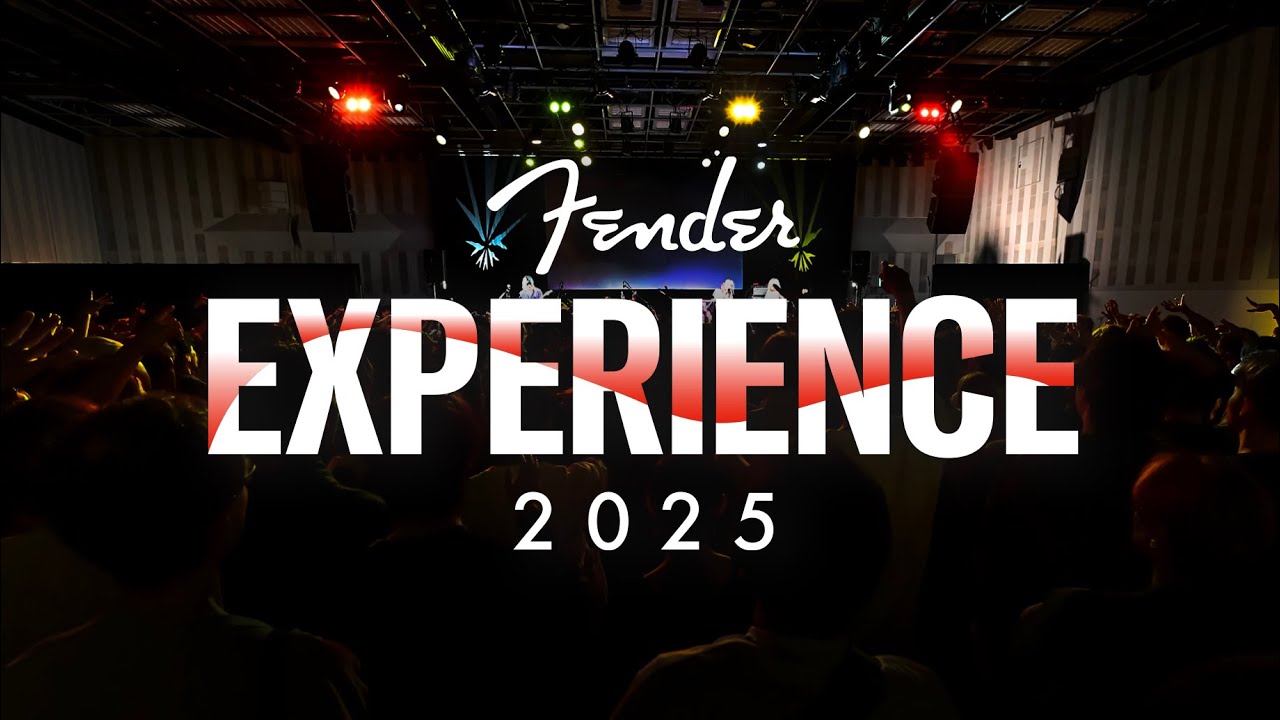
Larger-scale events are on the agenda, too. Last year, Tokyo played host to the Fender Experience, a free three-day event in the heart of the city that showcased artist performances, live guitar-building demonstrations, and hundreds of Custom Shop creations – all with the aim of not only catering to existing guitarists, but aspiring players and non-playing appreciators of guitars, too. It was like a Fender-only mini-NAMM. And Cole aims to bring similar concepts to the US and beyond.
“As more and more people go to see live shows, both behind the scenes and possibly in the future, at the front of the scene, we will be doing everything we can to support live music and live shows and people playing. And I would love to see executions like that, not just in the US, but in Europe, in Latin America and all around the world.”
Anniversary gift

2026 is a landmark year for Fender: it’s the 75th anniversary of the Telecaster and the Precision Bass, and the 80th anniversary of the company as a whole. It’s a good time to land the CEO gig.
In the near-future, there will be limited-edition models across the company’s entire product line that celebrate these milestones and Leo Fender’s contribution to the landscape of contemporary music.
Further down the road, elements of Fender Japan’s boundary-pushing designs could find their way into the global catalog, too. Cole’s first guitar was a Made-in-Japan ’69 Thinline Telecaster reissue – and despite a growing collection of around 50 instruments, it remains at his side wherever he is in the world. So the MIJ cause is close to his heart.

“I have always appreciated the uniqueness and the beauty and the coolness and the sort of Unobtanium of the Made-in-Japan line, and I think Fender has incredible innovation that really pushes the boundaries across all of our different product, wherever it’s made.
“We will continue to push those boundaries, much like we’ve done over the last couple of years in Japan.”
But while it may be a historic year to be taking the reins at one of the world’s biggest guitar companies, it’s also an especially challenging time. Last year, the ongoing tariff storm forced Fender to raise its prices by 5 percent across the board, and although the firm has fared better than some of its competitors, the financial outlook is far from rosy.
“We’re all navigating economic uncertainty, trade dynamics and shifting consumer behavior,” Cole says. “Our focus is on managing these challenges responsibly through diversified sourcing, operational agility and a continued investment in innovation while staying very accessible to players.”
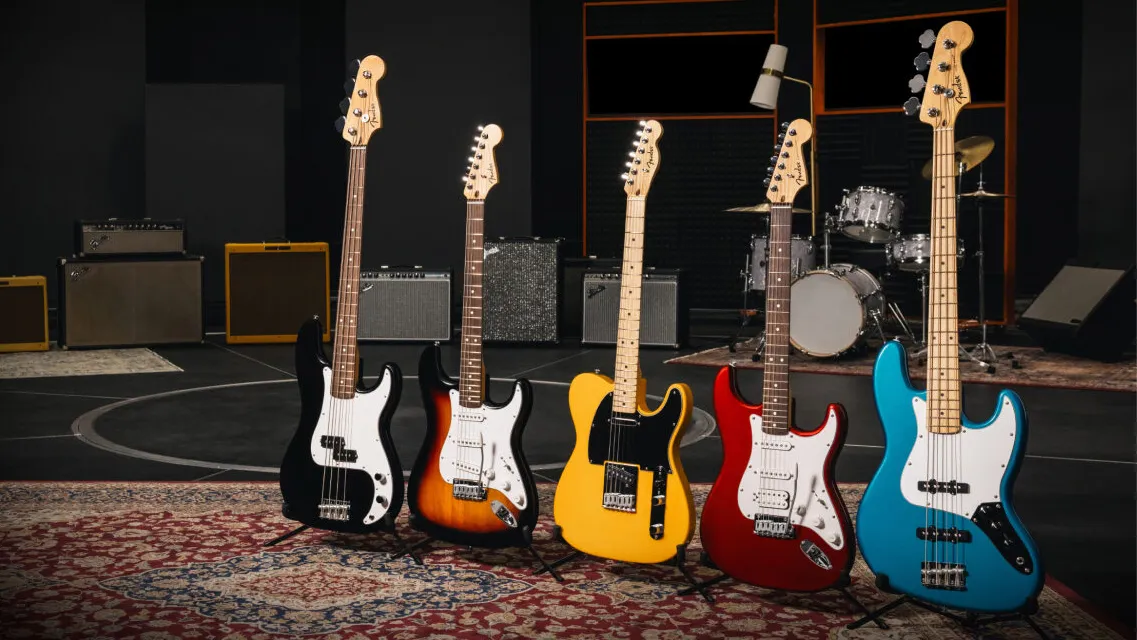
One way Fender has held out against tariff headwinds on products from China and Mexico is by building more affordable guitars in its Indonesian facility, which is typically responsible for budget Squier designs (although a number of signature models, including the Tom DeLonge Starcaster, are also produced there).
Internet critics were quick to dub the range “rebadged Squiers”, but the experiment paid off – the Fender Standard Series Telecaster ended up one of the best-selling guitars of 2025. The factory will no doubt continue to be an important asset in 2026 and beyond.
Beyond tariffs, the other big buzzword in the guitar – and every – industry is AI. And Cole is bullish about its potential.
“I strongly believe that AI will create opportunities that are unimaginable today for players, to learn, to create, to record and to express themselves. With Fender being the market leader, we will be at the forefront and are totally committed to that.”
The ‘how’ to answer the ‘why’
For now, we can only speculate on how Cole’s era of stewardship will play out – we may well learn more when he officially takes the reins on February 16.
Cole continues Mooney’s agenda of expanding Fender beyond a US legacy guitar brand. But he is not one to pull punches. Dynamism and innovation are his calling cards, and working alongside a product team encouraged to color a little more outside the lines, that bodes well for delivering on his promise of a blockbuster 2026.
It starts with people who pick up the guitar to find a way to express what’s going on in their head and in their hearts
One thing that is certain, however, is that Cole will seek to help potential guitarists find their calling. Beneath all the top-line business, the profits, the PR, he genuinely believes that guitars and music have a profound impact – and Fender can provide that sense of purpose and meaning to people’s lives.
“Fender is totally committed to giving musicians the ‘how’ to answer their ‘why’ they actually play a guitar and play music,” he says.
“That’s how we grow this business. Person by person, guitar by guitar, state by state, region by region, country by country, we continue to put guitars at the forefront of everything, because they make a difference.
“It starts with our players. It starts with our product, and it starts with people who, just for all the right reasons, pick up the guitar to find a way to express what’s going on in their head and in their hearts. And I can’t think of another company that does it more consistently or better than Fender.”

