

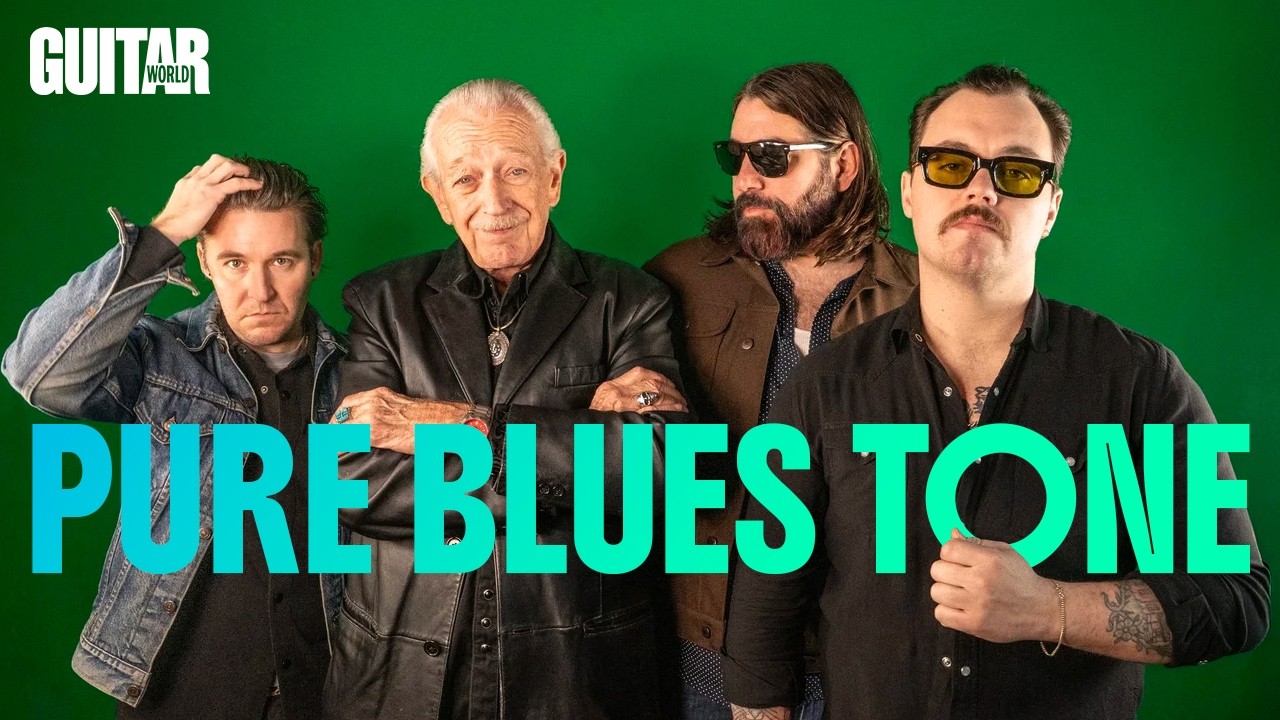
If you’re looking for slick-as-an-eel blues with a digital sheen, warns Matt Stubbs, keep walking. The hirsute leader of Providence-based power-trio GA-20 makes no apologies, for either the fact that his cultural clock stopped a half-century ago (“From the Fifties until ’72 – that’s the sweet spot”), or that his band’s deep dive into Chicago blues is the kind of tube-torn, freight‑train clatter that made the city’s mid-century dancefloors groan.
That warts ’n’ all approach is working. Formed in 2018 by former sideman Stubbs, and scaling the Billboard Blues Chart with all four of their studio albums to date, GA‑20 (named for a mid‑Fifties Gibson tube combo) now feel like a thrilling rebuke to AI music, showcasing the primal punch of analog fleshsacks moving air.
As blues scholars to a man, you can imagine the buzz when veteran Windy City harp-blower Charlie Musselwhite stepped in for their new album, Blues Now. But as Stubbs and fellow guitarist Cody Nilsen assure us, even hosting this VIP guest hasn’t sanded their rough edges.
What would we have seen as a fly on the wall at the Blues Now sessions?
Matt Stubbs: A lot of old amps, old guitars, old microphones, and all of us in one room, standing in a half-circle. All the records I love, that’s how they were recorded. Most of these songs were two takes, not a lot of punching in or fixing things. It’s a conversation. You play off of each other, and hopefully each time it’s different. What you hear on this record is what you’d have heard if you poked your head in.
Cody Nilsen: There’s one point when Matt lets out a yell of excitement, and it wasn’t planned, but we’re recording live, so it’s like, “Well, it’s staying.” Those unrehearsed moments of synchronicity really excite me. If Matt makes a move and I like the way it sounds, we follow him down that road. It’s about eye contact, talking without speaking, rolling the dice and saying, “I’m gonna play this now, I hope it works ’cos we’re all playing together.” No risk, no reward.
You tracked the record in six days. That’s actually quite generous for this band, right?
Stubbs: Yeah, all our other records were done in two days. We didn’t have a lot of money back then. We don’t have a lot of money now, either! But Charlie told us his debut record [1968’s Stand Back!] was recorded in less than three hours. He said that if they went a minute over, the union was double scale or something.
On this one, the engineer was a great guy named Brian Charles. That’s important in the studio. Sometimes with engineers, if they don’t move fast, you can lose eight hours pretty easily.
How do you split the guitar parts?
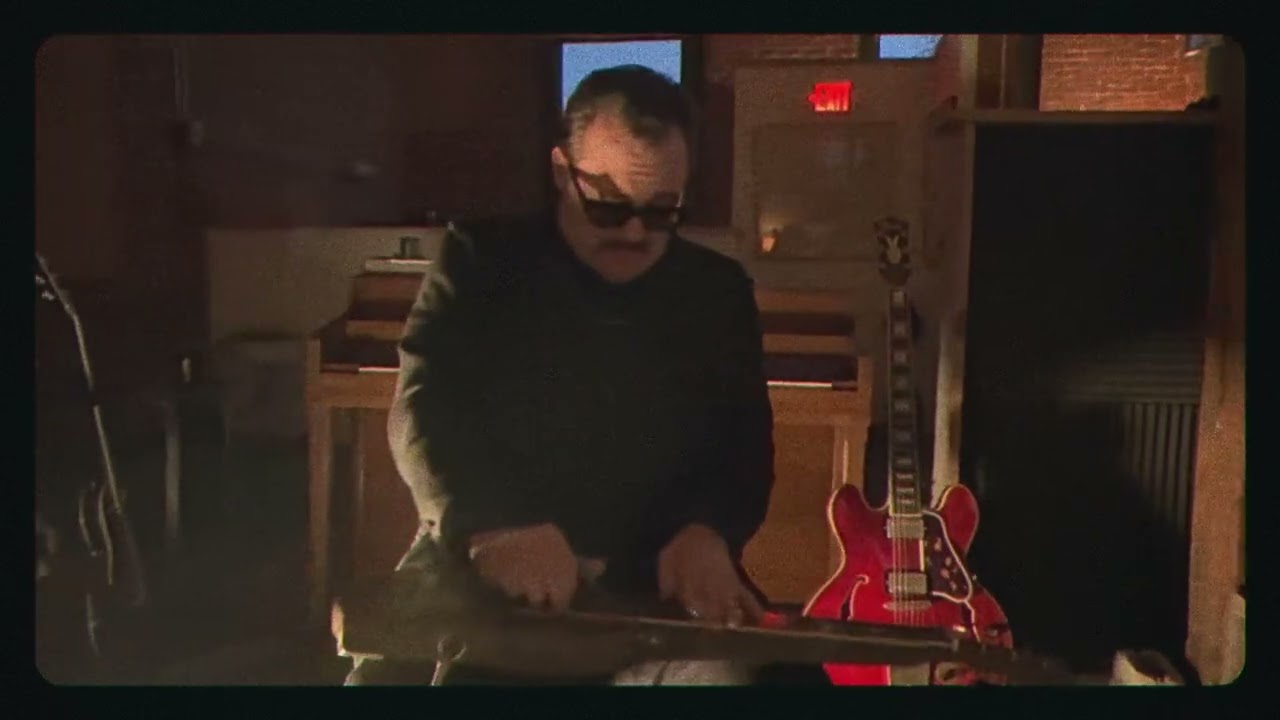
Stubbs: I’m pretty simple and primitive. Cody’s a bit more intricate and probably uses a lot more technique than I do. He even played lap steel on Cristo Redentor. I don’t think there’s ever been a version like that before.
We did two tunes off of Stand Back! just to tip the hat to that record. The others are classic blues songs, mostly from Chicago. But it goes a little deeper; for every one of them, it relates to a story of Charlie’s. Like, I told him, “Man, you talk about Jimmy Reed a lot.” So we did I’ll Change My Style.
Matt, you started playing in Charlie’s band back in 2008. How did that happen?
Stubbs: I was living in L.A., playing with another harmonica player named John Németh. June Core was on a bunch of those tours, and that’s Charlie’s long-term drummer. So when the guitar chair in Charlie’s band opened up, I got a random call – “Hey, June says you’re pretty good. Wanna do some gigs?” No rehearsal.
I just got on stage. It was pretty scary, actually. There’s a vocabulary, a way to back up a Chicago harp player. You’re playing behind them but also weaving around them. At first, it might not seem super-exciting for a young player. But as you get into it, you learn all these beautiful voicings.
What are your impressions of working with Charlie on Blues Now?
I’d never played a Waterslide, but I’d seen them online a lot. So I called them up and explained that I love old Teles and Silvertones, and I wanted a cross between the two
Matt Stubbs
Stubbs: He’s a historian at this point. He’s got a million stories, about all these guys I never even got to see, but they’re heroes. He had a great one about watching Earl Hooker in Chicago. Every time the solo came around, Charlie would be like, “That’s the greatest thing I’ve ever heard; he can’t top that.” But Earl just kept topping it. And Buddy Guy was in the audience, just freaking out each time the solo got elevated.
You play an Ibanez, Cody. It’s not really a brand associated with the blues.
Nilsen: No. I’m trying to reclaim it from the shredders! We were joking the other day, like, how funny it’d be if Matt and I started shredding on blues stuff. My main guitar is a 2335 from 1977. It’s [like] a Les Paul Custom with P90s. I found it online, a half-hour from my house, and it was love at first sight. It’s one of those instruments that resonates so well; it thumps like no other.
Those lawsuit-era guitars – Greco, Burny, Tokai – they’re such high-quality instruments that I’m always pleasantly surprised. I’m also touring a big red 2457 from the same year. It was actually a wedding gift from the band. I opened the case, thinking it was a guitar Matt needed me to work on. And boom – there it was.
Stubbs: In some ways, they’re probably better than the Gibsons [from] that time.

What’s the appeal of your Waterslide signature model, Matt?
Stubbs: I had it built when we started flying with GA-20. At the time, I was using an older Silvertone hollow-body 1454, with the gold foil pickups. But it’s rough flying with guitars, so I wanted something more durable that could take a fall if I had to gate-check it – ’cos we try to always carry our guitars on.
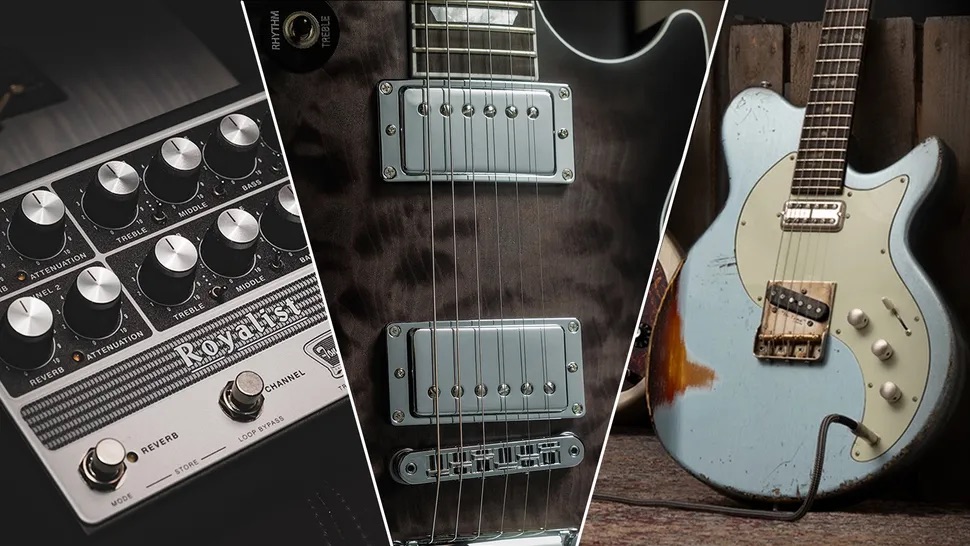
I’d never played a Waterslide, but I’d seen them online a lot. So I called them up and explained that I love old Teles and Silvertones, and I wanted a cross between the two – basically a Tele with gold foil pickups and a nice springy Bigsby. And I’ll tell you what, man – I haven’t played a new guitar I like better.
Have you ever regretted letting a guitar go?
Nilsen: I had a 2003 Les Paul Classic goldtop. It was a magic instrument, but I needed the money at the time. I keep an eye out for it to this day. That same Les Paul once fell on the ground before a set. Everything seemed fine and I made it through the show without a problem. Turns out I played the whole set with a broken headstock.
How about your worst onstage mishap, Matt?
Stubbs: I was in the middle of a long tour and one of my vintage Bassman heads stopped working, so I found a local amp guy to do a rush-repair for the gig that night. He came to the show, and a couple of songs in, the amp burst into flames in front of him. Luckily, I had a backup and he fixed it up right that night. All good.
There’s a lot of new amps – even tube amps – I just can’t get on with, and if we get ’em as backline, it’s rough
Matt Stubbs
Given your name, do you feel any pressure to use the Gibson GA-20?
Stubbs: We don’t use them live much anymore, but we still record with them. This record, probably 80 percent was recorded with the GA-20. But we’ve had some amps built by a great company out of Nashville called West Side Amplifiers. Diego Rotondo is the owner, and he specializes in building Fender-style stuff.
I have in my collection a great-sounding 1960 Tweed Deluxe. So he’s like, “I can build you an exact-to-spec amp so you don’t have to bring the old one out.” So we both tour with one of those. And then we both have ’68 Bassman heads when we’re home, with 2x12 cabs. When GA-20 started, we were pretty quiet. Now we’re pretty loud.
Nilsen: We’re not a lounge act, y’know?

Are you glad you didn’t name the band after an amp-modeling software package?
Stubbs: Yeah. We could be called Line 6.
Where are you guys on modeling?
Stubbs: I don’t touch the stuff. If I’m on my iPad demoing a song, I might plug into GarageBand. But no, man, I love old or vintage-inspired amplifiers.
Nilsen: There were certain bands I was a part of where the things I care about were not as important to the bandleaders. So I was using a Boss Katana. And it’s like, I’ll get through the gig, it’s cool, but man, that was not inspiring.
Could you actually tell the difference in a blindfolded test?
Stubbs: I’ll say that recording with modeling amps, you can get pretty close. In the studio, you can manipulate things in post-production. But for me, it’s about feel, especially onstage. The way it feels under your fingers, the way it jumps off the speakers.
There’s a lot of new amps – even tube amps – I just can’t get on with, and if we get ’em as backline, it’s rough. In GA-20, we haven’t got a bass player, so we got to cover the low end and it has to sound tight. But then we also want a distorted guitar tone happening. So the amp has to sound good for me.

You’ve said mistakes are tolerated – even encouraged – in this band.
Stubbs: That comes from learning old blues songs coming up. With Little Walter songs, I always wondered, why did he play it like that? Then you realize, “Oh, it was probably just a mistake.” A lot of times those end up being the cool moments. This is definitely not AI music. It’s humans in a room playing. Quantized, “perfect” music has its place – in pop music. I’m sure they sell a lot of records. But it’s not my thing. I like raw music.
Presumably, you’re staunch opponents of AI-created music?
Stubbs: There’s nothing I like about AI music. It’s the direct opposite of what I like. No soul. I hate AI in art. I don’t like the AI promo posters. All of it.
Nilsen: I don’t see any situation where I’d listen to AI music. Music created by humans is the only way for me.

Some people say all blues guitar is just a variation on the same old licks…
Stubbs: They obviously haven’t spent enough time digging in. That’s someone that either doesn’t like blues or never learnt the language. A lot of blues songs are only three chords, but what can you do with that? People who don’t listen might think blues is down and out, sad and slow, but it ain’t really that. It’s feel-good music, too.
Nilsen: Blues is so powerful, even now, because it’s three chords and the truth. And it doesn’t need external factors to improve on what can be found within it. The best blues is magic just the way it is.
- Blues Now is out now via New West Records.
- This article first appeared in Guitarist. Subscribe and save.

