

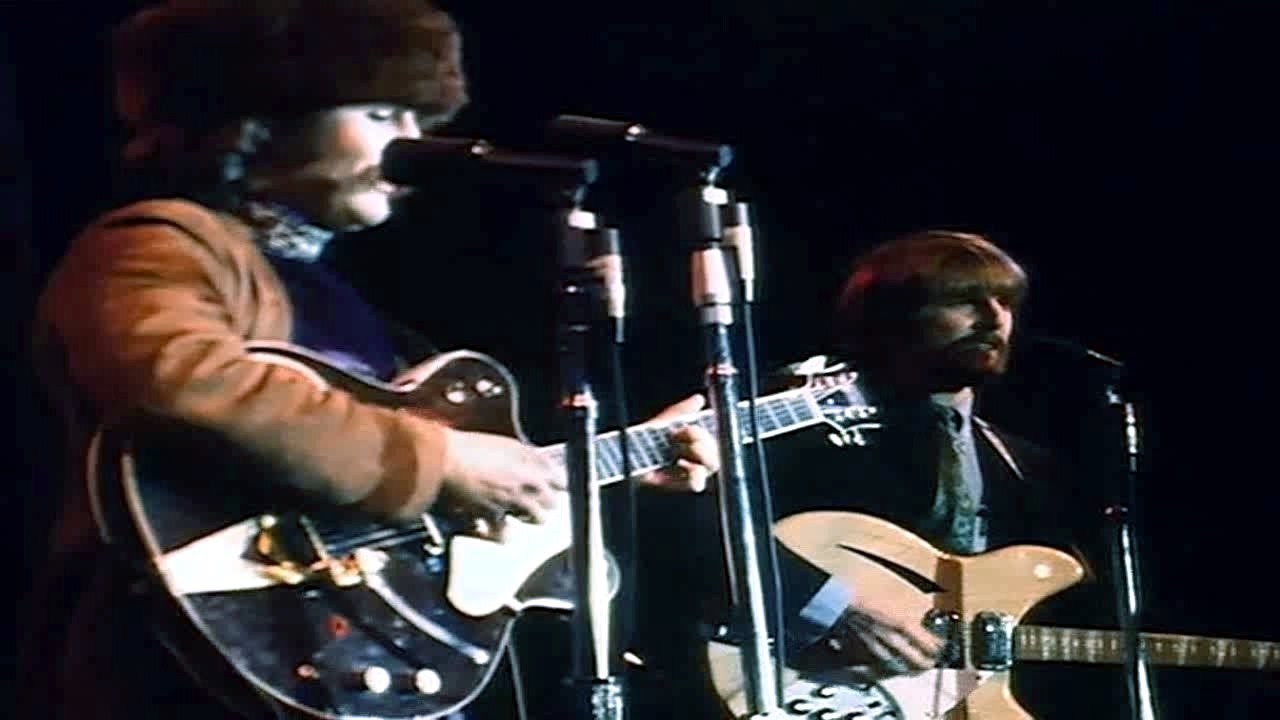
![[from left] The Byrds’ Clarence White, Skip Battin, Gene Parsons and Roger McGuinn in action in London in 1971](https://cdn.mos.cms.futurecdn.net/UBYneTRLchqapQkXCTFjYm-1920-80.jpg.webp)
Generally speaking, there were two versions of the Byrds – the early lineup featuring Roger (formerly Jim) McGuinn alongside David Crosby, Gene Clark, Chris Hillman and Michael Clarke, and the later, decidedly edgier band that was navigated by McGuinn, the lone “O.G. Byrd,” amid a sea of lineup changes.
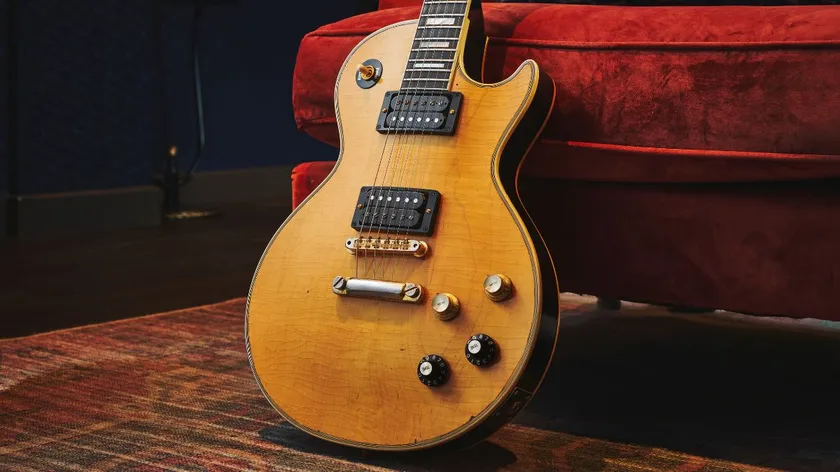
And while that’s a gross oversimplification that leaves out a host of in-between lineups, one thing is certain: the band’s later variations featured an absolute ace of a guitar player named Clarence White.
Some even say that, despite the shimmering beauty of the band’s early singles and albums (consider 1965’s The Bells of Rhymney and 1966’s Wild Mountain Thyme), the later version of the Byrds created some of the band’s most striking music.
McGuinn, to a point, agrees, referring to the White-fortified lineup as “a hot performing band.”
“Clarence had been hired as a studio musician for some earlier sessions [including 1967’s Younger Than Yesterday and 1968’s Sweetheart of the Rodeo],” McGuinn says. “But when everybody else left the band, they left me holding the bag. Clarence wanted to be a Byrd all his life. He told me that he loved the fact that he got to be in the Byrds, along with [multi-instrumentalist] Gene Parsons.”
White (along with Parsons) became a full-on Byrd in the summer of 1968, and his unique phrasing added some serious sparkle – and undeniable spark – to a slew of later Byrds albums, including 1969’s Dr. Byrds & Mr. Hyde, 1970’s (Untitled) and 1971’s Byrdmaniax and Farther Along.
Peter Fonda and I had been friends since I worked with Bobby Darin. We kept up a relationship over the years
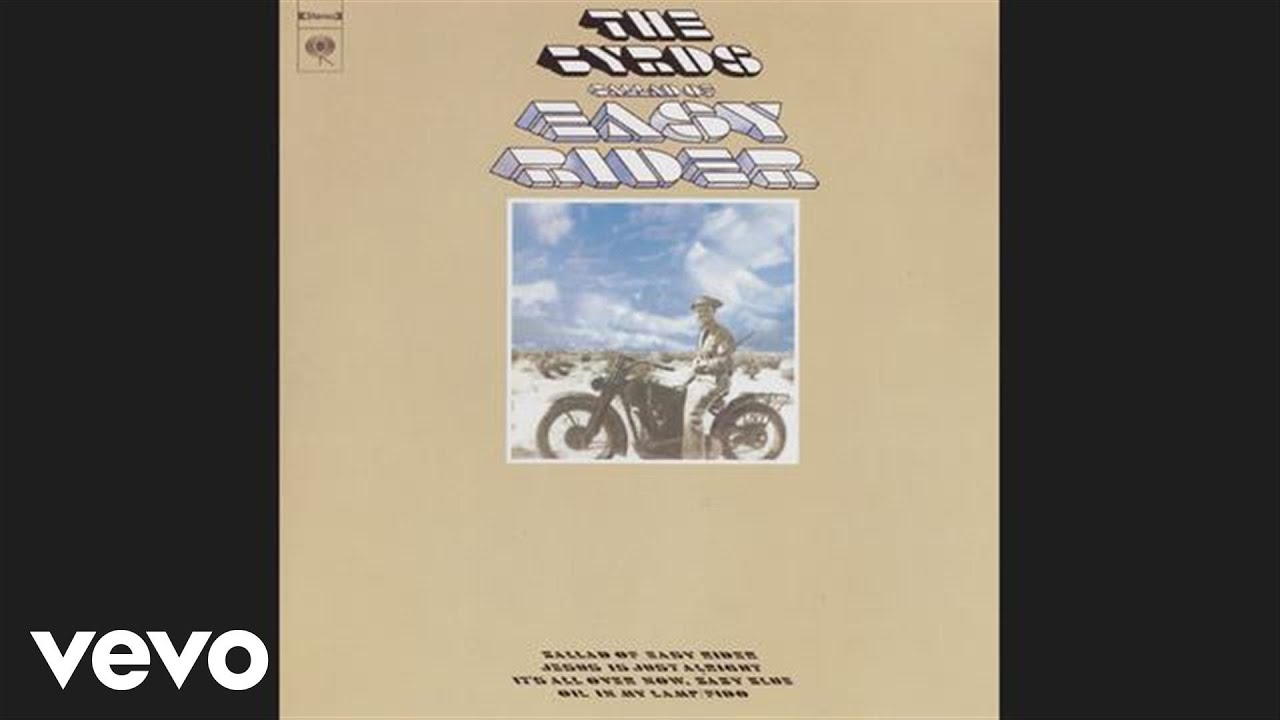
However, White’s guitar work is particularly prominent on 1969’s Ballad of Easy Rider, an album named after the Byrds track that famously appears in Easy Rider, the 1969 counterculture film starring Peter Fonda, Dennis Hopper and Jack Nicholson.
“Peter Fonda and I had been friends since I worked with Bobby Darin,” McGuinn says. “We kept up a relationship over the years.” That relationship led to McGuinn recording the original version of Ballad of Easy Rider for the film’s soundtrack.
“The one for the soundtrack was where Peter and Dennis Hopper came into the studio,” McGuinn says. “Gene Parsons was there with the harmonica, and he did a great part. And it was just me and, I think, an acoustic 12-string guitar.
“I remember Dennis Hopper, who was a kind of wild man, said while leaving the studio, [quoting Ballad of Easy Rider] ‘All they wanted was to be free, and that’s the way it turned out to be. What’s that?’” I said, ‘Think about it, Dennis.’ And Dennis said, ‘Oh, wow, man. That’s cosmic!’” [Laughs]
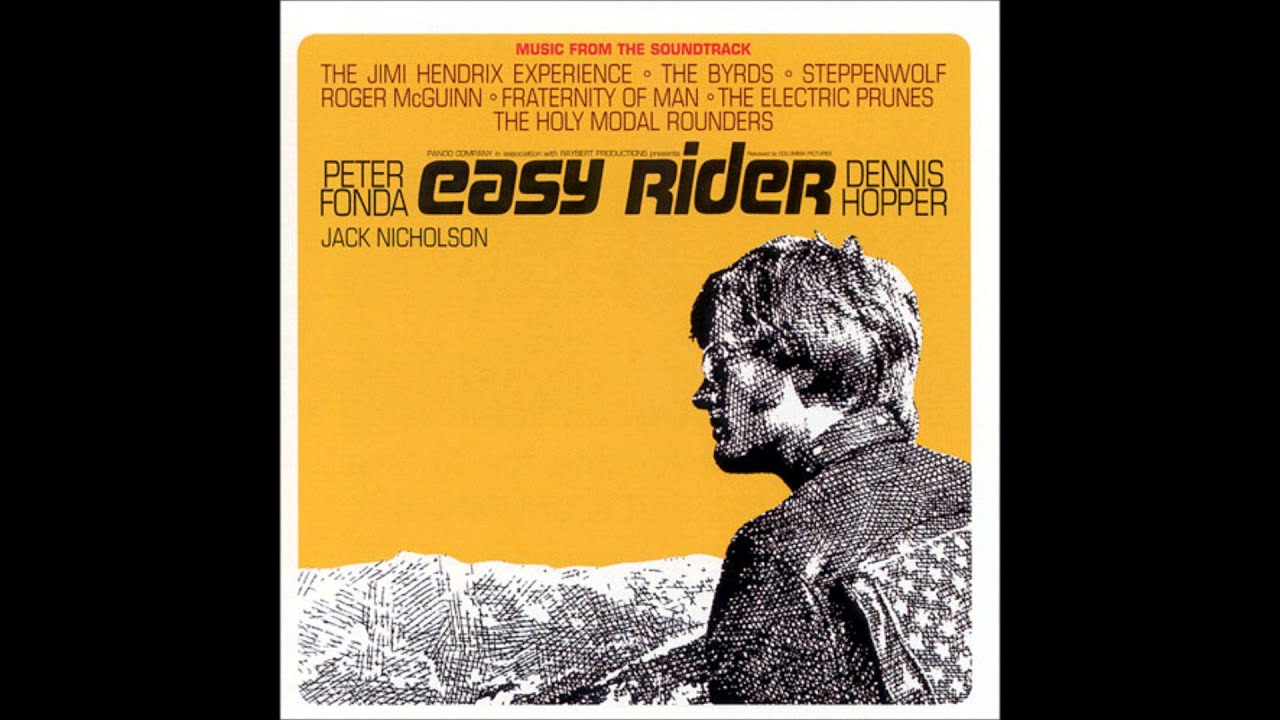
Ballad of Easy Rider went on to be an essential part of Easy Rider’s soundtrack, although the tune’s co-writer, Bob Dylan distanced himself from the song and the film after watching it. He called McGuinn, asking that his name be removed from the credits.
But when the Byrds recorded Ballad of Easy Rider – an 11-song album that (beside its title and title track) had very little to do with Easy Rider – it included an updated cover of Dylan’s It’s All Over Now, Baby Blue. Dylan didn’t have much to say about this development.
“I never heard from him about it, so I don’t know,” McGuinn says. “But, you know, with Bob, he doesn’t really give you a lot of feedback. He kind of runs hot and cold.”
Ballad of Easy Rider also includes a version of the Art Reynolds Singers’ Jesus Is Just Alright. Although the Byrds’ version – released as a single that December – was essentially overlooked, it became a hit for the Doobie Brothers three years later. Long story short? While Ballad of Easy Rider was packed with quality tunes and tied to an iconic movie, it wasn’t exactly a smash.
Bob wrote some notes on a napkin and said, “Here, give this to McGuinn. He’ll know what to do with it”
“It was like Sweetheart of the Rodeo,” McGuinn says. “It was a bomb when it came out, but it gradually elevated to [a level] higher on the Rolling Stone chart than any other Byrds album. Things take time to catch on. I guess we were a little ahead of our time. We were just doing what we liked doing. If people liked it, that was great. And if they didn’t, well, we’ll wait!”
Ballad of Easy Rider was the theme song for Easy Rider, the film. How did that come about?
The story goes that Peter Fonda put a couple of Byrds tracks on the soundtrack of Easy Rider, I think, as placeholders – or maybe his engineer did it for him. But they kept listening to it, and they were like, “Instead of putting some other kind of music on here…”

Peter got the idea that he wanted Bob Dylan to write him a theme song, so he flew up to New York and screened [the film] for Bob. Bob wrote some notes on a napkin and said, “Here, give this to McGuinn. He’ll know what to do with it.”
Peter got back on the plane and came to my house, and it was like the Holy Grail. He presented to me like, “Bob wants you to have this, man.” I looked at it, and it was the first verse, “The river flows,” and a chorus, but he didn’t have a tune. I got out my guitar, made up a tune for it, wrote the second verse, and that’s the way it came out.

When it came time to do the rest of the album, Terry Melcher – who had produced 1965’s Mr. Tambourine Man and Turn! Turn! Turn! – was behind the glass. How did he impact you and Clarence?
Before Clarence, Terry was instrumental in making me the kind of lead guitar player I was with the 12-string Rickenbacker. Then, in the studio, Ray Gerhardt, the engineer at Columbia Records, put us through two Pultec compressors, which really clamped down the sound and made it sustain for a long time.
The Rickenbacker, when it comes out of the factory, doesn’t sustain for very long. It’s got a good sound, but it needs that sustain to do the stuff like I did. So that was the first thing they did. I thought Terry was a good AM radio and mono-record producer. I don’t care what anybody says about him; he was really good at that.
I’ve read that Terry didn’t believe in stereo, yet Ballad of Easy Rider was the first Byrds album to be exclusively released in stereo.
There are things beyond our control that went on at Columbia Records. They were highly union-oriented. I remember one time I touched the board and all the union guys got up and walked out
I don’t think we had a choice. There are things beyond our control that went on at Columbia Records. They were highly union-oriented. I remember one time I touched the board and all the union guys got up and walked out.
But Terry didn’t believe in stereo. He thought it was a gimmick. Like four-track, the quadrophonic thing, he thought that was a gimmick. He was practical. Most people didn’t have stereos; they had AM radios in their cars, and that’s the market Terry was aiming at.
How did Terry like working with Clarence?
Terry worked well with Clarence. And then Clarence and I interacted quite a lot. Clarence had this amazing personality and was a great bluegrass picker. But then, on the Tele, once he got the B-bender, he went off into some other zone. It was like John Coltrane; it’s like improvising all the time, doing great counterpoint and things you wouldn’t believe – you know, wonderful stuff.
Of course, fellow Byrd Gene Parsons built that B-bender for Clarence.
Correct! Gene was the only guy I ever met who had a lathe in his garage. He’d make things on it, and the B-bender came out of that. I guess Clarence said, “Is there any way you can get the B string to bend?” Gene went to work and came up with the B-bender. It’s a great invention – I love it.
Did your guitar approach change once Clarence joined the band?
I played my normal leads that I’d been playing. Clarence just improvised around it. It was just his adaptation to what I was already doing.
What amps were you and Clarence using?
I’d go into the control room and plug into the board. That was my main thing. And Clarence, well, because Columbia Records bought Fender, we had Fender Dual Showmans. I think we also had a couple of Twin Reverbs. Basically, it was all Fender gear.
How did the cover of Jesus Is Just Alright come together?
It’s a good record. We were kind of winding down… I mean, the best performing band we ever had was with Clarence, Gene and Skip
That was Gene Parsons. He was a fan of the Art Reynolds Singers, the gospel group, and I guess he had that record. He brought it to us, and we learned it and did it like Art Reynolds. Then [in 1972], the Doobie Brothers did it like us and got a hit with it. It’s always sad when you get overlooked, but I was happy for them.
Initially, Ballad of Easy Rider received mixed reviews, but it’s become a cult favorite. How do you view it now?
It’s a good record. We were kind of winding down… I mean, the best performing band we ever had was with Clarence, Gene and Skip [Battin, bass – although John York plays bass on Ballad of Easy Rider].
That was a really hot performing band. People would go wild, and we’d get three or four encores. It was amazing, especially in Europe or somewhere like that. But as far as the recording goes, it kind of wound down to where it was all over.
- Ballad of Easy Rider is available via Sony Legacy.
- This article first appeared in Guitar World. Subscribe and save.