Guitar World Verdict
From ambient cleans, bluesy crunch, and mid-forward saturated leads, the John Mayer Archetype X covers the gamut of Mayer’s tones. Modeling all the important elements of his rig, it’s the perfect plugin for fans and provides endless fun for guitarists in that bluesy/pop/rock realm.
Reasons to buy
- +
Three of John Mayer's sought-after amplifiers.
- +
Great sounding, touch-responsive digital modeling.
- +
A full rig of models of pedals and effects used by the man himself.
Reasons to avoid
- -
Limited tweaking in the compressor and the Three-In-One amp.
- -
The signal chain cannot be moved around.
- -
Headroom Hero and Signature 83 amps don’t have the full suite of controls that the real versions do.
You can trust Guitar World Our expert reviewers spend hours testing and comparing guitar products so you can choose the best for you. Find out more about how we test.
What is it?
John Mayer is a guitarist who's now become a household name. He is one of the few artists who has managed to demonstrate a virtuosic mastery of the instrument in the context of mainstream music - just ask any guitarist who has attempted that Neon riff.
From a guitar player's perspective, it’s more than just songwriting and technique that impresses - it’s tone too. Now, John Mayer is teaming up with Neural DSP to release a guitar plugin that makes these tones available to the masses. And the decision by such a world-renowned analog aficionado to collaborate on releasing models of his favourite tube amps and effects isn't just a big deal for fans and Neural DSP, but a showcase of just how far the technology has come.

What John Mayer brings in guitar expertise, Neural DSP matches with plugin know-how. The company has a renowned history in building guitar plugins with artists such as Cory Wong, Rabea Massad, and Misha Mansoor, all getting the Neural treatment, as well as authentic recreations of sought-after amplifiers demonstrated by the likes of Neural’s Soldano SLO 100 X plugin.
What makes this collaboration extra interesting is that John Mayer isn’t someone who has been known to use digital modeling to the same extent as some of those aforementioned artists in Neural’s Archetype roster.
Sure, he has been spotted with a Quad Cortex at Coachella, but is still primarily known for a discerning collection of boutique and vintage amps.

So, having someone like John Mayer diving in the deep end with a plugin is a real vote of confidence in where Neural’s digital modeling technology is at.
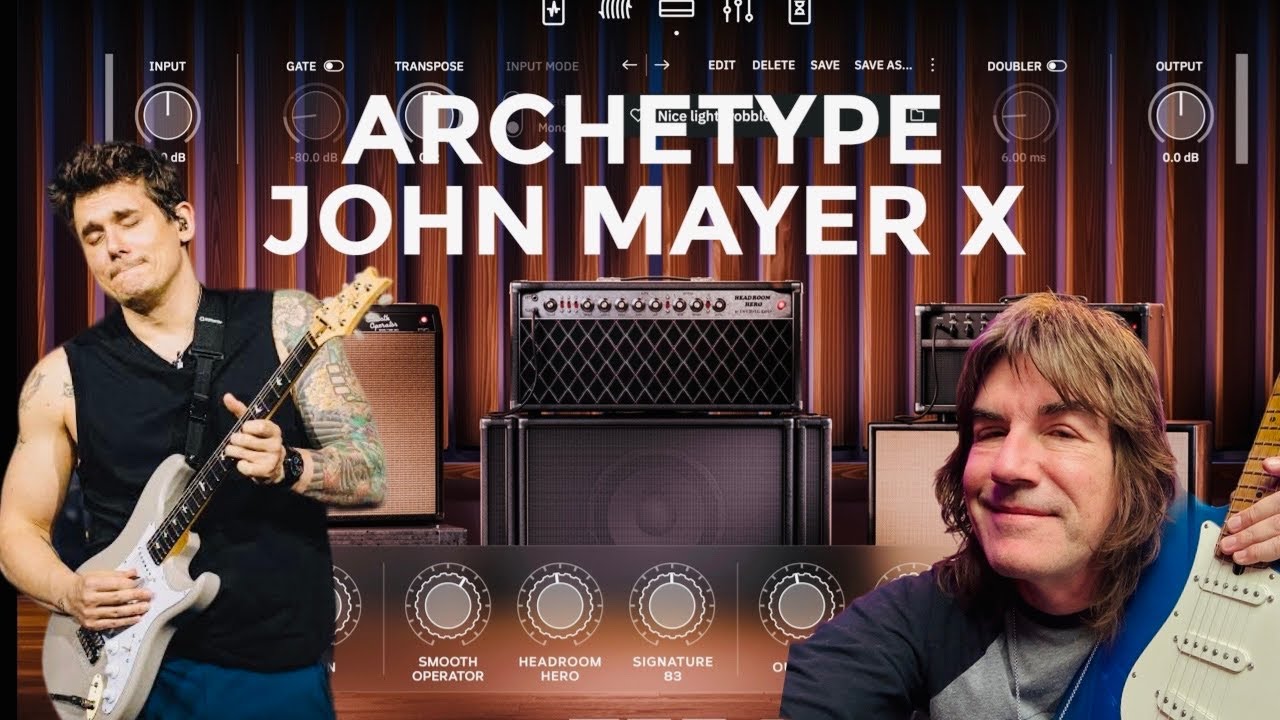
The Archetype: John Mayer X, then, is a meeting of two leaders in their respective fields that should yield some heavenly guitar tones. To achieve this, the plugin models three of John Mayer’s favorite amps - the Vibrato channel of his 1964 Fender Vibroverb, the Dumble Steel String Singer #002, and the Two Rock John Mayer Signature Prototype ‘Signature #83’.
You can use these individually or a blend of all three at once, and they all come with matching cabs and an array of microphones that can be swapped and moved.

Then, modeled after his actual rig, we have a collection of overdrive pedals featuring a recreation of the infamous Klon, as well as a Tube Screamer and a Blues Breaker. Other effects include an EQ and a compressor he uses in the studio, a harmonic tremolo, spring reverb and a Studio Verb which can mimic either a hall or plate reverb.
And of course, we have the usual global features in Neural’s Archetype plugins - a Noise Gate, Transpose function, and Doubler.

Specs

- Launch price: €199
- Type: Amp and FX modelling Plugin (hosted or standalone)
- Formats: Windows and PC
- System requirements: MacOS 13 Ventura or higher/Windows 10 or higher, AMD Quad Core R52200G/Intel Core i3/Mac Silicon M1 or higher, 1GB storage space, 8GB RAM
- Formats: VST2, VST3, AU, AAX
- Contact: Neural DSP
Usability

Usability rating: ★★★★½
As you will have gathered, there is a lot here to get stuck into, and thankfully, it's made accessible via Neural’s tried and tested interface. It’s highly visual, with the signal chain (Pre FX, Verb and Trem, Amp, Cab, EQ and Comp, Post FX) displayed at the top and the three amps plus the Three-In-One mode, situated at the bottom.
Just below that signal chain sit the global functions. All of this is represented via handy icons or easily understood text, which makes it a breeze to jump in and start playing.
The titles on the amps are a little hard to read, so unless you spot the somewhat discreet pop-up at the bottom of the screen as you select an amp, it may be a little difficult to discern the name of the one you are using if you're not familiar with their aesthetic. To be clear, it is obvious which one is currently selected, just not obvious what it's called.

Tweaking settings on the plugin feels oddly like adjusting real pieces of gear
The images representing the amps, cabs, and effects are all highly detailed, complete with movable dials and drag-and-drop microphones on the cabs. As a result, tweaking settings on the plugin feels oddly like adjusting real pieces of gear.
Furthering this is the fact that the plugin can run standalone. No need to fire up a DAW to fiddle around with some tones, just open the plugin app and go. When it comes to saving your tones, however, they all go into the same folder named ‘User’ with no easy way to organise them from the plugin.

Spoiler alert - this plugin sounds fantastic (more on that later), so I’m likely to be creating a large number of tones within it. Therefore, I’d like an easier way to organise the tones I create into separate folders for different projects/sounds so I can quickly recall them later.
This is mitigated a little by a tag function, meaning I can search tags for tones I’ve created, but I’d still prefer to have things stored in separate folders as well.
The last thing to mention here is the MIDI learn function. Simply right-click, select MIDI Learn, and adjust the MIDI controller you wish to use. Easy.
Sounds

Sounds rating: ★★★★½
The highlights for me are the Gravity Clean and Lead 2 Live Room presets
Given that we have a collection of presets from John Mayer himself, I’m going to start making some noise with those, then go from there. Lacking a PRS Silver Sky (Mayer’s signature PRS), I grab my Fender Elite Stratocaster and get stuck in. Immediately, the problem with the presets is a good one; I don’t want to stop playing them and evaluate the rest of this plugin.
The highlights for me are the Gravity Clean and Lead 2 Live Room presets. The former offers a glassy, clean sound, featuring plenty of low end but also a healthy amount of high. All on the edge of breakup so that it compresses nicely, reflects picking dynamics, and cleans up beautifully on the volume control with my Strat's fourth-generation Noiseless pickups.
The latter is a smooth, mid-forward lead, with a ton of compression and sustain, making it feel incredibly easy to play. There is a smattering of reverb to create some space, all of which makes it an absorbing tone. There are also presets from a large selection of other renowned artists such as Cory Wong, John Petrucci, and Joey Landreth that really showcase the breadth on offer with this modeled rig.

So, we know there are great sounds in here. Both the Gravity Clean and Lead 2 Live Room presets make use of all three amps at once. Looking at them individually, they are all amps suited to that edge of breakup, pedal platform thing, and are well-balanced in their tonal differences.
Smooth Operator (1964 Fender Vibroverb) is the brightest of the bunch, the Headroom Hero (Dumble Steel String Singer) is the most mid-forward, and the Signature 83 (based on the prototype for Two-Rock's John Mayer Signature amp, of which only 25 were made) brings more low end than the other two.
When it comes to how they break up, the Smooth Operator gives out that gnarly, aggressive Fender-style thing, breaking up relatively early on in the volume controls sweep.
The Headroom Hero unsurprisingly has a ton of headroom until you activate the FET switch. At which point, the clean headroom gives way to a pleasingly smooth overdrive. This amp also features a Mid switch that will move the midrange into a higher frequency.

The Signature 83 sports a ton of headroom, just not quite as much as the Headroom Hero, and is more full-range. All three of the amps have Bright switches to add some bite.
Each amp has EQ options. A subtle Bass and Treble on the Smooth Operator, a three-band EQ on the Headroom Hero, which, as well as being a much wider EQ sweep than the Smooth Operator, also has a pronounced effect on the gain, and another powerful three-band EQ on the Signature 83, which also includes a more subtle presence control.
It’s worth noting that the Headroom Hero is a little more streamlined than the real thing, in that it lacks the High and Low Filter controls, as well as the Deep and Rock/Jazz switches. Personally, I’m not missing them in this Mayer-esque context, but if you are after a more authentic replica of that particular amp in digital form, you may be left wanting.
Same too with the Signature 83; it’s missing the Mid and Deep switches, plus the Contour control of the Two Rock John Mayer signature it's based on.

It's all very touch-responsive too, which makes the amps feel alive under the fingers
Even with that streamlining of the controls, there is still a lot of versatility within the bluesy pop genre John Mayer resides. The amps can go from a delightful, crystal clear clean to a fun, old-school breakup and a rewarding, smooth drive. It's all very touch-responsive too, which makes them feel alive under the fingers.
Adding extra tonal possibilities is the cab section, within which we can switch between 11 different mics and edit their position to taste, as well as load in our own impulse responses if we want to.
What is clear, though, is that this plugin will not baby you into a good tone. For example, turn the Smooth Operators Bright switch on with the Treble in the wrong place, and you will find yourself having an ear-piercingly bad time.

I had a ton of fun recreating the intro to I Don’t Trust Myself, as the effect is very reactive to picking dynamics
This is arguably a good thing. It shows that the amps have been authentically recreated and demonstrates a trust that the user will know how to get the best out of them. To this end, I find that the Pre FX section is a useful tool.
The first pedal there is the ‘Just A Boost’, based on the Keely Katana. This fattens things up nicely, and once it’s on, you're going to want to leave it on. The Antelope Filter is next in the chain and is modeled on the EHX Q-Tron. An auto-wah style effect, I had a ton of fun recreating the intro to I Don’t Trust Myself, as the effect is very reactive to picking dynamics.
No blues/rock/pop rig would be complete without a complement of drives, and here we find some real treasure. The Halfman OD (Klon) and the Tealbreaker, which switches between Blues Breaker and Tube Screamer-style overdrives.

The Tealbreaker’s Tube Screamer side is great for recreating leads the likes of which can be found in Slow Dancing in a Burning Room. By far, my favourite way to use these drives is to have the Tealbreaker set up for this soft type of lead, and then bring in the Halfman OD for some mid-forward saturation.
The BB side of the Tealbreaker provides some great, full-range rhythm sounds, which I find a ton of fun for choppy, aggressive bluesy riffing, as well as the Hendrix-style, Bold As Love thing covered in John Mayer’s Continuum album.
The last item in the Pre FX section is the Millipede Delay, which is based on the Way Huge Aqua Puss. Emulating a short analogue delay with just Time, Feedback, and Blend controls, it’s a simple tool for adding a little slapback and beefing up those leads.
We aren’t quite done with effects before the amp, as next in the chain is the Gravity Tank. This is a two-in-one effect, providing movement ranging from a subtle wobble to an organ-like sound via a harmonic tremolo and some space courtesy of a convincing, delightfully drippy spring reverb.

It would be nice to have the option to move the Spring Reverb post-amplifier, but alas, none of the signal chain can be moved around in this way, which is a little limiting for anyone wanting to experiment with the models here.
What we do have post-amp is a powerful four-band parametric EQ that provides everything needed to make studio-ready tone tweaks, and a compressor. Another limitation comes with the compressor, as the only controls are Input and Output.
This is because the other settings one might expect to have access to are preset to Mayer’s specifications, allowing you to get straight to Mayer-esque tones. While I appreciate the benefit of this, I would rather have the extra versatility to tweak for myself.
The Post FX section consists of the Dream Delay and Studio Verb, with the reverb emulating both a Hall and a Plate. Here lies the longer delay times that the Millipede delay is lacking, and a more modern-sounding Reverb compared to the aforementioned spring reverb.

The delay is a fairly simple affair with just Mix, Feedback, Time, and Hardness controls. It’s that last one that I find particularly useful, as at zero, it darkens the delay, keeping it out of the way of the mix. Combine it with the Ping Pong option, and there are a lot of ambient tones to be found here.
The Studio Verb sports a Mix, Pre-Delay, Decay, Low Cut, and High Cut. My favourite setting is the Plate on a fairly high Mix (around 45%), with a short Decay and a little Pre-Delay. It results in a sound that encapsulates the guitar tone without getting in the way of it, adding a lovely amount of space, which is incredibly pleasing for those ballad-like clean riffs.

The highlight of the plugin for me is using these effects with the ‘Three In One’ amp, which blends all three amps together, recreating the setup John Mayer uses live and in the studio. The amplifier’s different EQs complement each other nicely, resulting in a well-balanced nature that lends itself to clean and edge-of-breakup sounds.
Turning the gain up here yields an old-school type of bitey overdrive. As I go to change settings on each amp, to find that I can’t. Similarly, the cab section is disabled too, meaning I cannot tweak any of the mic settings.
In this mode, the three amps and cabs are set to John’s preferences, with the idea that the user is able to blend in each amp to taste and adjust drive via an overall Gain control, and some reverb through a Room Send.
Again, like with the compressor, I see the benefit here, but I would rather have the extra versatility of editing each amp and cab for myself.
Instead, I set up the Three-In-One amp to an edge-of-breakup tone and make use of the drive pedals in the Pre-FX section. This is so much fun that I spend way too much time here. Combine this with the rest of the effects, and it’s bluesy/pop/rock heaven.
To round this all off, we have a couple of useful utilities in the Gate, Transpose, and Doubler. The Gate works well, easily getting rid of amplifier hiss.

Transpose allows a 12 semi-tone shift either way. Single note lines translate well throughout the range, and chords are good down to four semitones, at which point the more sophisticated voicings start to become a little dark and warbly, which is an impressive range for these types of chords.
The Doubler is a real plus in my book. It introduces an almost imperceptible delay and creates an impression of a stereo spread, similar to the effect of double tracking audio and panning the two tracks hard left and right. Once this is experienced, it’s hard to bring yourself to turn it off.
And I could say the same thing about the plugin as a whole. I just want to keep playing it.
Verdict

At €199, this is priced a little higher than other Archetype products, but for the John Mayer fan at least, this is the perfect plugin. Which is a pretty obvious conclusion, but recreating iconic tones from a highly discerning modern guitar hero is no mean feat, so Neural DSP deserves the plaudits for having done it so successfully.
Most will not be able to get the real amplifiers modeled here, so it’s a real treat to be able to recreate those tones within the plugin at sensible home-friendly volumes, even considering the streamlined controls of the Headroom Hero and Signature 83. With the included pedals, Neural has convincingly recreated the important parts of John’s rig.
Neural has convincingly recreated the important parts of John’s rig
Personally, I would have liked a bit more tweakability in the compressor, the ability to change settings on each individual amp in the Three-In-One mode, and more flexibility in ordering the signal chain. The flip side of having these set to John Mayer’s preferences, however, is that it points you squarely at his tone, which makes sense given that this is a signature plugin.
And for those of us who play live with a Quad Cortex, there will be a whole other element to be explored when this X edition becomes compatible with the unit soon.
Guitar World Verdict: From ambient cleans, bluesy crunch, and mid-forward saturated leads, the John Mayer Archetype X covers the gamut of Mayer’s tones. Modeling all the important elements of his rig, it’s the perfect plugin for fans and provides endless fun for guitarists in that bluesy/pop/rock realm.
Also try

Hands-on demos
Neural DSP

Rabea Massaad
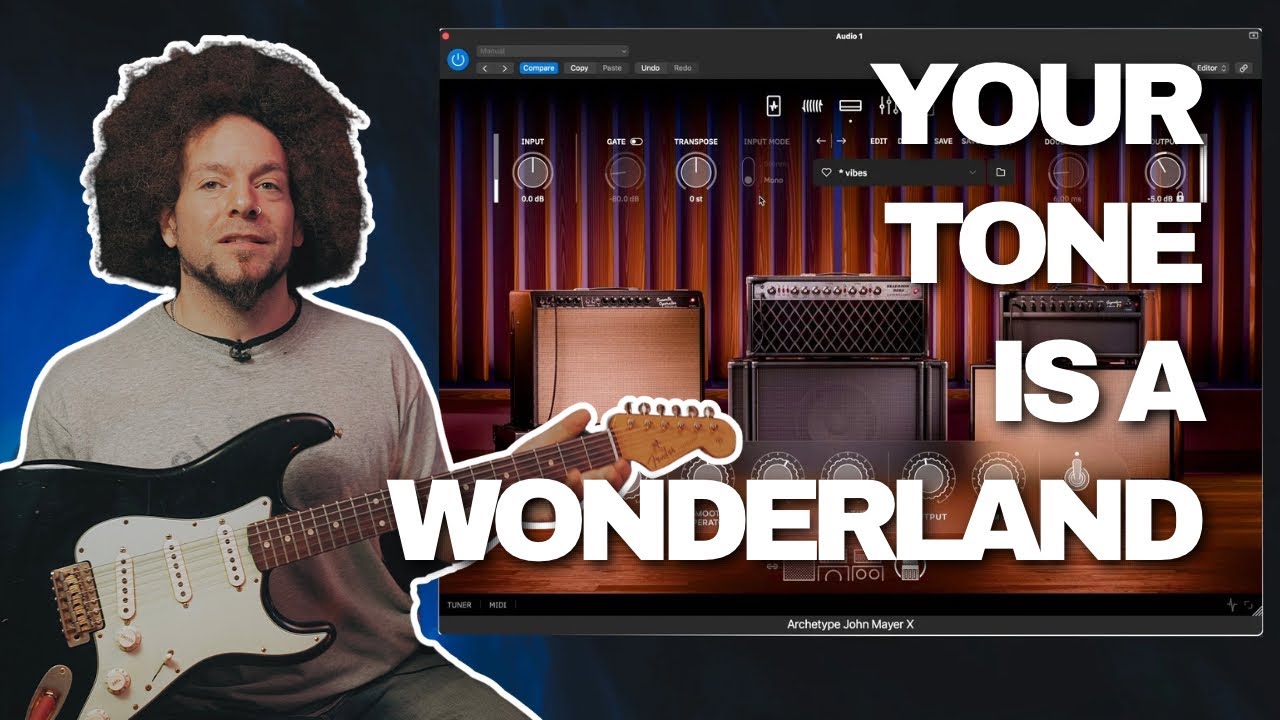
John Nathan Cordy
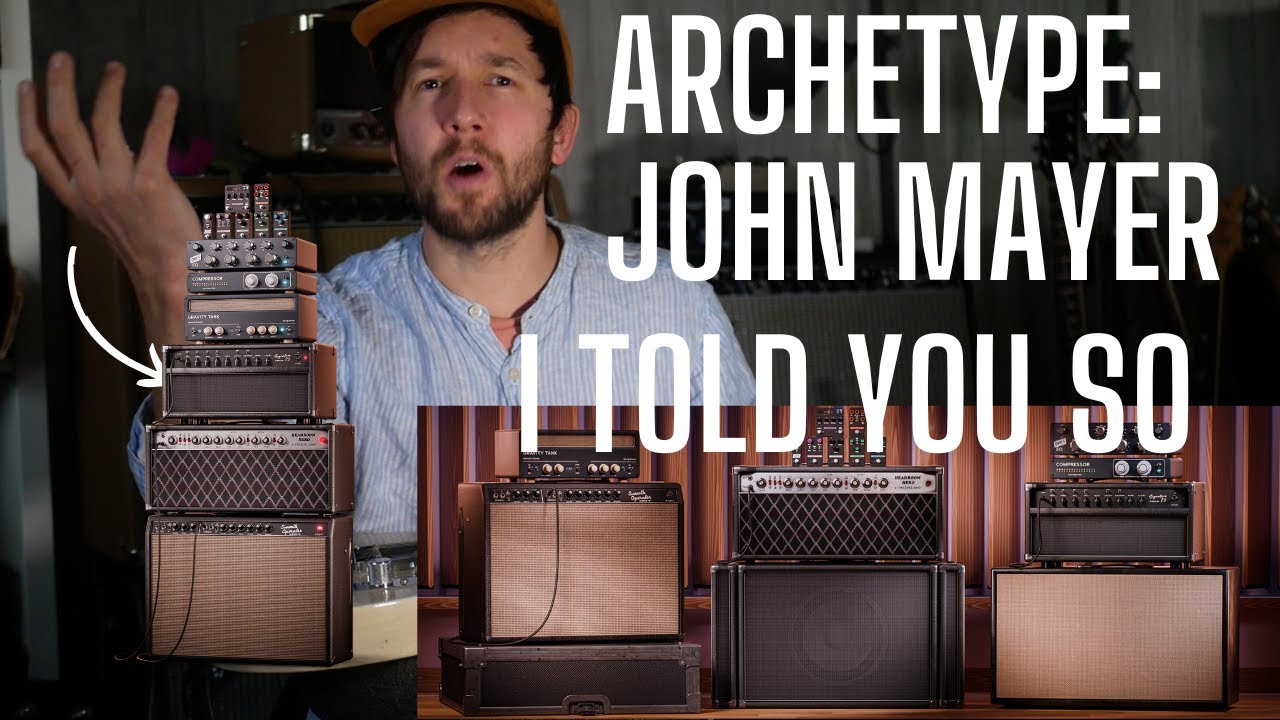
Vertex Effects
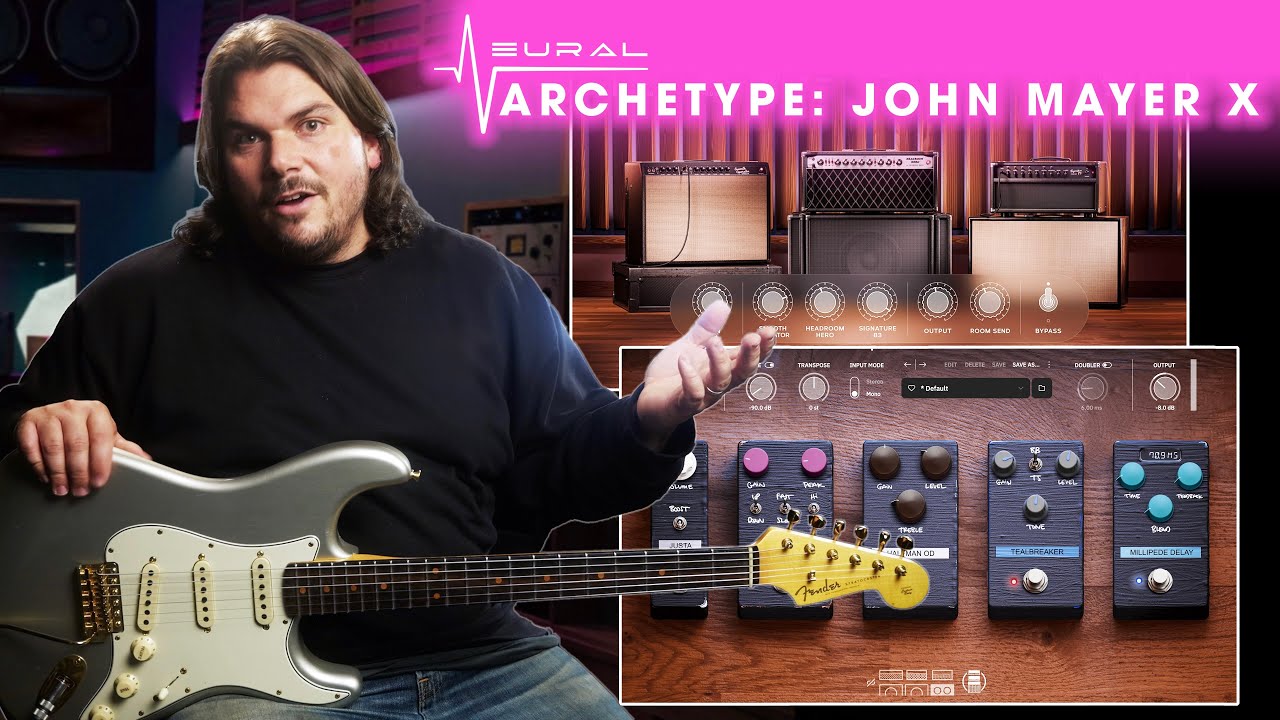
The Studio Rats
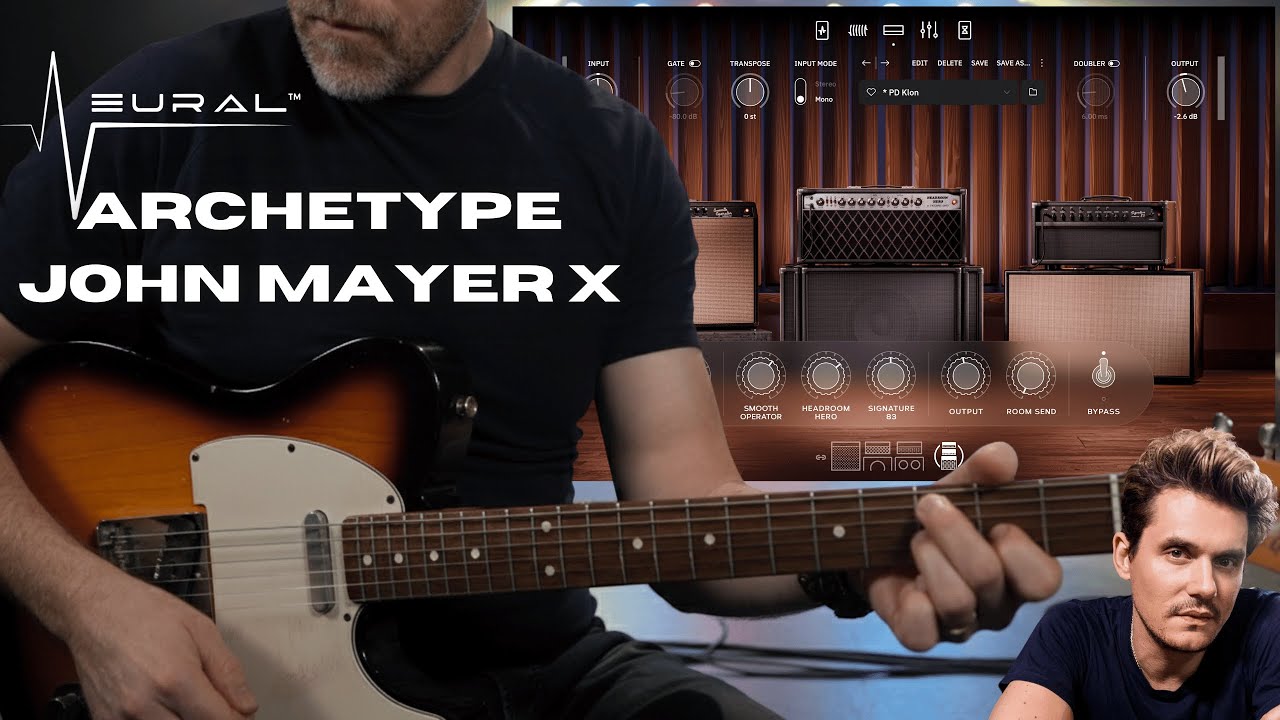
Pete Thorn