
 Access Backstage Pass




An effect you'll find on nearly all pedalboards, the best reverb pedals can be a subtle underpinning of your tone or the catalyst to send it into the stratosphere. Now I’d argue that Reverb is quietly one of the most important effects going – and that’s not hyperbole, either. It’s the subtle reflections of sound from walls and surfaces that give sound its body; without them, life just sounds a bit lifeless. Spend any amount of time in an anechoic chamber or super-dead vocal booth, and you’ll find out how unsettling life without reverb is in short order.
Just as reverb is crucial to giving our lives figurative colour, so too is it crucial to giving our guitar tones the same. It is at once a practical utility and an opportunity for play, thanks to a broad spectrum of reverb pedals that offer spacey sounds both real and decidedly unreal.
Whether it’s a subtle Fender-Twin-sy spring reverb adding some depth to your chords, or a stratospheric space-verb taking your tone to the fifth dimension, reverb is a non-negotiable addition to the modern pedalboard – and by no means in short supply, as evidenced by the smorgasbord of incredible reverb pedals found in this very guide.
If you have some unanswered questions about reverb or want to know a bit more about choosing the right pedal for you, you’ll find a bevy of advice at the bottom of this guide in the FAQs section. Otherwise, read on to discover the best reverb pedals on the market right now, as reviewed by Guitar World’s very own experts.
The quick list

One of the most popular reverb pedals of all time, the Strymon BigSky MX is a welcome update. With a screen and usability improvement, one of the all-time greats just got even better.

If you're after a quality reverb pedal on a budget, the TC Electronic Hall Of Fame 2 gives you loads of different quality reverb algorithms that won't break the bank.

Three essential reverb types, a simple and sleek control interface and a switchable trails setting make the Fundamental Reverb a first-reverb must-have.

If you want an array of top-quality different reverb algorithms in a pedalboard-friendly enclosure, without having to spend loads, the Electro-Harmonix Oceans 11 is your perfect match.

For those who like their soundscapes dripping in ambiance, the Strymon NightSky will deliver otherworldly sounds with an incredible array of functionality for truly unique reverb tones.

Taking the best of the RV-500 and adding an exciting new algorithm, the RV-200 is a space-conscious stereo-verb monster.

This collaboration reverb between boutique stalwarts Walrus Audio and guitar whizz Yvette Young is every bit as delicious-sounding as it looks. There’s a lot going on in here, including a granular sampler that adds exactly the stardust you’d hope to the luscious, ambient reverb enclosed. A multi-effect that adds up to something greater than the sum of its parts, for sure.

Hotone’s NC-200 Verbera is the chrysalis of something for which guitarists have been openly wishing for a while – a practical IR-loading convolution pedal. There’s 120 loaded in already, and room for 1024 of your own; it’s also a dual-reverb, in that there’s an algorithmic second engine you can blend with your IRs for spectral supremacy.

Danelectro has achieved what many (myself included) thought impossible, and squeezed some Actual Springs into a pedal you can pocket. It even does the crashy thing when you kick it! Granted, this little pedal is less full-featured than many other budget items on the market – but it does this thing extremely well, with a small form factor, and without the need to lug an ancillary spring tank around with you. Luscious.
Best overall
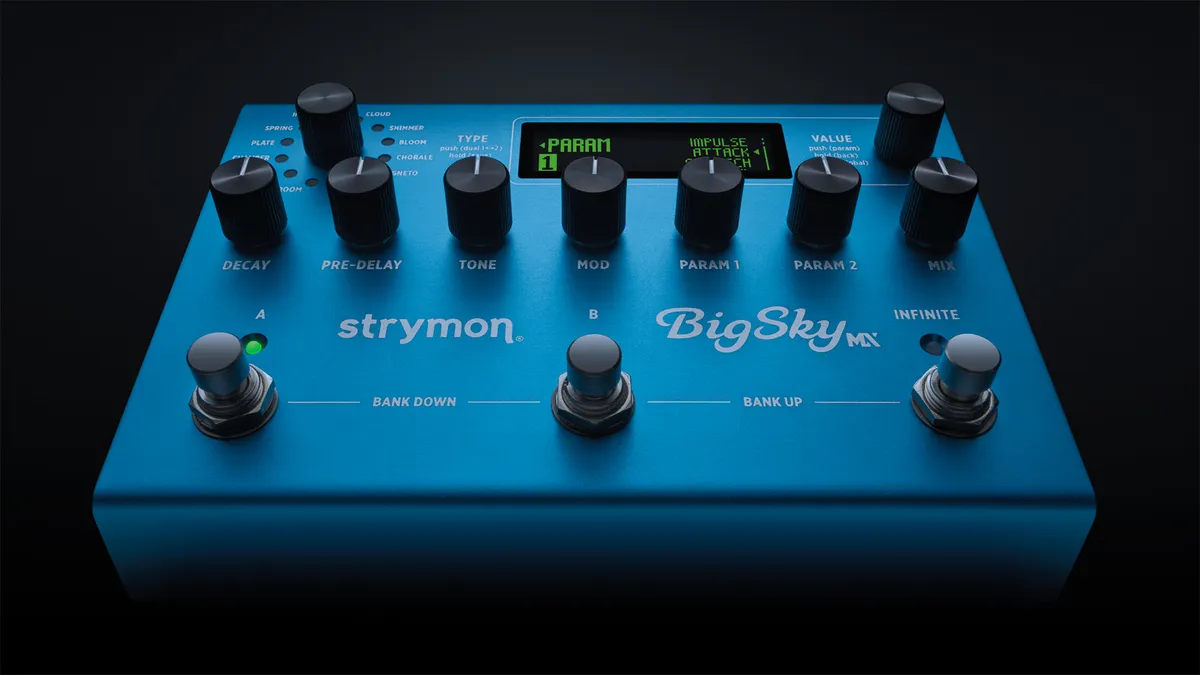
Strymon’s name is rightfully and indelibly associated with ‘quality’; gigging musicians have turned to Strymon’s unassailable range of pro-quality products for years, with a slew of top-name and session guitarists swearing by their versatility live and in-studio. The BigSky reverb is one such workhorse – and it’s received a mega update.
The Strymon BigSky MX is practically a BigSky remaster, with dramatically improved internal hardware and entirely new subsets of features. The bones of the BigSky remain, in its 12 powerful reverb algorithms and endless adjustability. There’s something new, though at every turn.
For one, there are seven new or updated reverbs to play with, one of which is the truly game-changing Impulse setting – an IR editor that places convolution reverb thrillingly at your feet. For another, your BigSky MX is actually two BigSkys, capable of engaging two reverbs at once, routed whichever way you like.
New reverbs, endless IR possibilities, and quality-of-life updates like a new OLED screen make the BigSky MX far more than a BigSky Mk2; this is a formidable upgrade, and an indispensable addition to the professional pedalboard.
Best budget

The sequel to TC’s best-selling Hall Of Fame takes the successful formula - which spans the typical spring, plate, and church settings, plus mod and lo-fi sounds - and adds a host of extras.
Besides a polyphonic shimmer mode, the HOF2 boasts TC’s pressure-sensitive MASH technology, which allows you to adjust the intensity of the reverb depending on how hard you push on the footswitch.
Three slots are onboard to store TonePrint presets, too - you can use TC’s computer or app-based editor to create your own sounds, as well as download artist presets. Considering the cost of this pedal, you get a whole lot of bang for your hard-earned bucks here.
Best beginner

Walrus Audio is a brand best known for its boutique output – but it’s recently brought its boutique expertise to the entry level, with an impressive roster of accessible pedals called the Fundamental Series.
The Fundamental Reverb shares the same austere control surface as its siblings, bearing three slider pots and a three-way slider switch. The switch gives you access to three different reverb algorithms – Hall, Spring and Plate – each of which are bread-and-butter in their own right, and lush in their own way.
The basic controls make the Fundamental Reverb extremely beginner-friendly, and do not majorly impede more fidget-friendly players either. This is because the algorithms are stage-ready out of the box, and bad sounds are near-impossible to find within them. That said, more experienced players might miss being able to control each reverb’s damping.
The Fundamental Reverb isn’t without its clever boutique-y touches, though, as evidenced by a smart trails-toggling parameter accessed by holding the footswitch down. As far as budget reverbs go, this is a highly practical utility with boutique-quality reverb algorithms – and an unmissable deal.

"Walrus Audio isn’t the first company to put a basic/budget range of pedals out recently, but the company has done it in the most stylish way. These Fundamental Series pedals look great, sound equally good and give you solid sonic alternatives in a single unit."
Read the full Walrus Audio Fundamental Reverb review
Best gigging

The lower left rotary switch knob on the Oceans 11’s front panel gives the strongest indication of the complexity lurking within this diminutive device. Here, users will find 11 different settings that consist of hall, spring, plate, reverse, echo, tremolo, modulated, dynamic, auto-infinite, shimmer, and polyphonic effects.
Several of these effects - tremolo, modulated, and dynamic - have three different sets of parameters that can be selected with the mode switch. The mode switch also selects tap tempo divisions for the echo setting and engages either interval or mix edit parameters for the Poly setting. Other controls include an FX level, time (decay), and tone knobs, with the latter two also providing a second set of parameters that are accessible by holding down the mode button for about one second.
The sound quality of all of the effects is stellar, boasting smooth tails and pro-studio-quality noise-free performance. The spring reverb setting is based on a 1962 Fender 6G15 reverb unit and delivers some of the best spring reverb effects you’ll ever hear. Echo combines delay and reverb, while tremolo applies a tremolo effect to both wet and dry hall reverb.
Shimmer is an ethereal, octave-up reverb effect with a long, sustaining tail that produces a synth-like texture, and the polyphonic reverb applies two programmable pitch shifts to the reverb tail to also generate complex, synth-like sounds.
Whether you want outstanding versions of bread-and-butter reverb effects, complex and unusual special effects, or a combination of both, the Electro-Harmonix Oceans 11 Reverb is a worthy and highly affordable contender for any pedalboard, large or small - and is easily one of the best Electro-Harmonix pedals in their lineup right now.

"The Electro-Harmonix Oceans 11 is a reverb pedal that truly does it all, from standard reverbs with studio sound quality to sophisticated synth-like effects previously only found on much more expensive products."
Read the full Electro-Harmonix Ocean's 11 review
Best ambient

Even for those used to complex pedals and software plug-ins, the NightSky is initially daunting. However, its saving grace is that more-or-less every parameter is accessible quickly via a control on the front panel.
There are three main modes. Sparse is a tap-delay-based reverb, Dense is more of a plate-style reverb, and Diffuse, as the name implies, is more of an ambient reverb. The tap delay mode can put you in the ballpark of more standard delays as well, further adding to the versatility of the NightSky.
There are dedicated controls on the front panel for adding harmonic intervals, shimmer reverb tails, and modulation to the core reverb sound, plus a footswitch to trigger an infinite reverb mode.
Finally, there's also a step-sequencer in the NightSky, presumably to add experimental options akin to those in the Hologram Infinite Jets and Microcosm. It's not clear that it's a USP in the context of the NightSky, which is more of a studio reverb workstation than an esoteric weirdo box.
"A reverb unit for the sonically intrepid, consider the Strymon NightSky the Starship Enterprise for interstellar adventures to seek out new dimensions of ambience."
Read the full Strymon NightSky review
Best stereo
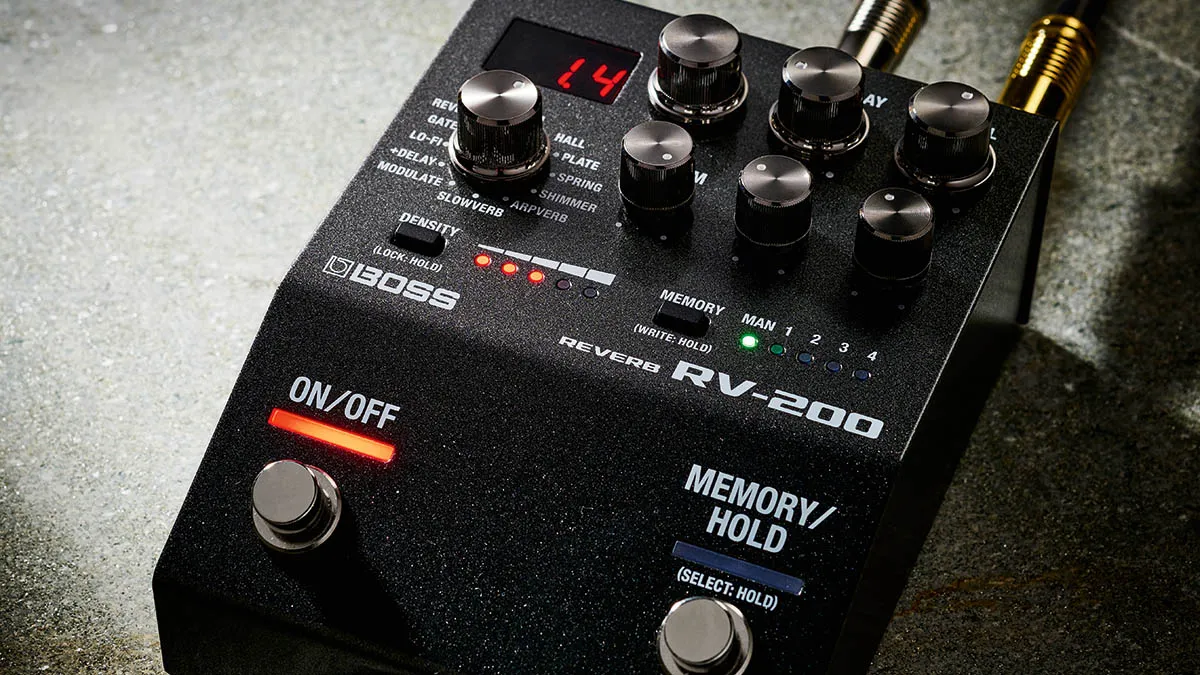
Boss’ RV-500 was a long-awaited reverb workstation from the legacy pedal brand, folding popular and historic Boss reverbs into a single mega-pedal with peerless functionality. Price and size were major limiting factors for this comprehensive reverb, though – and its latest sibling addresses both without sacrificing quality.
The Boss RV-200 is a pint-sized multi-reverb unit, putting the best of the RV-500 at your feet in a plug-and-play stompbox format. There are 12 reverb algorithms to choose between, and extensive parameter customisation for each (without the menu-diving complexity of the RV-500).
There’s also a boon in the form of Boss’ all-new Arpverb patch – a unique, gleaming, ever-ascending digital reverb marrying shimmer-verb with the magic of synth arpeggiation. All effects benefit from Boss’ proprietary 32-bit floating point processor, and an absurdly high sample rate of 96khz.
Though missing the extensive adjustability of its big brother, the RV-200 is an immensely powerful addition to the pedalboard – and space-friendly, to boot.

"If you're after Halls, Plates and Shimmers, the RV-200 is a workhorse of a reverb pedal – but its spacier offerings could do with a few tweaks to entice ambient players."
Read our full Boss RV-200 review
Best multi-effect

The Walrus Audio Qi Etherealizer is a collaboration between the boutique makers and Yvette Young, songwriter and driving force behind Covet. The pedal is a suitably expansive affair, then, combining chorus, delay, grain sampling, and reverb into a monumentally atmospheric package.
There’s a lot to love about the Qi Etherealizer, not in the least that spacious end-of-chain reverb that so excellently glues everything together. But, while this is a guide to the best reverbs, I think the star of the show here is the granular section, which takes your playing, crumbles it up, and throws it at the reverb like stardust (whether you’re in the pedal’s series or parallel mode, the reverb always cements everything together). The preceding delay and chorus only serve to add motion and dimensionality.
This melange of effects and capabilities makes for a powerful box of atmospheric tricks. Whether a bubbling undercurrent to a sparse arrangement or an all-out asteroid-belt assault on the ears, this is the experimental pedal with which to do it.
"If you have the money (and let’s face it, this isn’t a budget pedal) this could be a flexible asset for your ’board to deliver conventional single or combined chorus / vibrato, delay and reverb effects when desired and the occasional composite fairy dust if the need arises."
Read the full Walrus Audio Qi Etherealizer review
Best IR Reverb

Hotone’s NC-200 Verbera is an exhilarating glimpse into the future of the pedalboard, having achieved something incredible. It’s a dual-engine reverb, one half of which is a fully-featured convolution reverb. Up until relatively recently, proper IR capability in a guitar pedal has been a bit of a pipe dream. But here, with 10 seconds of stereo tails or 20 seconds in mono, we are welcomed to the world of tomorrow.
For the uninitiated, convolution reverbs use impulse responses (IRs) – recordings of sharp sounds or sine sweeps in physical spaces – to ‘steal’ the character of the space and apply it to new sounds in real time. The Verbera comes with 120 pre-loaded IRs of huge spaces, rare plate reverbs, and more. And there’s 1024 more spaces, for IRs of your own (which, incidentally, you can make from scratch using the pedal’s cloning function). And that’s not even the half of it.
The other half of the pedal is Hotone’s XR algorithmic reverb, which can be blended in with your IR verb/space design to expand its capabilities even further; this algo verb also has freeze, too. There is, of course, expression control, trails switching, stereo I/O and everything else that makes for a contemporary pedalboard heavyweight. This is a hard prospect to pass up, particularly if you’re a fan of ‘real’ spaces as guitar verbs.

"Simple to use, built to last, and with tones that would make pedals twice this price jealous, there’s really not a lot to dislike about this pedal. Okay, I’m not really a fan of the locations of the MIDI in and outs, but it’s a small issue in an otherwise flawless pedal."
Read the full Hotone NC-200 Verbera review
Best mini

There are compact reverb pedals out there that do it all: all-singing, all-dancing digital affairs with unreadable visual displays and increasingly convoluted menus to navigate. While some such reverbs are well-deserving of attention and accolade, sometimes it’s a breath of fresh air to see something tiny do one thing well – and in the case of Danelectro’s Spring King Junior, it’s remarkable that it’s capable of doing this one thing at all.
The Danelectro Spring King Junior is, like its big brother, a spring reverb pedal. And not just that, but a real spring reverb pedal. No digital algorithm, no separate and secondary spring tank to buy, no approximative tomfoolery. But how?! The answer is a clever combination of a miniature three-spring Accutronics-Belton tank and a delay chip to lend some length.
It’s not a Fender Twin’s reverb in a box, and it’s certainly not Explosions In The Sky. But what it is is a phenomenal rough-and-ready splatty ‘verb that’ll do exactly what you want any tasteful spring sound to do. And you can kick it for that chaotic crashing sound, too.
"What’s not to like about proper spring reverb that should easily fit on any pedalboard? In our view, not a lot: the Spring King Junior is a solid implementation of a great idea."
Read the full Danelectro Spring King Junior review
Also tested
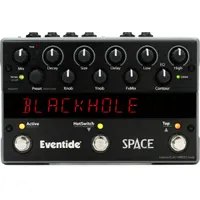
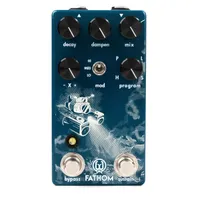
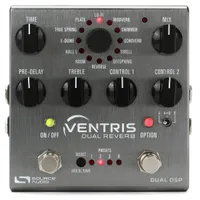
For us, the pedals we've listed above are the best of the best. That said, we've tested loads of different reverb pedals so if you're looking for something a little different, here are some more of our favorites.
Glossary of terms
- Algorithm: Algorithms are set sequences of processes, in this context applied to a digital audio stream in order to alter its characteristics. Reverb algorithms use code to alter the digital information received, imbuing a digital audio signal with the hallmarks of a particular reverb. Different algorithm parameters are changed by using a pedal’s knobs, to control variables like decay and tone. Algorithms can emulate real spaces and analog reverbs, but, being effectively code, algorithmic reverbs are also capable of creating unnatural and impossible ‘spaces’ for a sound. This leads the way to more experimental and ambient sounds.
- Convolution: In reverb terms, a type of reverb that uses impulse responses (IR) as a basis for digitising real-world spaces. Convolution reverbs are able to take the characteristics of a reverberant space from specific recordings within it, and superimpose them on whatever you play through them.
- CV: Stands for Control Voltage. CV inputs on a guitar pedal enable its parameters to be changed electronically by external equipment. This enables periodical, time-based modulation of parameters for a more dynamic sound. CV is more commonly found in modular synth equipment, but is increasingly used in boutique pedals to enhance their functionality with other audio equipment.
- Decay: The time it takes for a reverb’s reflections to die down.
- DSP: Stands for Digital Signal Processing. A large majority of reverb pedals on the market use DSP, meaning the analog guitar signal is converted to digital information, processed by algorithms, and then converted back to analog audio.
- Early reflections: The first reflections of a sound in a space. In some spaces, these early reflections are more distinct, sounding more akin to delay. The larger a space, the longer the time between the initial sound and its early reflections.
- Expression: The external control of a pedal’s parameters using a pedal; with an expression pedal, the characteristics of a pedal can be changed smoothly without having to stop playing and reach down to the pedal’s knobs.
- IR (Impulse Response): An audio file of a staccato sound played in a space or through a speaker that captures its tone and time-based characteristics. IRs are used in convolution reverbs to essentially capture and replicate the real sound of a given space; they are also used in cab simulator pedals to emulate the tone of specific speakers.
- MIDI: Stands for Musical Instrument Digital Interface; it is a communications standard for audio equipment that enables the sharing of music and parameter information. It can be used to navigate reverb presets and control parameters.
- Plate reverb: An analog reverb device that passes audio through a metal plate by way of a transducer, and retrieves the results with pickups. Plate reverbs are a studio staple and a common source of reverb emulations.
- Spring reverb: An analog reverb device that passes audio through a series of springs suspended in a tank. Spring reverbs are commonly found in guitar amps and are also a popular studio reverb for dub music.
- Wet/dry: Wet refers to the affected signal from a pedal or device, while dry refers to the unaffected signal. In reverb pedals, wet and dry signals are combined to keep the definition of a guitarist’s playing; many pedals give you a knob to control how much wet signal you hear, with the option to completely cut the dry signal.
How to choose

If you’re a bread-and-butter guitarist looking for a pedalboard-based alternative to the sparse, quintessential amp-verb sounds of Stevie Ray Vaughan or Mark Knopfler, you’ll need little more than a decent spring reverb emulator. Many less-featured or entry-level reverb pedals have a spring reverb patch included, and the few controls they possess are generally more than enough – providing the patch itself sounds to your liking.
If you play a little more broadly, then you’ll want a multi-effect reverb pedal with different options or patches. Ask yourself what kind of sounds you’d like to choose between, and what parameters you’d like to be able to change. Would you like to be able to set presets, too, or are you content with noodling around the knobs and switches?
If you’re hoping to take your playing off into the stratosphere, then you won’t be too fussed about accurate room- or amp-sound reverbs; instead, you’ll be looking for a more esoteric ambient or pad reverb pedal. These kinds of pedals have super-long tails, and often feature a ‘freeze’ or ‘hold’ function that can be used to create an endless bed of ‘verb. In pedals like these, tone controls are vital, as they help you sculpt a non-intrusive verby fog for your playing to float over, under or between.
FAQs

What does a reverb pedal do?
The reverb pedal is, in essence, a space simulation station. Natural reverbs are the result of sound bouncing off reflective surfaces; reverb pedals use a variety of methods to create an artificial version of this effect, giving the illusion that you’re playing in anything from a small, pingy room to a huge, boomy cathedral. Some reverb pedals go even further beyond, creating completely impossible spaces with additional effects like chorus, reverse-sample playback and octave-shifting.
What makes a good reverb pedal?
No two pedalboards are quite the same, and there’s no universal answer when it comes to choosing a reverb pedal to add to your own chain. The sheer variety of reverb pedals on the market today can be daunting, but the potential they represent is thrilling.
Ultimately, there’s no real right or wrong when it comes to picking your own reverb. Your best bet for making the ‘right’ decision is to listen to some pedals in action. Ask yourself whether you like what you’re hearing, and whether you’ll like it against the sounds you already utilise.
As a professional guitarist with studio sessions or live shows coming up, you might have some cause to concern yourself with specifications like sample rate or processing power – but even the most sought-after session musicians in the world don’t let ‘bad’ specs get in the way of a good sound. So go forth, and get lost! (in reverb.)

Where does reverb go in the pedal chain?
We always like to say there are no hard and fast rules on where you should place your pedals, but if you’re new to reverb, we’d start by placing it at the end of your chain. Reverb is designed to simulate space, and spaces usually hear the sound coming from your amp.
With this in mind, putting your reverb at the end of your chain is the closest you’ll get to that same effect. All the better if your amp has an effects loop, which can be used to place your reverb (and other time-based effects) after your amp’s pre-amp and EQ stages for a cleaner, more controlled result. However, placing your reverb earlier in your chain can yield uniquely exciting results.
Placing your reverb before other modulation effects lets you effect the tails of your ‘space’, leading to a more cohesive and dynamic sound. Placing a reverb before your dirt stage can give you colorful grit, or blown-out shoegaze-y soundscape a la Kevin Shields.
Experimentation will yield wildly different results based on the contents of your own pedalboard, so don’t be afraid to move things around in the name of science!
What are the key differences between different reverb pedals?
You can trust Guitar World Our expert reviewers spend hours testing and comparing guitar products so you can choose the best for you. Find out more about how we test.
The vast majority of reverb pedals you will encounter are digital reverb pedals. This means they use digital signal processing technology, or DSP, to create their reverb effects. Digital signals are ‘verbed in two main ways – algorithmic reverb, and convolution reverb.
Analog reverb pedals are far less common, but by no means impossible to find. Analog reverb effects are achieved by routing an analog audio signal through a resonant material or assembly, the most famous example of which is spring reverb. Good spring reverbs are usually both sizeable and costly, but innovation continues even in this most old-school of fields, with the likes of Gamechanger Audio re-inventing analog spring reverb for a new generation.
What is the difference between algorithmic and convolution reverb?
Algorithmic reverbs, up until very recently, were the primary form of digital reverb in pedal form. They use calculus to create artificial spaces with near-limitless possibilities, combining numerous timed delays with banks of filters to sculpt the sound’s reflections and tails.
Convolution reverbs, meanwhile, are reverbs created from real-life samples of reverberant spaces. Impulse responses (IRs) are audio files comprising a short, percussive noise or sine-wave sweep and a space’s resulting reverb – which a convolution plugin can then combine with your signal, making it sound as if you’re playing in the very same space.
Convolution reverb is a computationally-taxing process, and until recently only short IR samples could be used in pedals (i.e.: guitar cabinet simulators). Now, leaps in microprocessor design have allowed the power of convolution reverb to come to the guitar pedal – with Strymon’s BigSky MX the biggest example of its pedal potential so far.
Convolution reverbs are ideal for simulating a real space, but algorithmic reverbs can create unreal spaces – and are responsible for quintessential ambient and ethereal reverbs, like the Eventide Space’s craziest patches.
Why are reverb pedals so expensive?
Unfortunately, reverb is one of the most expensive effects out there and this is because of the computational power that’s required to take your guitar’s signal, simulate it being played through digital space, and play it back at you, all in real-time. A mixture of complex algorithms and powerful computer chips is required to handle this workload and still deliver a top-quality tone, hence the associated cost. If you’re on a budget, not all is lost though, there are some budget reverb pedals available if you look hard enough that still deliver a great sound.
Are reverb pedals worth it?
In our opinion, absolutely yes. Reverb is probably the most used effect in the whole of music and was certainly one of the first effects that were ever used. Way back when loudspeakers were being played into a recording studio's bathroom to create a sense of space, right through to today’s wild soundscapes that are possible thanks to advanced digital signal processing, reverb is a must-have effect for any guitar player. It is an investment, but trust us, it’s totally worth it.

Are all reverb pedals digital?
Reverb is, for the most part, a digital effect. This is because for it to be analog, you’d need something physical to play your sound through. Early reverb effects, like plate reverb, required large metal sheets through which the sound was played. Echo chambers had sounds played into them, which were then captured by a microphone and added to the dry signal to create a sense of space on the recording. In most cases, you might imagine the inconvenience of incorporating analog reverbs such as these into anything but a studio workflow.
Of course, that’s not the whole story for analog reverb – being that there’s one highly portable type that we’ve touched on already: spring reverb. Spring reverbs have been used in guitar amps for decades, and still are today; they are idiosyncratic, but portable and even somewhat flexible.
Spring reverbs are a popular choice, then, for pedal brands to interpret and iterate upon in service of bringing analog sound straight to your pedalboard. There are pedals that act as drivers for a separate spring tank, enabling you to plug in different-sized tanks for different sounds. There are pedals that take the spring principle and put a twist on it, like Gamechanger Audio’s Light reverb. And finally, there are pedals that stubbornly stuff spring tanks directly in their chassis – an unlikely, but highly fun, result, exemplified by Danelectro’s Spring King Junior.
How we test reverb pedals

When testing any reverb pedal we like to put it through a rigorous process that would simulate exactly how any guitarist would use it. As guitarists ourselves, this might mean putting it on our own 'board, taking it to rehearsals and shows, as well as using it for recordings too.
We like to get straight to business when testing a pedal, so we start off by hooking it up to our pedalboard and seeing how it works off the bat. We're looking at whether it's easy to dial in sounds, how you can configure things on the fly, and whether or not everything is clearly marked.
Of course, some reverb pedals are far more complex than others, so we may need to dive into the manual on those units. But ultimately what we're trying to find out is how usable it is for the average guitarist, whether you're one to look at a manual or not.
We'll test all of the available sounds on both clean and dirty guitar tones, using our keenly trained ears to determine how well they react to different effects. We'll try various blends from a touch of 'verb to full-on Kevin Shields-style reverse reverb tricks if the pedal is capable, making certain we've covered every sound possible.
We'll also look to see how well the controls can affect the sound, whether that's sculpting via EQ or adding modulation. Reverb can be a very consuming effect so it's important to see how flexible a particular pedal can be, particularly when integrating with dirty guitar tones.
Finally, we'll look at the build quality of the unit. Ultimately we're trying to determine how well it will put up with life on the road, as many of these pedals will be used for live guitar playing. We'll check over each pedal in detail to ensure it can put up with plenty of use and abuse, as well as using it ourselves at live shows or in rehearsals to see how it deals with the pressure.
Read more about how we test products and services and how we make our recommendations.
Why trust us?

☑️ A global audience of 3.8 million guitarists monthly
☑️ 1,200+ reviews on GuitarWorld.com
☑️ 30+ years of product testing at Guitar World
Guitar World boasts over 44 years of expertise and stands as the ultimate authority on all things related to guitars. The magazine and website feature expertly written gear round-ups and top-quality, authoritative reviews penned by a team of highly experienced industry professionals.
Guitar World's inaugural print issue hit the shelves in July 1980, and ever since, it has been captivating players and enthusiasts with engaging lessons, insightful interviews with the biggest guitar heroes, and priceless buying advice for newbie players.
Furthermore, GuitarWorld.com continues this legacy online and serves as the hub of the world's foremost authorities on guitar playing. The site not only hosts content from Guitar World but also showcases articles from respected publications such as Guitarist, Total Guitar, Guitar Techniques, and Bass Player. With a reach extending to 3.8 million players each month, GuitarWorld.com is a go-to destination for guitar fanatics globally.
Related buyer's guides
- Go all-in-one with the best multi-effects for guitar
- Bring the dirt with the best fuzz pedals around
- Get all wobbly with the best tremolo pedals
- Get top-notch sound with the best amps for pedals
- Power up with the best pedalboard power supplies for every budget
- Get great tone with the best impulse response loaders

