




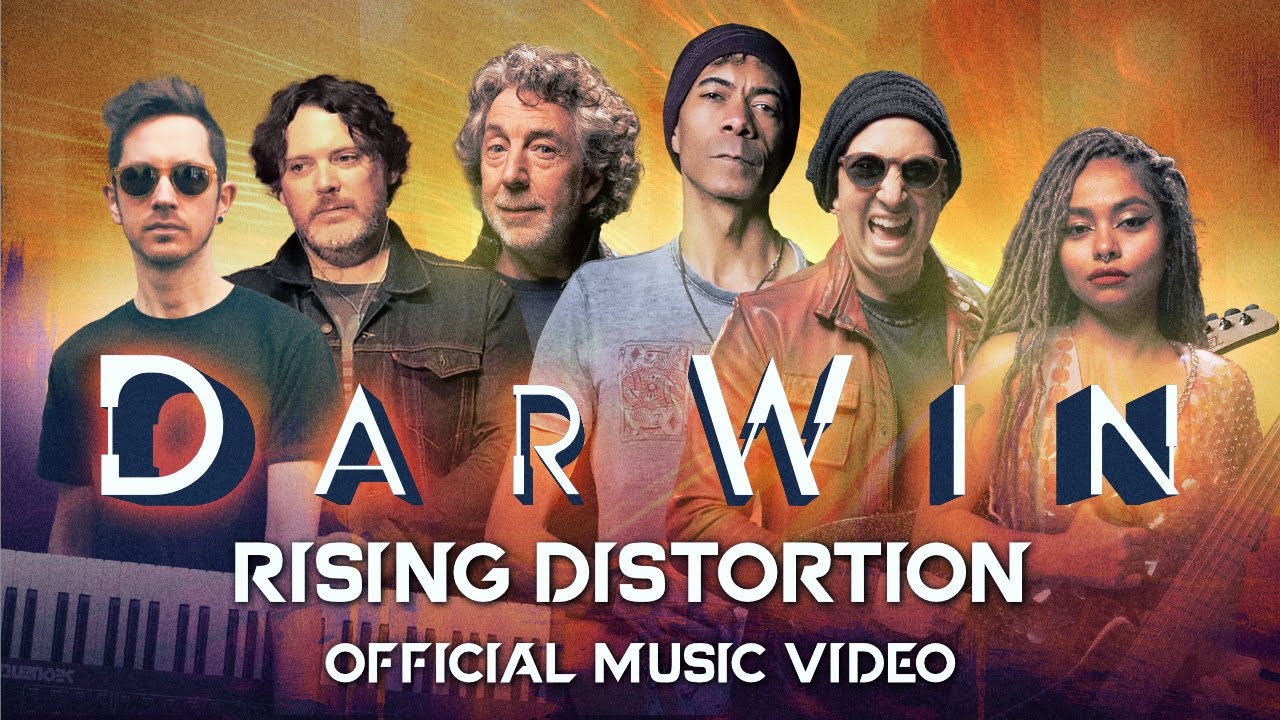
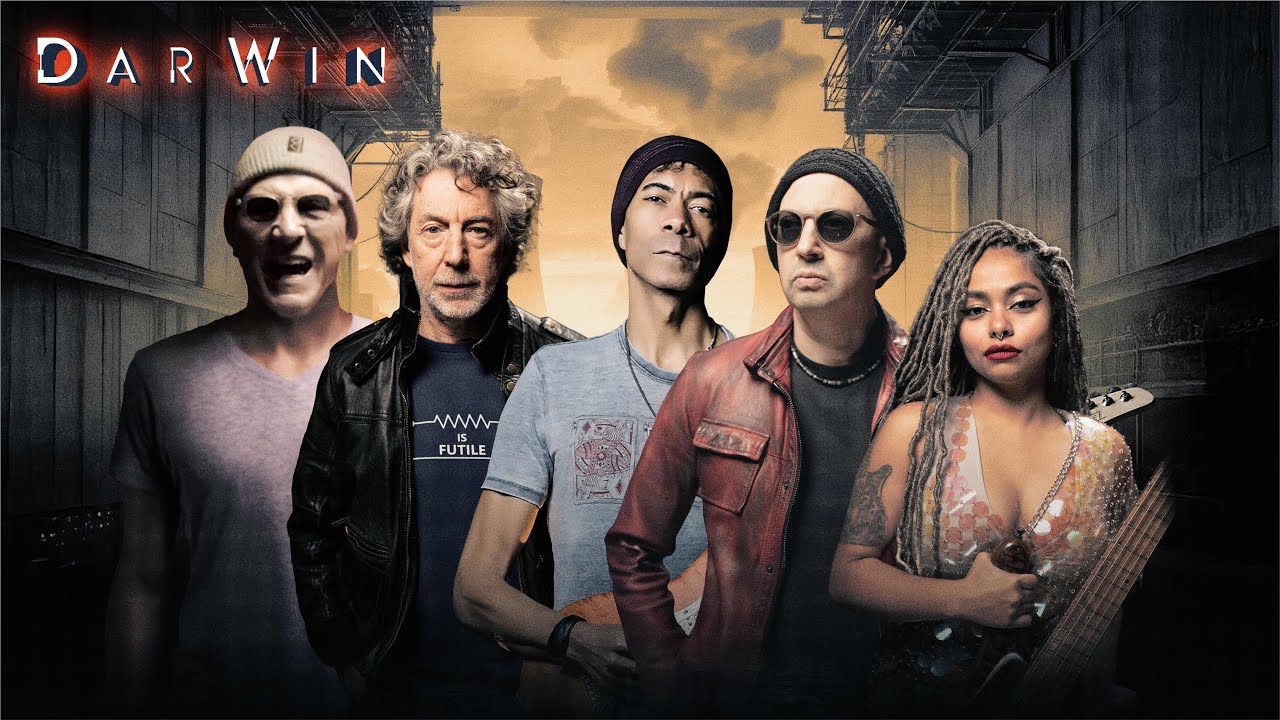
Most supergroups are an exercise in egomania. But back in 2015, DarWin formed with the purest of intentions: to fill each position with the best musician in their discipline, set them loose on ambitious, narrative-driven material, and let the sparks fly.
On drums and production, there’s god-among-sessioners Simon Phillips. On vocals (breaking from his familiar role as bassist), Ringo Starr and Elton John associate, Matt Bissonette.
On rhythm guitar? Well, that’s a little trickier.
In an age when we’re told mystique is dead in rock ’n’ roll, we know next to nothing about the project’s songwriter, svengali and namesake.
Fortunately, while DarWin himself will only answer emailed questions about new studio album, Distorted Mirror, veteran guitar virtuoso Greg Howe and Mumbai-born bass sensation Mohini Dey are happy to fill the gaps.
How did you get involved with the DarWin project?
Greg Howe: Back in 2018, I was working in LA with Simon Phillips in Protocol. One day, he said, “There’s a guy who wants you to play on his songs.” So I went down to Simon’s studio and heard DarWin’s stuff.
He was online with us, so we’d record something, send him a quick mp3, then he’d get back with critiques. I just remember thinking, “This is a unique sound.” And I’m always into that. As for DarWin himself, he’s quite mysterious. I can’t even say much more about him.
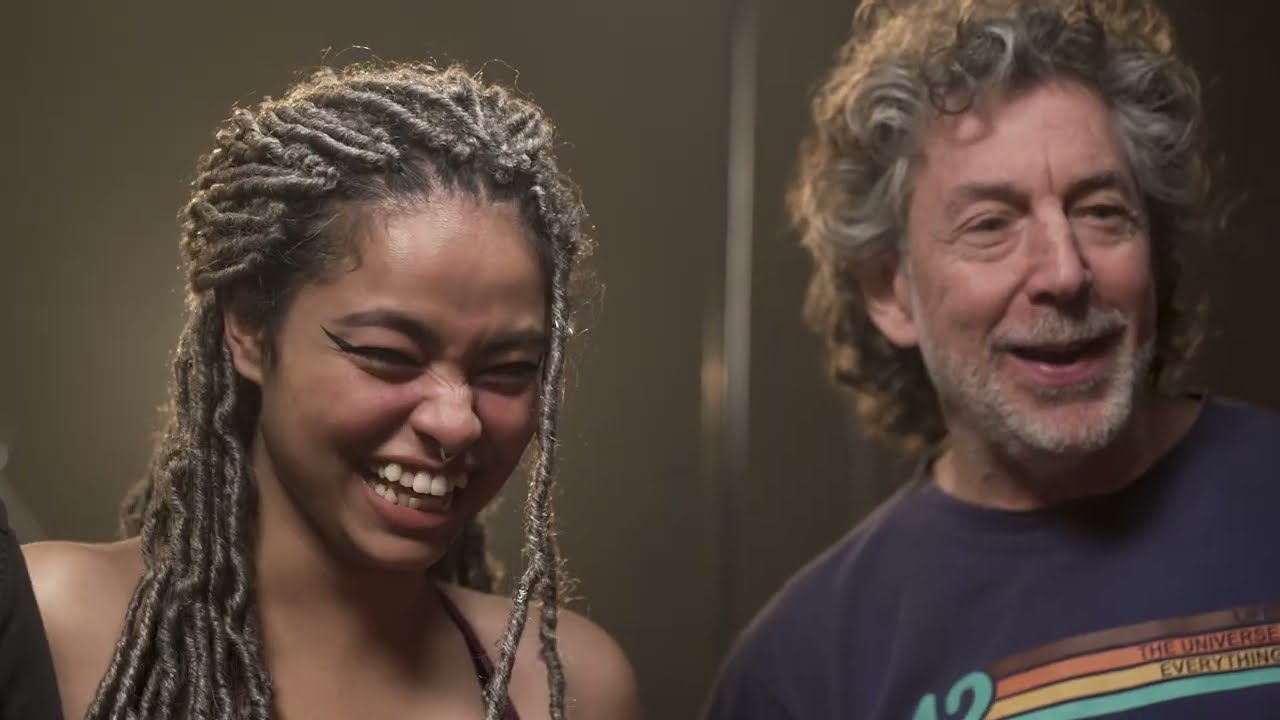
Whereas, Mohini, you joined in 2022. What’s the appeal of DarWin for you?
Mohini Dey: I love the little elements of pop and jazz. I feel like these days everything is so progressive, we’ve lost that old-school pop-rock vibe, and with DarWin, we’re keeping that aspect alive.
People can groove and sing along, so it’s more relatable than super-technically challenging. I mean, we’re all capable of that, but this project is focused on the stories DarWin wants to tell – about the environment, humanity, life…
Greg, you tracked remotely. But Mohini, you were in the studio. What are your memories?
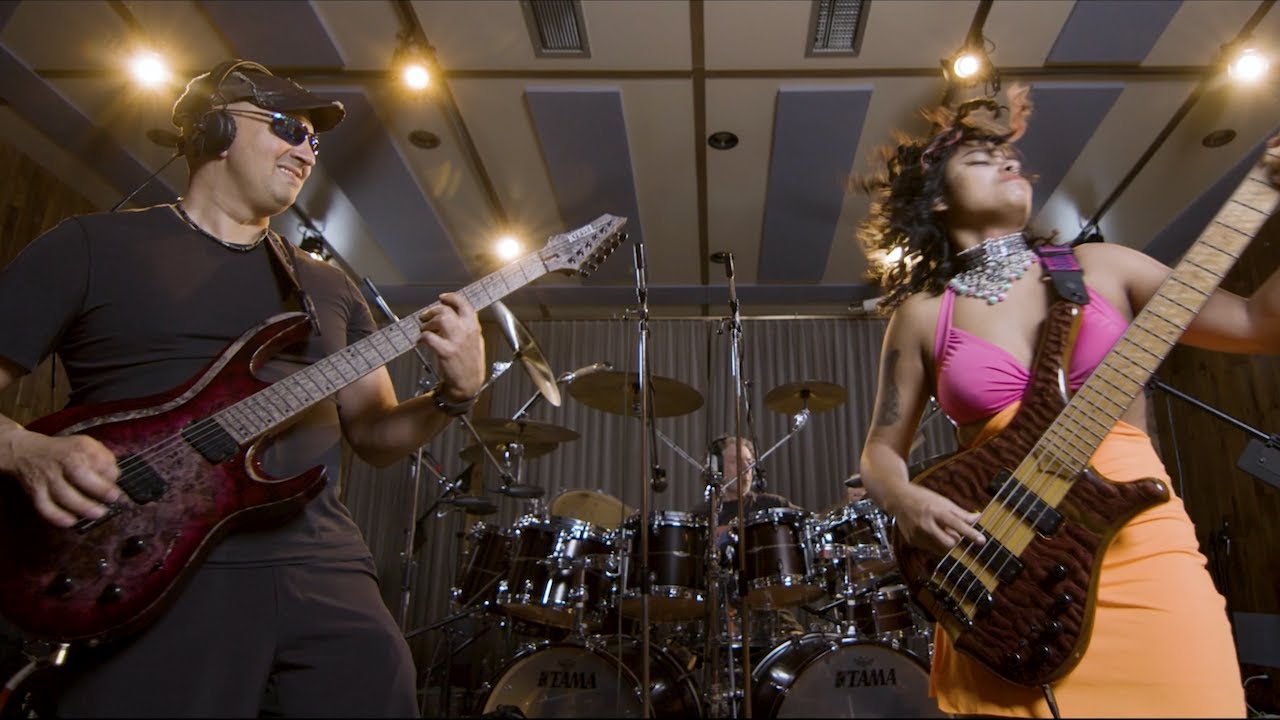
Mohini: I remember Simon setting up his big drum kit because he loves to record bass and drums together. So nothing is chopped, it’s all live takes and very rarely does that happen now. I love being in the same room, picking up a part in five minutes, then doing a take when the adrenaline is flowing. I like being put on the spot, that’s my strength.
Simon already had such beautiful basslines laid out that I didn’t have to do too much. But will I suggest changes? Absolutely. I have complete freedom to improvise, like on Man Vs Machine. And most of the time Simon welcomes that. DarWin and I, we have this joke that I bring up his ideas because Simon is more likely to listen to me!

How do you write parts to complement DarWin’s dystopian lyrical themes?
Greg: It’s a fun challenge. I’m getting into the DigiTech Whammy DT because it instantly makes anything you do sound very synthetic and non-organic. So it’s good for injecting that kind of futuristic feel. But there’s also a sort of sadness when we think about the future. There’s a bleakness. So I’m trying to inject that into my playing, too.
What sort of tone were you shooting for?
Greg: If you take a generic electric guitar at a music store, plug into a generic high-gain amplifier and put everything at 12 o’clock, it’s usually not a pleasant sound. It’s usually something that has to be tweaked to make it cool, y’know? So I’m just looking for the same things in my tone that I’d be looking for in any instrument.
I want it to be warm and smooth, like a nice voice. When something is too bright or piercing, I’m like, ‘Well, you wouldn’t want that if it was a violin, so why would I want it?’
Mohini: Simon likes the bass tone very clean, not too dirty, no distortion. He’s not a big fan of slap bass or too many ghost notes.
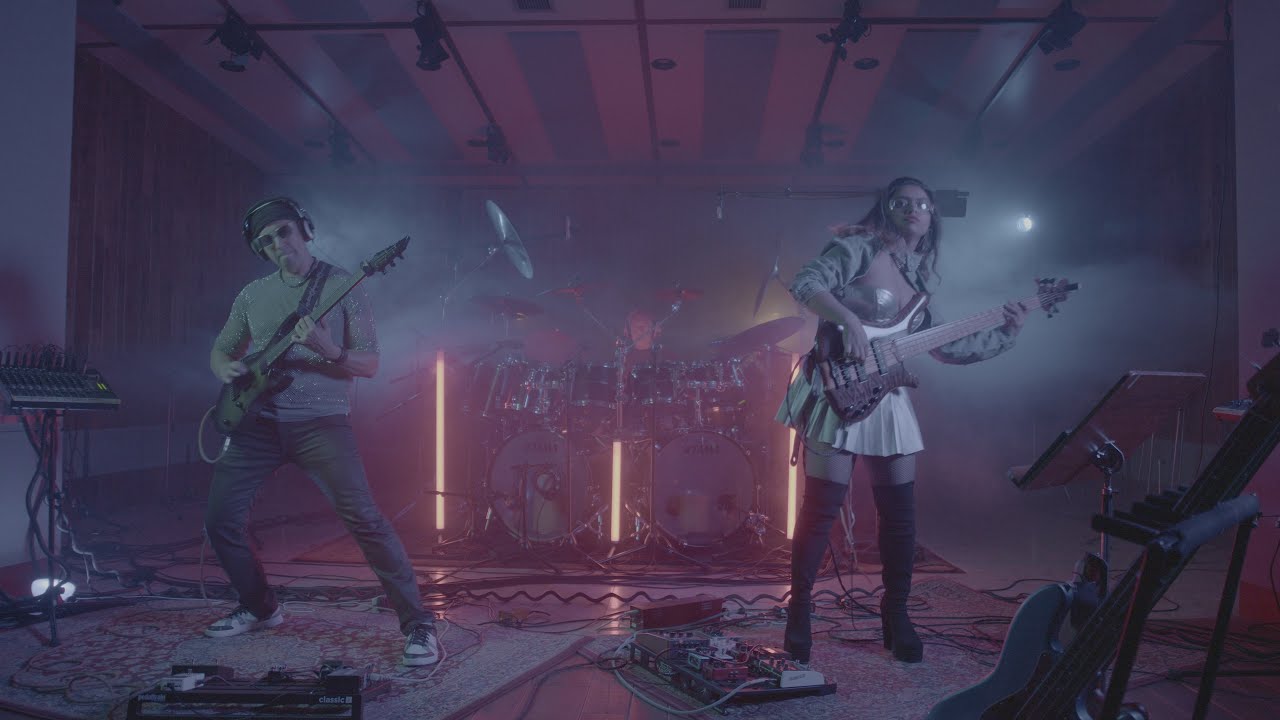
What was your rig for Distorted Mirror, Greg?
Greg: Simon is a big fan of real amps because he’s old-school. There was my Cornford MK50, which is my favourite amp in the world and the only one where I don’t need anything in front. I used a Marshall JCM 2000 DSL, usually with a Tube Screamer.
It’s solid-state, and just to hear that come out of my mouth feels sacrilegious, but it sounds great, very tube-like
Greg Howe
I have a signature amp with DV Mark called the Little GH 250. It’s solid-state, and just to hear that come out of my mouth feels sacrilegious, but it sounds great, very tube-like.
My favourite wah is the original Cry Baby. So I asked Dunlop, ‘Is there anything like that but true bypass?’ And they said the closest thing was the Buddy Guy wah. I’ve got a signature Carl Martin overdrive, the Greg Howe Lick Box. I’ll confess, I’ve got into situations in the past where my name is attached to a product and when I plug it in, I’m like, ‘Ugh, really?’ But this one, I really am proud of it.
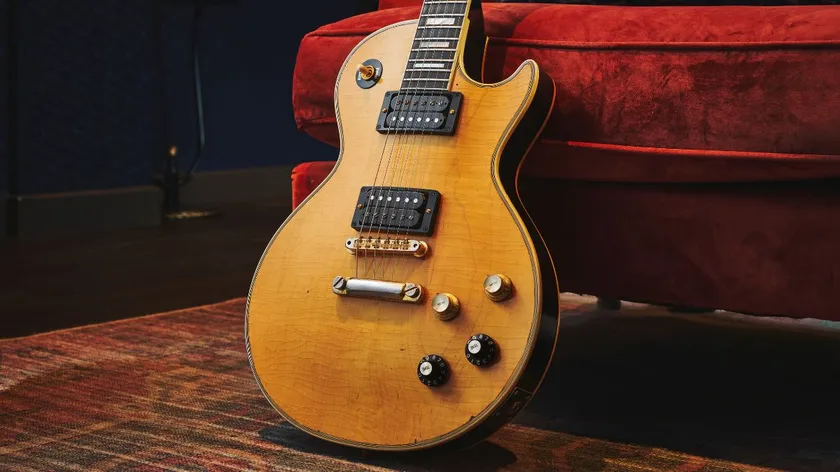
I’ve been using my Kiesel Lyra signature guitar. There’s a Seymour Duncan Whole Lotta Humbucker in the bridge, which was a placeholder until I figured out what I really wanted. But it’s still there.
This guitar has a very thick sound, not as snappy or Strat-y as others I have. The frets are a harder metal than nickel, so they last longer. But they’re not as hard as stainless steel, so luthiers don’t get mad at you when you have work done.
How about your key gear, Mohini?
Mohini: I used my Mayones Comodous Classic 5. It’s my baby and there’s something about it – the attack, the tightness and tonality functions – that’s just close to my heart. On the last album [Five Steps On The Sun], for the song Be That Man, I needed to tune my B string down to A, and it’s very rare you can do that without buzzing. But this bass can handle rare situations – and take a beating!
My favourite amp is the Markbass Standard 104HF cabinet with the Little Mark 800. I just love the combination of that tube head with the Aguilar OBP-3 preamp in my bass: the depth, clarity, definition, attack and headroom.
I have my Mid High [control] on the head full up and the same on my bass EQ. That’s where I get my bridge-heavy tone. I always look for that clarity because I play very fast notes and I hate it sounding muffly.
Mohini and Greg, what do you think of each other’s playing?
Mohini: You really hear Greg on this album. He’s given complete freedom to rock out on his solos, and you can hear the stories and energy just flow through him.
Greg: Mohini is phenomenal. She does things on bass I’ve simply never heard done before. She can really bring it: she’s got crazy chops. But she’s got a nice feel, a great rhythmic sense – and she can really get funky.
I didn’t know that about her. I knew she’d have all the time-signature stuff. But some of my stuff is real ‘pocket’ funk, like head-nod shit, so I was a little concerned, like, “I hope she gets that.” And she totally gets that.

Mohini, how has your background helped prepare you for DarWin?
Mohini: I didn’t consciously choose to play bass – it was just handed to me at three years old. My dad was a touring musician and he had plans for me. He saw a spark in my eyes and wanted to finesse that.
Early on, I was playing with Bollywood artists, and I feel like certain doors opened when I got the AR Rahman gig or played for MTV India
Mohini Dey
Other dads weren’t even paying attention to their kids, but mine gave so much to me, to the point I started to rebel against it. Here in America, I feel like parents are chill, but the culture I come from is so strict. Music was like school. That’s why I got so good. I didn’t have any other option. I had no choice but to excel.
I feel like I’ve had breakthroughs in different phases of my life. Growing up in India, I’ve been working professionally since the age of nine – and I’m 29 now. Early on, I was playing with Bollywood artists, and I feel like certain doors opened when I got the AR Rahman gig or played for MTV India.
But then, two years ago when I moved to America, I got the Willow Smith gig and that was a turning point. Right after that, I got signed by a management agency for my own music and tour. Now I’m playing at all these European jazz festivals.

Of course, your career has many chapters too, Greg. Do you recognise your playing on the late-’80s Shrapnel Records releases, say, or as a sideman for Michael Jackson in the ’90s?
Greg: Some of the old stuff, I listen to now and go, “Wow, I wish I could redo that.” But there are other things when I was in my mid-20s and I’m thinking, “If I could meet that version of Greg Howe, I’d give him a pat on the back.” Like, “Not bad.”
The Michael Jackson tour? It was amazing. Everything was bigger than life. Top-notch hotels with gold fixtures. A private jet, with flight attendants, just for the band. It was fun playing the Beat It solo live. I had to walk out there with Michael, and he’s all pumped up, looking you right in the eyes.
And it’s a little intimidating. Because you can feel that he’s saying, like, “Come on, get into it, bring it!” And I’m like, “Well, I’m trying to bring it, but I gotta play the right notes!” I remember, one night, he grabbed me and spun me around, in the middle of the solo. And I’m thinking, ‘What did that sound like out front, coming through million-watt speakers…?”
Do you think there’s still gas in the tank for guitar-based music?
Greg: I do. It’s interesting how these questions are always asked about guitar, not saxophone or piano. The guitar is such a versatile instrument and there’s so many different ways to play it – I think we have a long way to go until we start to sincerely wonder if there’s any room left for expansion. I see new techniques all the time. New tunings. New equipment. I don’t think we’re even close to the end.
Finally, do you think DarWin could go on the road?
Mohini: It’s difficult because everybody is their own artist and so busy with their own thing. But Simon tells me he gets approached after shows and asked, “Hey, when are you doing a DarWin tour?” I get the same thing on my tour. And every time I hear these songs, I’m just like, “Wow, this deserves to be on stage.” So I think it’s just a matter of time…
Mystery Man: A rare encounter with the enigmatic DarWin…

What was your founding vision for DarWin?
Simon and I wanted to make great-sounding songs that fit together thematically in an album experience. We felt the art is getting a bit lost and that we still had a few ideas left.
We also felt that sometimes rock music can become a bit repetitive, but there are plenty of ideas, approaches and emotions left to explore. Importantly, we wanted to do old-school production in a studio environment, under Simon’s leadership, and enjoy the creative experience that comes with that.
You’re also a great player. How do you divide the guitar parts between you and Greg?
Greg is just a rare kind of genius. He does so many incredible technical things, but in a way that always serves the song, concept and melody, and still brings the fireworks. His mastery of music, via the guitar, should probably be researched by scientists. It’s clear that he needs to be doing our solos. I basically play the rhythm parts, which are the core song structure and how the songs are usually written, and Greg shreds the solos.
What atmosphere did you want the guitars to have on the record?
Usually, the heavy rhythm guitars are doubled with both Kraken and Mesa/Boogie played tracks to make them extra thick and juicy. Then we have the ancient and wise Leslie for a mysterious clean sound.
DarWin
There are many different types of songs, including ballads. Those shimmering clean electric guitar sounds – like Rising Distortion or Loophole – are all going through a beautiful Cold War-era Leslie.
The guitar tone needs to shake a speaker cone in a certain way when it combines with the bass sound. It’s a bit Megadeth or Metallica. However, for the ballads, Jesse Siebenberg plays such wonderful acoustic and lap steel that I stay out of his way.
What was the most important gear that you used in the studio?
I play various Kiesel Aries with Lithium pickups, a Victory Kraken VX MKII, and often a Mesa/Boogie 5:25 via a Marshall 4x12 or Bogner cab – and basically no effects ever. Usually, the heavy rhythm guitars are doubled with both Kraken and Mesa/Boogie played tracks to make them extra thick and juicy. Then we have the ancient and wise Leslie for a mysterious clean sound. It is just all guitar pickups to speaker cone, really.
When it comes to guitar, how do you keep your playing fresh?
I hit a wall with standard tunings after our first double album, t7-s. Then I started detuning the low E string and things got exciting again – for another four albums. Now, I usually have a 0.056 gauge string on the low E – I don’t like playing seven-strings so I just push the low string as far as I can.
When I play in drop C, I usually also drop the high E to C. That’s what gives Rising Distortion that mystical sound. A lot has been done with guitar, but I think it will continue to surprise us. When technical mastery combines with soul, and enough electrical power to charge a Tesla, the result is quite magnificent.
The internet has stripped so much mystique from rock ’n’ roll. Why do you choose to remain such a mysterious figure?
I think we live in an era when most young people want to be professional influencers and we are addicted to getting likes on social media. I want to participate in the system only to the extent that the music can delight the listener and somehow give them a lift.
- Distorted Mirror is out now via Phantom Recordings
- This article first appeared in Guitarist. Subscribe and save.

