




Anyone who has pointed a condenser mic at an acoustic guitar in the hope of hearing an accurately captured and musically inspiring recording upon playback may have instead felt disappointment at the opposite.
I know I have. The acoustic guitar – whether flat-top or archtop, steel- or nylon-strung, flat-wound or rubber-bridged – can be a bit of a pain to capture, especially for the self-recording player. The reality is the vast majority of acoustic recordings are tracked, at best, in a modest home studio, or, at worst, a completely untreated bedroom (or toilet…).
Quality of sound at source is a vital part of the process. I had an in-depth chat with Nashville studio ace Rory Rositas (Tommy Emmanuel, Bryan Sutton) who has this to offer on the subject.
“I’ve always said a good song transcends a bad recording, but for any recording the source is the most important part. If the source doesn’t sound the way you want it, then the recording will also not sound the way you want it. Getting the sound at source makes recording easier. That’s the first step.”
Evidently, there is some housekeeping to do before we get anywhere near the mics, then. A successful recording depends on a guitar that can do the job. An hour saved in prep is worth double in the heat of battle, so take the time to do an in-depth play-through and really listen to what’s going on with the instrument. Is the tuning slipping? Is the intonation out as you move up the neck? Are you getting buzzing or dead notes?

In short, does the guitar in its current state sound like how you imagine the end results to be? If not, then this probably needs addressing before you press record. Forget the targeted ad for the Turd Polisher 3000 plugin you saw on Instagram this morning. This is real life. Go get a setup.
In short, does the guitar in its current state sound like how you imagine the end results to be? If not, then this probably needs addressing before you press record
Having ensured the instrument itself is performing as hoped, we must turn our attention to the player.
Time for some detailed listening and some more questions: are the nails on the fretting hand short enough to ensure clean and accurate fingering? How frictionless is the attack? Are you hearing string squeak or other extraneous noise? It may not bother you now, but the moment you slap a compressor on the track it will take your head off.
Does the player make any non-musical noises? A creaky chair may add verisimilitude to an acoustic blues recording, but wheezing, grunting, farting, moaning along with the melody, foot stomping and stomach noises do not. Ask me how I know.
Flat Baroque
The vast majority of us do not have the luxury of a dedicated recording space – as such, proper care and attention must be paid to the sound within the room. Proximity to flat surfaces such as walls and windows will have an effect on your results.
Legend has it that Robert Johnson was recorded in the corner of a room facing the wall. I have tried this myself, but I’ve never quite managed to get the same intensity of results – maybe it was the source after all…
Berlin-based engineer Kian Moghaddamzadeh spends much of his working days piloting the 56-track SSL desk at Hansa Studios (U2, Coldplay, Yungblud), but offers the following words of encouragement to home-recordists.
“The nice thing about recording at home is that you don’t have the same time pressure as you do in a big studio,” he says. “Aside from that, the same rules apply. So much depends on the space, the instrument and also what sound you’re after – whether the guitar should stand on its own or fit in a larger context.
“Once you start experimenting you can begin to build up a personal library of sounds and textures that work for you,” he adds. “That makes it much easier to get creative later with instrument and mic choice later on.”
Close To You
So your guitar sounds good (only you can assess what this means), and the room is working in your favour. But what about mic positioning? I remember a conversation with Windham Hill founder and producer Will Ackerman who described the process of capturing the sound of Michael Hedges’ Aerial Boundaries with an array of mics all positioned alarmingly close to the instrument.
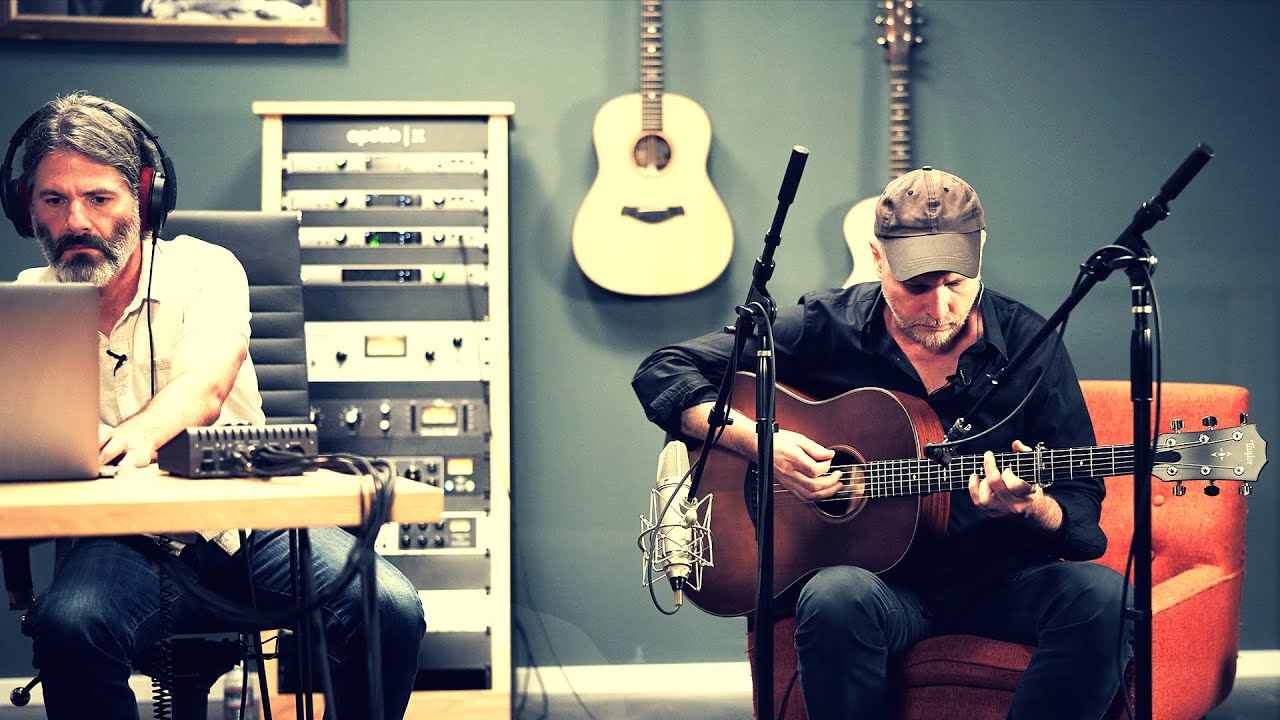
Close mic’ing was certainly a game-changer for me in the early days, but do you need more than one? I asked another guiding light of acoustic production – Hernan Romero (Al Di Meola, Paco de Lucía) for his take.
“I use the same technique whether I’m recording a Conde Hermanos flamenco guitar or a steel-string fretless: it’s just one mic, that’s all you really need,” he tells us. “I use an Earthworks SR30 and also use the space between the soundhole and the body join as a guide – kind of like an EQ slider.
“The closer you get to the soundhole, the more full and bass-heavy the results. Get closer to the neck and things get clearer. Some say you should aim for the body join or 12th fret – I find that too thin – and I position the mic about six to eight inches away. This lets me work the details and dynamics of the performance.”
This is just the start, but by paying attention to the three esses – ‘Source’, ‘Space’ and ‘So where does this mic go?’ – we can avoid anguish down the line. Whether you’re Bill Leader tracking Bert Jansch’s guitar on a reel-to-reel in a 1960s Camden flat or Shawn Everett and Jonathan Rado putting a wall of acoustic splendour behind Miley Cyrus on a Top 10 hit, the principles remain the same. And there’s something rather beautiful about that.
Three to get ready

Universal Audio Apollo Twin X Duo Gen 2 ESS Audio Interface $1,199/£999
A quality guitar audio interface will bring rock-solid performance and peace of mind. The market is pretty saturated with a large array of options, but we have found the Universal Audio Apollo series delivers the promised results in 24-bit 196kHz style. Not cheap but extremely capable.

DPA Core+ 4099 Instrument Microphone $920/£840
The best mic for the job is the one you’re holding in your hand. Make sure it’s a beauty with one of these German-made cardioid numbers – a common sight in pro studios and my own mic of choice for detailed recordings of achingly beautiful luthier-made guitars.

DPA Core+ 4099 Instrument Microphone $760/£569
This Danish super cardioid mic clips directly on to the instrument, making it a strong choice for home recording. Lightweight, high quality and easy to use, it’s also a favourite for live sound among fingerstyle guitarists such as Gwenifer Raymond. If you’re feeling playful, you can even use a stereo pair!
- This article first appeared in Guitarist. Subscribe and save.
