




One minute, it’s a car alarm. The next, it’s a chewed-up cassette tape. And perhaps it’s that infinite capacity for metamorphosis – under the boots of players from Tom Morello to Jonny Greenwood – that has made the pitch shifter a pedalboard staple since the ’70s.
Needless to say, Boss is no newcomer to the market. The king of compacts released its first analogue pitch effects – the OC-2 Octaver and VB-2 Vibrato – in the early ’80s, before going digital with 1987’s PS-2 Pitch Shifter/Delay, and pretty much setting the pace for the modern sector with 2010’s PS-6 Harmonist.
But as global product marketing manager, Matt Knight, reflects, it still felt like there was more gas in the tank. And with the new XS-100 and XS-1 Poly Shifters – a pair of hugely expressive, envelope-pushing units dressed in sky-blue armour – the Japanese pioneer set out to deliver no less than the next generation of shifting.
What made Boss designers believe that pitch shifting could go further?
Boss has a 40-year history with pitch shifting products. But we haven’t had a new device since the PS-6 in 2010. And, you know, how much has changed in music over the past 15 years?
We’ve seen other innovations in that world, in terms of multi-effects, plug-ins, other hardware. So with our history and our vision of always asking, ‘What’s the best thing we can make for musicians now?’, we knew there was still life in this category.
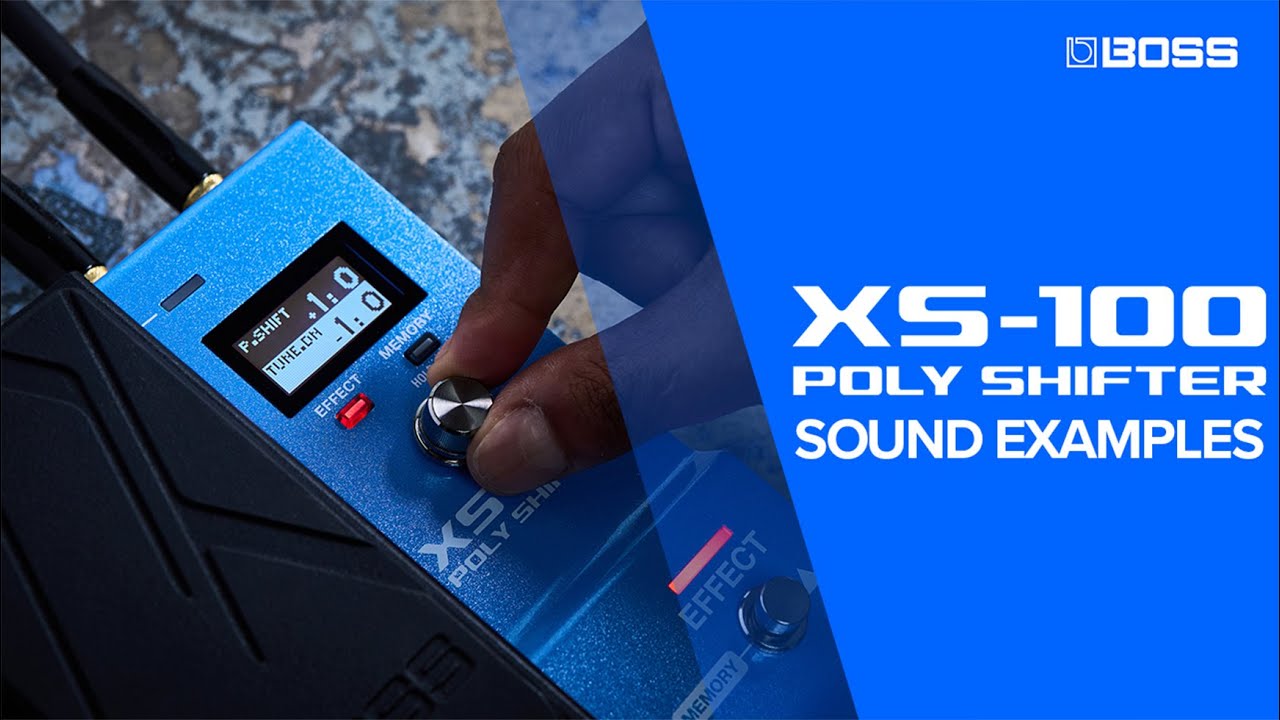
What were the roots of the XS series?
This project actually started back in the mid-2010s, with a PC-based development idea. Our engineers were asking: ‘What can we do for pitch shifting in a computer realm?’
And it was quite easy to do high-speed processing on a PC but really difficult progressing that into a stompbox. So 15 years of background has developed into the XS series. I’m actually glad it took so long because we ended up with such a great product.

What would you say is at the heart of the XS series pedals?
The XS algorithm is where the revolution comes from. First and foremost, we knew it had to be polyphonic. Of course, there are other polyphonic products on the market, but the idea was to create a polyphonic algorithm where users didn’t need to change their playing to get what they wanted out of it.
And, actually, one of the things we realised during development was the possibility of using SHARC processing chips because of their processing power and power efficiency.
We took out any glitches, any hiccups, and just give you pure attack clarity and character. So the XS pedals feel like an extension of your playing, rather than an effect on top of what you’re doing.
So if you want to go half a step down, it really feels like you’re playing half a step down; it doesn’t feel like you’ve added an effect to do that. I found the oddest thing was turning it off after jamming a tone down – and suddenly the natural tuning feels like you’ve retuned the instrument.

The XS-100 offers an impressive shifting range, doesn’t it?
Yeah, it’s four octaves up or down. Some people would argue that’s too much. We’d argue that we look forward to what people could do with it. All of the famous players that have used pitch shifters created their sound from what that product offered them at the time. So that freedom of range just means something new might be born out of it.
And that’s always the great thing about bringing a product to market – actually seeing what people do with it. The maddest sound I’ve got myself is probably going down a 5th, then adding in dry signal for harmonies, then pitch shifting on top.
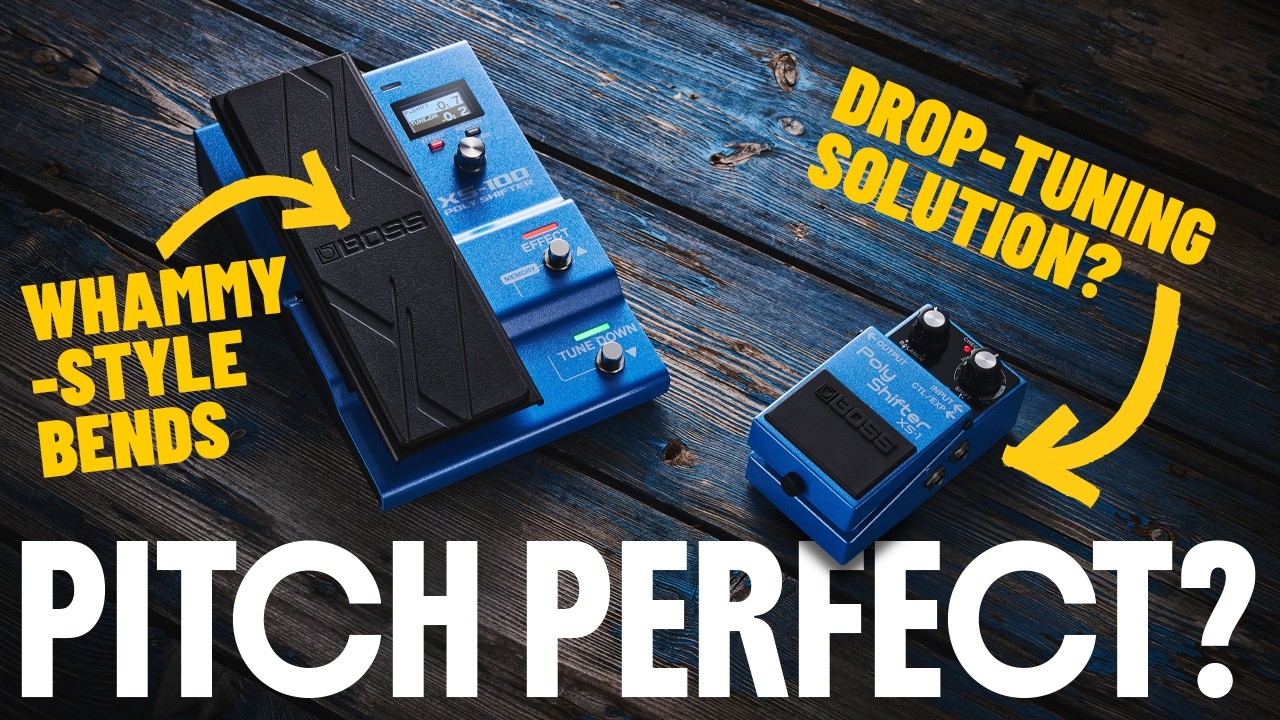
But I’ve seen people on Instagram almost use the XS-100 like a wah pedal because the expression pedal is so responsive and you can actually dial the feel into your playing as well. And then we’ve also added a toe switch so you can program it to have four different pitches on hand at any one time.

It’s claimed that the XS units raise the bar for lead guitar playing.
100 per cent. Improving that attack and feel just means that whether you do fast runs, legato, really dissonant notes, it just works really well. I’ve spoken to a few people who were, like, ‘I tried to trick it, I tried to break it, I tried to give it really odd things to work out – but it just works.’
They never had to think: ‘What do I need to do from a lead-guitar perspective to match the pedal?’ They could just do what they wanted and the pedal would follow along. You know, it doesn’t feel like you’re losing any connection, from your pick to the string to the effect to your amplifier.

How flexible are the XS sounds?
We didn’t want to limit people. So there’s presets onboard, but you can really dial in every sound. You can go between any range of octaves, or between a semitone down and a semitone up – then save that as a memory.
You can flick through those memories really quickly as well. I’ve already seen some people going up and down through their memories to create riffs.
We wanted a product that effectively gave complete creative freedom, not locked it down. But not everyone is going to do wild, crazy stuff with it. Some people might just go, ‘I need to play in Eb and I’m not going to have a guitar specifically for that.’ Or, ‘I’m in a covers band and I need to do something in drop D, drop C, or even with a capo.’ It’s open for you to do what you want.

How hard did Boss work to make the XS units intuitive?
I think, like any of our compacts, a pitch shifter needs to be super easy to use. So with XS-1, we basically added one big knob that determines where the pitch is, then one controlling how much effect you want – wet to dry – and on/off.
With XS-100, we said, ‘Yes, we need all of those minor tweaks to really dial in the sound. But ultimately, you need to be able to get a product out of the box, plug it in and enjoy it.’ So we knew we couldn’t lock things behind lots of menus.
Then there’s the fact that on the XS-100, you have a toe switch, so you can engage it like a wah pedal. That was one of the first things I said, like, ‘I want to turn it on like a wah because I’m used to clicking my wah in. Why can’t I click my pitch shifter in…?’
It’s said that you can still hear the raw tone of your guitar, even through the effect?
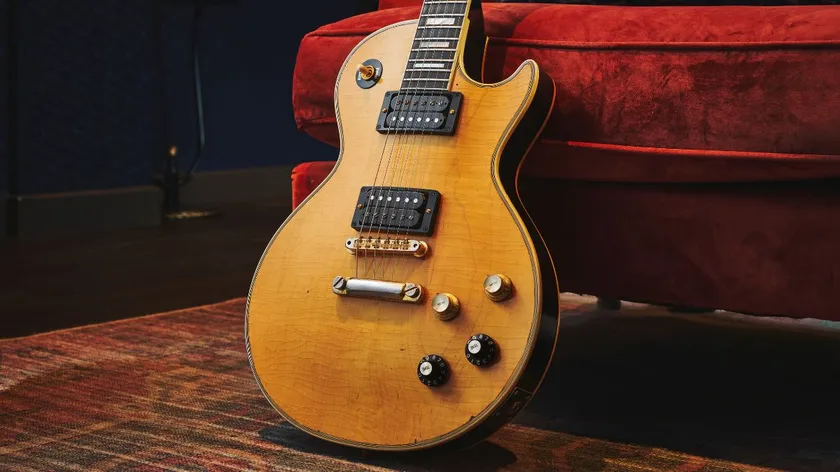
If you’re plugging in a Les Paul, you still want it to sound like that guitar, and so much of that comes down to our work on the algorithm to maintain that attack character and tonal clarity
There was a conversation: how does it feel under the fingers? What’s the attack like? What’s the note clarity like? How do I still feel like I’m playing the guitar that I’ve spent all this money on?
If you’re plugging in a Les Paul, you still want it to sound like that guitar, and so much of that comes down to our work on the algorithm to maintain that attack character and tonal clarity. Without that, every instrument could be at risk of sounding similar because you’re running it through a device that’s changing its core tone.

How much scope for connectivity is there with the XS pedals?
“So, just to talk about XS-1 for a second. As a compact, we’ve added that expression input, so if you wanted to use XS-1 as an expression device, you could. But with XS-100, again, our goal was complete freedom. Believe it or not, XS-100 is a full MIDI controller in its own right. So there’s potential for MIDI sequencing and changing pitches remotely.
“It’s mad, the amount of connections they ended up putting on. Because, actually, on the back of the XS-100, you have inputs for a separate control switch or expression pedal. So if you wanted to add a second expression pedal or second set of footswitches, the option is there. I’d imagine we will start to see it as a section of people’s bigger rigs – who knows what someone might come up with?”
Were there challenges along the way?
We weren’t going to revolutionise the way a Boss compact looked. With XS-100, the hardware was developed pretty quickly, too.
It was the software and feature set that took the longest time to dial in. Lots of comparisons, lots of testing, lots of back and forth, lots of very deep analysis at an engineer level.
It went through a lot of revisions, almost weekly. Constantly changing, testing and really trying to put it through its paces to make sure, again, that we’ve achieved that core goal. Once people plug it in, I think they’ll really start to feel that.

Do you have a user in mind for the XS-100 and XS-1?
I think Boss compacts appeal to such a huge range of players, it’s impossible to put it in a box. But I think, ultimately, XS-1 will be a great, easy-grab compact for people who might be doing a covers gig and they need to do something with a capo one moment, then drop a step down, or maybe use a range of different tunings.
To me, it feels like XS-100 will gravitate towards people who are trying to experiment with their sound – you know, not as mad as a synth pedal but more creative than a chorus or a phaser.
You can really make something brand-new in terms of a riff or a style or a sound. I’d love to sit here in two or three decades’ time and look at some of the people that have made hit records with our product. That would be amazing.

Let’s say there’s someone reading this who last used a pitch shifter back in the 90s. Would you encourage them to have a listen to how things have developed?
Absolutely. Going back to the first question: is there still juice in the tank? Absolutely. What I would say is, ‘Pick up the XS pedals with no preconceptions of what it will sound like.’ Just going through the presets, to me, was eye-opening in terms of the riffs and ideas I could get out of it.
And then you need to look at what people have done on the socials. You just think, ‘There’s so much more out there.’ So I would certainly urge people to come back and give it a go.
- “Boss has worked hard to counter the DigiTech Whammy's biggest pitfalls, but whether it dethrones it outright is a matter of taste”: Boss XS-100 Poly Shifter review
- This article first appeared in Guitarist. Subscribe and save.

