


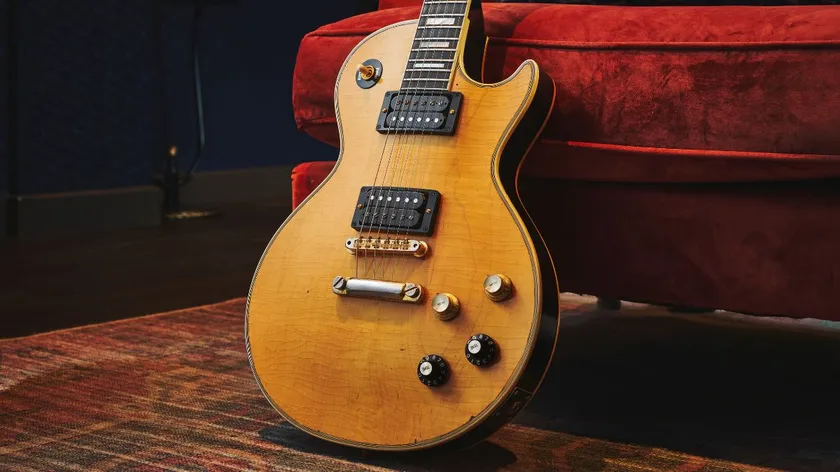


Distortion – most of us can't imagine guitar without it. There's something about turning pristine cleans into delicious dirt that still thrills us every time. Luckily, then, we live in a golden age of guitar pedals, with all kinds of small-scale boutique stompbox manufacturers facing off against industry titans such as MXR, TC Electronic, and Boss, meaning if you're looking for the best distortion pedal to help you achieve tonal bliss, there's more choice than ever before.
When used right, there's nothing like the roar of an amp getting totally shredded by a distortion pedal, and as a result, it's come to define many genres, from metalcore to Swedish death metal, hard-rock to punk. This hard-clipping effect has captured the hearts of many players, whether that's bedroom warriors dreaming of the sound of a totally dimed Peavey stack or the gigger looking to push their gain tone into the stratosphere.
The question is, where do you start? Well, my honest answer is 'try a ProCo RAT and go from there,' but if you want a longer read, then we've rounded up some of our favorites below. If you’re just starting out, the perennial classic Boss DS-1 is a great budget option that has been used on countless records. If you have seen it all, then check out the Hamstead Odyssey. It is a fresh, versatile take on a distortion pedal that wields buckets of great tones.
I have included some in-depth FAQs at the end of this guide, informed by my 10 years working in a guitar store, helping beginners and experienced players select their next distortion pedal. If you'd like to get straight to the products, keep scrolling.
Best distortion pedals: Quick list

Fender have stacked the Pugilist with all the gain you need, and even if it takes a bit of time to dial in your desired setting and negotiate the two gain channels via the blend, there’s so much joy to be had. Yes, it can function as an overdrive, but we’re on the hunt for the best distortion pedals, and the Pugilist understands this, with oodles of gain that can be shaped to react to your pickups.

The Boss DS-1’s set-up is simple: level, tone and distortion, with a rubber-topped foot pedal to switch it on and off. The pedal is happy adding a little crunch and some extra oomph, but it keeps the integrity of your guitar tone steady when dimed. There’s plenty of versatility. The DS-1’s tone knob really can tweak your highs, perfect for pinch harmonics. Dial it back to thicken up your rhythm tone or to fatten up single coil pickups.

Fortin has been supplying heavy titans Meshuggah with amplification since 2016. In that time, Fortin Amplification created the Meshuggah Blackout, an elusive 50W amplifier head that was produced in very limited numbers. If, like us, you missed out on that, this preamp/distortion pedal is the next best thing.

Like the Sovereign, the M75 has a default voice that speaks in British EL34 tube crunch. Keep everything at noon to maintain that sort of equilibrium, but if you’re chasing heaps of ugly-delicious metal gain, roll it forward to 2 o’clock onwards. The three-band EQ is everything in changing the character of the M75’s gain.

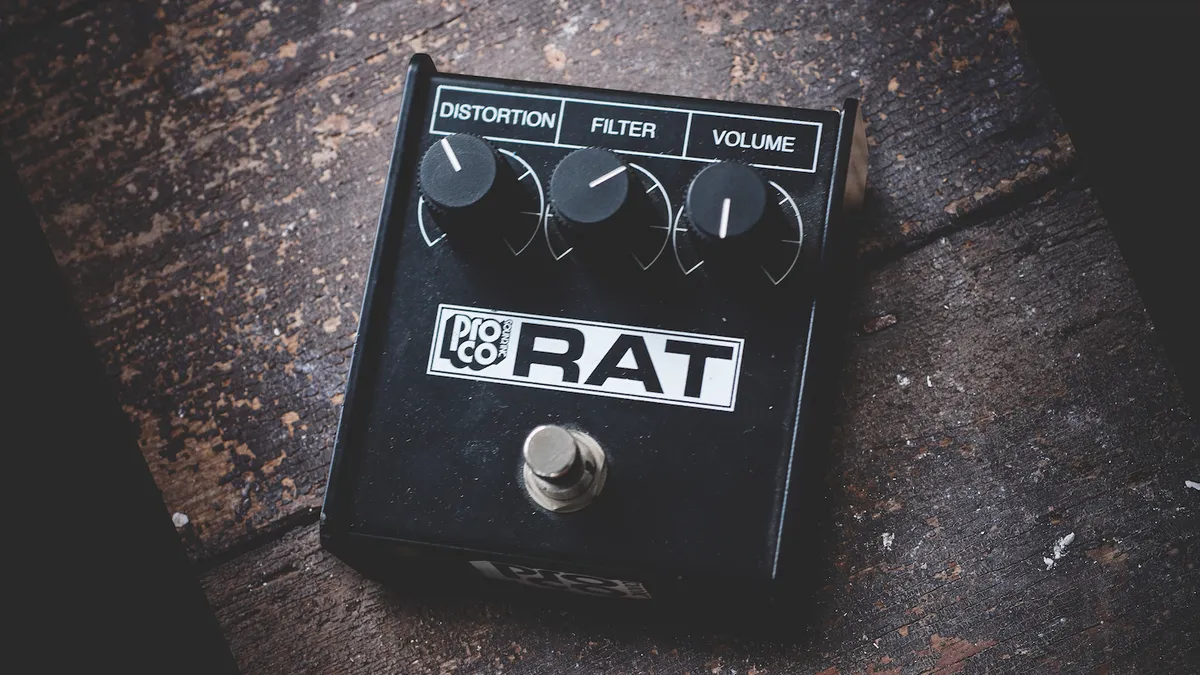
Developed in 1978, and mass produced from 1979 onwards, the ProCo RAT has a decent claim to being the first proper mass-market distortion box. Its hard, aggressive sound and tight, focussed clipping are pretty much the template for what distortion sounds like to this day. If you're looking for the punchy tone of players like Radiohead's Johnny Greenwood, then the RAT is a good choice. They of course used a Marshall Shredmaster - now long discontinued - but the RAT can cover most of the same ground.

At face value, the Odyssey is a RAT on steroids. Like the RAT, it's got a wide gain range, with seriously crunchy tones when fully open. However, that's a very superficial, 'guitar-store test' take. Not only does the Odyssey pack a true amp-like EQ, but there's also ordering and input gain options to change its operation to be even more flexible. The clipping settings allow it to go from pure transparent clean boost, to heavy distortion.
Best distortion pedal overall

Fender have stacked the Pugilist with all the gain you need, and even if it takes a bit of time to dial in your desired setting and negotiate the two gain channels via the blend, there’s so much joy to be had.
Yes, it can function as an overdrive, but we’re on the hunt for the best distortion pedals, and the Pugilist understands this, with oodles of gain that can be shaped to react to your pickups.
Mode A is more overdrive/crunch; Mode B saturates the tone for a more modern metal tone, while the bass boost is excellent for fattening up single coil tones.

"Fender’s new line of effects impresses for each pedal’s utilitarian functionality, distinct sounds, useful and innovative new features (particularly the magnetized battery compartment door), and most of all for their exceptionally affordable prices."
Read our full Fender Pugilist Distortion Pedal review
Best distortion on a budget

The Boss DS-1’s set-up is simple: level, tone and distortion, with a rubber-topped foot pedal to switch it on and off. The pedal is happy adding a little crunch and some extra oomph, but it keeps the integrity of your guitar tone steady when dimed.
There’s plenty of versatility. The DS-1’s tone knob really can tweak your highs, perfect for pinch harmonics. Dial it back to thicken up your rhythm tone or to fatten up single coil pickups.
What's not to like about all this tone for under 50 bucks? Just don’t underrate it just because it’s cheap and pre-dates the Sony Walkman.
Best premium

Fortin has been supplying heavy titans Meshuggah with amplification since 2016. In that time, Fortin Amplification created the Meshuggah Blackout, an elusive 50W amplifier head that was produced in very limited numbers. If, like us, you missed out on that, this preamp/distortion pedal is the next best thing.
Being specifically designed to create Meshuggah’s face-melting, vicious riffage, you can expect a boatload of gain across both channels within this pedal. Fans of the band will love it; however, any modern metalhead who needs a pedal that delivers violent yet controlled distortion will also find plenty of use for it.
That leads us on to the price tag. A distortion pedal costing around $300 had better be built to the highest standard, and Fortin delivers on that front. We found the build quality to be impeccable, as well as stylish, thanks to the blacked-out design and Meshuggah logo.

"There's little access to the unobtainium amp that inspired it, so it’s difficult to know exactly how close Fortin has managed to come to replicating it in a pedal. But on its own merits, the Meshuggah Preamp/Distortion is a job well done."
Read our full Fortin Meshuggah Preamp/Distortion review
Best for rock

Like the Sovereign, the M75 has a default voice that speaks in British EL34 tube crunch. Keep everything at noon to maintain that sort of equilibrium, but if you’re chasing heaps of ugly-delicious metal gain, roll it forward to 2 o’clock onwards.
The three-band EQ is everything in changing the character of the M75’s gain. Take out some of those mids for late ’80s Metallica scooped crunch, boost them for that ‘70s vibe.
When it comes to the best distortion pedals, the M75 is a no-brainer that takes seconds to find the tone you want – an indestructible little powerhouse of versatile analog distortion. It's also worth noting that it pairs especially well with one of the best phasers of all time the MXR Phase 90.
"With its versatile EQ section and responsive, dynamic gain circuit, the MXR Super Badass is possibly the best distortion pedal that MXR has ever offered."
Read the full MXR M75 Super Badass '75 Distortion review
Best for punk

Developed in 1978, and mass produced from 1979 onwards, the ProCo RAT has a decent claim to being the first proper mass-market distortion box. Its hard, aggressive sound and tight, focussed clipping are pretty much the template for what distortion sounds like to this day. If you're looking for the punchy tone of players like Radiohead's Johnny Greenwood, then the RAT is a good choice. They of course used a Marshall Shredmaster - now long discontinued - but the RAT can cover most of the same ground.
Although it does sound the best at higher gain settings, it can be used as a lower-gain boost, even if it never fully cleans up in the way an overdrive might.
The only real drawback of the modern ProCo RAT is that the op-amp at the heart of the circuit is no longer the original LM308. On the original, the slow slew rate of the op-amp created a distinctive, almost triangle-wave waveform at higher gain levels. However, the hard clip of the diodes means that the difference in reality is more marginal than some claim.
Best distortion for modern tone

At face value, the Odyssey is a RAT on steroids. Like the RAT, it's got a wide gain range, with seriously crunchy tones when fully open. However, that's a very superficial, 'guitar-store test' take.
Not only does the Odyssey pack a true amp-like EQ, but there's also ordering and input gain options to change its operation to be even more flexible. The clipping settings allow it to go from pure transparent clean boost, to heavy distortion.
It pairs well with preamps, real amps, and other gain stages on your pedalboard, and remains one of the easiest recommendations of any gain pedal on the market.
Also tested
So those are our top picks, but there are many more great options to choose from that offer something a little different in terms of features and performance. We've selected some more of our favorites below.
How to choose

Just like chorus, delay, or reverb pedals, each individual distortion has its own unique tone and characteristics. But, deciding on which distortion is right for you really depends on the style of music you want to play. In the world of heavy metal, distortion is the most-prized raw material. For many metal guitar players, the ideal pedal delivers a thick, saturated distortion with a tight and controlled low end.
If you are playing towards metal's extremes, you'll obviously require a whole heap of gain, but you'll also want tone-shaping controls such as a variable mid control to ensure you can dial in the exact sound you need to be heard of the blistering drums and thunderous bass. Some scenes, such as early '90s Stockholm death-metal, coalesced around a single distortion pedal, the famed Boss HM-2 – they dimed everything, and it sounded horrible but brilliant in its own unique way.
For the less severe styles of music, such as punk and hard-rock, you may want to seek a more open-sounding distortion. For these genres, you can afford to opt for a distortion pedal that has more of a mid-range punch, as opposed to the scooped mids the metalheads seem to favor.
Glossary of terms
- Bypass (true vs buffered): This refers to the signal path when an effect pedal is turned off. True bypass means the switched-off pedal doesn’t affect your guitar’s signal at all, whilst buffered bypass will affect it slightly by boosting or preserving the signal.
- Clipping: This is the term for waveform distortion. Clipping happens when an audio signal’s amplitude exceeds the voltage capability and “clips” off the top and bottom of the waveform.
- Distortion: This is the name of the effect that adds ‘dirt’ or ‘grit’ to your guitar’s amplified tone by clipping the signal.
- Dynamic response: This refers to how well a pedal reacts to the nuances of your playing, such as how hard you hit the strings or your picking speed.
- EQ (equalization): These are the controls on a pedal that will either cut or boost frequencies, typically treble, middle, and bass.
- Gain: This controls the amount of signal that is let through. The higher the gain, the ‘dirtier’ or more distorted your tone will sound.
- Gain staging: This refers to the process of using multiple overdrive and/or distortion pedals set at incremental levels in the signal chain to create a controlled and effective flow of gain.
- Hard clipping: This is the most aggressive form of distortion, where the waveform is cut off very abruptly. It sounds punchier and more aggressive than soft clipping.
- Headroom: Headroom refers to the amount of signal level an amp or pedal can handle before distorting. Devices with higher headroom take more power to distort than those with low headroom.
- Overdrive: This is the stage before full distortion. Overdrive clips the waveform more gently, causing your sound to break up gradually rather than aggressively.
- Saturation: This is another way of describing how much gain you are using and hearing. Peak saturation is when an amp or pedal can’t distort any further because it has reached its maximum capacity.
- Signal chain: This describes the path your signal takes from start to finish. Think of your pedalboard as a signal chain: your tuner is usually at the start, followed by overdrive and distortion, then modulation and time-based effects before reaching the amp.
- Soft clipping: This is a smoother, more gradual form of clipping where the waveform is rounded rather than sharply cut. It produces a warmer, more natural distortion and is commonly associated with overdrive pedals and tube-style breakup.
FAQs

What is distortion?
You can trust Guitar World Our expert reviewers spend hours testing and comparing guitar products so you can choose the best for you. Find out more about how we test.
So, what do we mean by distortion, and how might this affect your hunt for the best distortion pedal? A distortion pedal uses hard-clipping to transform your clean guitar signal into a filthy, gritty mass of pure joy. Now, while this buyer's guide focuses on distortion pedals, naturally, there's some overlap between distortion, overdrive, and fuzz pedals, as all of them are effectively designed to dirty up your tone. Where overdrive doesn't change the fundamental character of your guitar's signal, distortion can be considered more aggressive. It clips your signal harder – and fuzz clips it harder still.
As with anything with an aesthetic purpose, gear, and how it sounds is subjective. There are no rules so long as the tone speaks to you - and ultimately, that's the most important thing to consider.
Should I go for distortion or overdrive?
The answer to this depends entirely on what style of music you play. Overdrive works great for less heavy genres, think rock ’n’ roll, blues, and indie. Since an overdrive clips your signal less harshly than distortion, lighter genres tend to favor it. On the other hand, if you’re a metalhead or in a punk band, you’ll want something more gnarly and in-your-face. If that’s you, go for a distortion.
However, most players tend to use a combination of both. Having a few overdrive and distortion pedals means you can build gain stages and create multiple layers of clipping depending on the song you’re playing. Of course, it takes time (and money) to build up a pedal collection, so if you can only pick one or the other, consider what you want to play most.
Where should distortion go on my pedalboard?
Distortion pedals usually go toward the start of your pedalboard. I typically put my distortion pedals after my overdrive, as having incremental increases in gain is an effective and logical approach when playing songs. This isn’t a hard-and-fast rule, and the joy of music is experimentation. However, placing distortion early in the chain means your signal is distorting in the cleanest way possible.
Things can get quite messy if you put distortion after modulation or time-based effects like delay. This may suit some players’ tastes, but for most, it results in too much uncontrollable chaos.
What distortion pedal did Kurt Cobain use?
Kurt Cobain was famous for his devotion to the Boss DS-1. This little orange stompbox was used on most Nirvana tracks and was a mainstay of Cobain’s tone.
Later in his career, Cobain started using the Boss DS-2 Turbo Distortion, which is very similar but features two ‘Turbo’ modes that effectively boost the mids for a more in-your-face soloing sound. Thanks to Kurt and Boss’ longevity, the DS-1 is perhaps the most famous distortion pedal of all time, and it’s certainly the best-selling one worldwide.
What is the best distortion pedal for beginners?
If you’re just starting out, don’t feel the need to splash the cash on your first distortion pedal. The Boss DS-1 is the best-selling distortion pedal in the world, and, costing around $50, it’s a great entry point into the world of distortion.
Alternatively, TC Electronic produces multiple affordable distortions, such as the Eyemaster Metal Distortion. Another incredibly popular option, the ProCo Rat 2, sits around the $80 mark and is used by both amateur and touring musicians worldwide for the classic ‘wall of sound’ tone it elicits. Once you’ve gained (excuse the pun) a bit of experience, you’ll likely develop your own tastes and can then consider spending more.
What distortion pedal is best for metal?
There are many metal subgenres that require different characteristics from a distortion pedal. Generally speaking, though, you’ll want to pay close attention to EQ and clipping. The level of clipping determines how much saturation you’re getting from the pedal. Classic metal typically requires less saturation than modern, fully saturated styles, so it’s worth thinking about which bands you like before choosing.
EQ is also hugely important. Tone-shaping controls, especially mid controls, are essential for dialing in the exact distorted sound you’re after, whether that’s tightening up the low end for precise chugging or scooping the mids to create space. Unfortunately, there isn’t a single pedal that suits everyone, so some consideration is needed before making the right purchase.
How we choose products
Here at Guitar World, we are experts in our field, with many years of playing and product testing between us. We live and breathe everything guitar and bass related, and we draw on this knowledge and experience of using products in live, recording and rehearsal scenarios when selecting the products for our guides.
When choosing what we believe to be the best distortion pedals available right now, we combine our hands-on experience, user reviews and testimonies and engage in lengthy discussions with our editorial colleagues to reach a consensus about the top products in any given category.
First and foremost, we are guitarists, and we want other players to find the right product for them. So we take into careful consideration everything from budget to feature set, ease of use and durability to come up with a list of what we can safely say are the best distortion pedals on the market right now.
Read more about our rating system, how we choose the gear we feature, and exactly how we test each product.
Why trust us?

☑️ A global audience of 3.8 million guitarists monthly
☑️ 1,200+ reviews on GuitarWorld.com
☑️ 30+ years of product testing at Guitar World
Guitar World boasts over 44 years of expertise and stands as the ultimate authority on all things related to guitars. The magazine and website feature expertly written gear round-ups and top-quality, authoritative reviews penned by a team of highly experienced industry professionals.
Guitar World's inaugural print issue hit the shelves in July 1980, and ever since, it has been captivating players and enthusiasts with engaging lessons, insightful interviews with the biggest guitar heroes, and priceless buying advice for newbie players.
Furthermore, GuitarWorld.com continues this legacy online and serves as the hub of the world's foremost authorities on guitar playing. The site not only hosts content from Guitar World but also showcases articles from respected publications such as Guitarist, Total Guitar, Guitar Techniques, and Bass Player. With a reach extending to 3.8 million players each month, GuitarWorld.com is a go-to destination for guitar fanatics globally.
Related buyer's guides
- You might need one of the best pedalboard power supplies, too
- Make a connection with the best patch cables on the block
- Get top-notch sound with the best amps for pedals
- Check out the best Tube Screamer clones
- Get all wobbly with the best tremolo pedals
- Our pick of the best Klon clones for every budget
- On a budget? Here are the best cheap distortion pedals
- Play it loud with the best punk guitars
- Lose your head in the best headless guitars
- Expand your playing style with the best Boss pedals

